
Cancer cells are so deadly because of their ability to quickly invade and a new study contends that part of the blame rests with mitochondria, the energy factories of the cell. Mitochondria are organelles inside most of our cells that generate energy and so play a crucial role in a tumor's ability to generate the energy needed to invade healthy tissue.

A new environmental claim about endocrine disruptors would seem to be an early Christmas gift for the fundraisers and lawyers at the Environmental Working Group and NRDC but the scientist employed at each of those groups likely feels a little dread.

Because the new endocrine disruptor is salt, and despite the perennially low quality science that dribbles from their websites, even they must realize how stupid it looks. Maybe even enough worry that remotely inquisitive individuals might wonder, "Hmm. Salt is disrupting my 'endocrines?' Huh?? Maybe the other endocrine stuff they write about is garbage too."

When a tree dies, or when we run across decaying wood in a forest, our first reaction is to think we should remove it. However, the ecology of the forest is such that saproxylic organisms, including fungi and insects, depend on the dead wood that naturally generates the dynamics of the forest. The fact is, however, that there is a real obsession to eliminate it as soon as possible because it seems dirty and like it will attract pests. The biggest problem associated with dead wood is that dead wood plays a very important role in forest life.

Once again this year, consumers say they are weighing their options for making healthier choices. And 81 percent say they wish they had made healthier choices before - but 70 percent have no plans to make their holiday meals healthier this year even though 37 percent realize they can eat healthier with simple meal substitutions.

Welcome to the world of Internet surveys.

The survey of 1,022 adults was conducted by ORC International on behalf of Ready Pac Foods. This online omnibus was live on November 3-6, 2016.


Key findings from the holiday survey include:

Taking music lessons increases brain fiber connections in children, according to a recent small study. The researchers studied 23 healthy children between the ages of five and six years old. All of the children were right handed and had no history of sensory, perception or neurological disorders.

None of the children had been trained in any artistic discipline in the past.

The study participants underwent pre- and post-musical-training evaluation with diffusion tensor imaging (DTI) of the brain. DTI is an advanced MRI technique, which identifies microstructural changes in the brain's white matter.

Thanks to savvy marketing by food corporations who are looking for health halos to put over their food, consumer demand for food products formulated without synthetic additives has increased.

There is a big drawback, demonstrated by Chipotle and others who are hoping to make themselves look healthier when selling junk food - it still has to be safe to eat. Additives, synthetic or not, are needed for food safety reasons, so food product developers are faced with the challenge of developing more "natural" additives that can produce comparable in safety results with synthetic versions. 
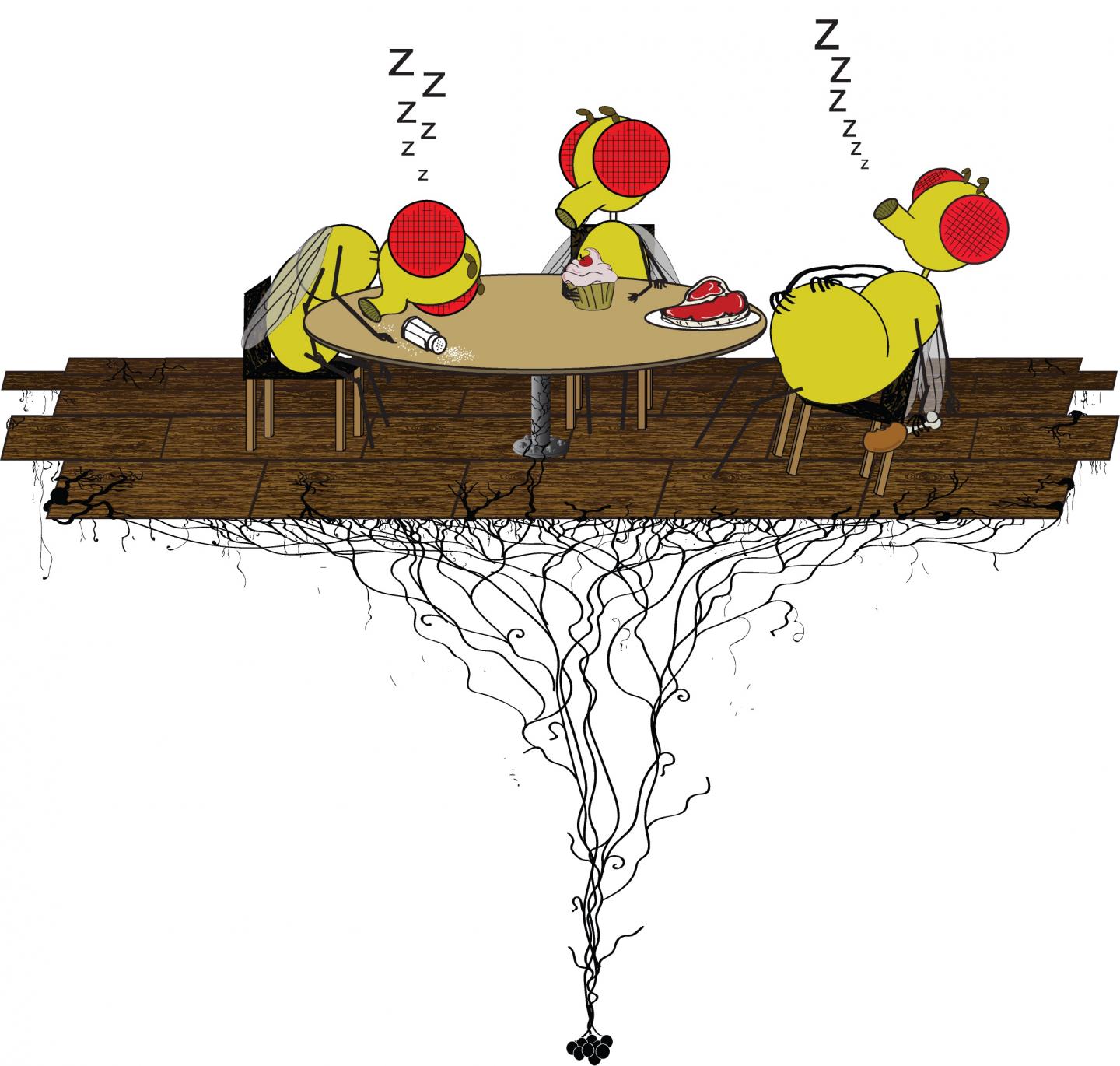
We've all felt sleepy after a big Thanksgiving meal and tryptophan usually gets the bad rap - but there simply isn't enough of it to make a difference. Yet clearly something is making many of us take longer naps after binging on supper.

A recent study examined 'food comas' using the fruit fly Drosophila melanogaster and explained some of the causes behind this phenomenon. They created a system that can measure both the sleep and feeding behaviors of individual fruit flies and discovered that, in much the same way as humans, the animals sleep for longer periods following larger meals. Further studies also revealed that certain types of food can promote post-meal sleep.
It's no secret that smoking causes lung cancer, but lost in the more recent smoke and mirrors about the new war on tobacco is the fact cigarettes are also linked to many other diseases, and the risk is compounded in diabetics who smoke. Diabetes, the kind occurring naturally and the lifestyle type 2 version, is a chronic illness in which there are high levels of glucose in the blood. More than 29 million people in the U.S. have diabetes, up from the previous estimate of 26 million in 2010, according to a report released by the Centers for Disease Control and Prevention. One in four people with diabetes doesn't know he or she has it. Like smoking, having diabetes can also put people at risk for numerous other health complications.

People may soon be able to watch their unborn babies grow in realistic 3-D immersive visualizations, thanks to new technology that transforms MRI and ultrasound data into a 3-D virtual reality model of a fetus. MRI provides high-resolution fetal and placental imaging with excellent contrast. It is generally used in fetal evaluation when ultrasound cannot provide sufficiently high-quality images. 

 According to the Centers for Disease Control and Prevention (CDC), obesity has more than quadrupled in adolescents over the past 30 years and it is estimated that more than one-third of kids and adolescents in the U.S. are at least overweight. Obesity in childhood and adolescence is associated with a number of later health risks, such as cardiovascular disease and type 2 diabetes.