

Scientists have shown how the brain anticipates all of the new situations that it may encounter in a lifetime by creating a special kind of neural network that is "pre-adapted" to face any eventuality. This emerges from a new neuroscience study published in PLOS Computational Biology.

Enel et al at the INSERM in France investigate one of the most noteworthy properties of primate behavior, its diversity and adaptability. Human and non-human primates can learn an astonishing variety of novel behaviors that could not have been directly anticipated by evolution -- we now understand that this ability to cope with new situations is due to the "pre-adapted" nature of the primate brain.

The Basque Institute of Agricultural Research and Development Neiker-Tecnalia is currently exploring a strategy to remedy soils contaminated by organic compounds containing chlorine (organochlorine compounds). The innovative process consists of combining the application of zero-iron nanoparticles with bioremediation techniques. The companies Ekotek and Dinam, the UPV/EHU-University of the Basque Country and Gaiker-IK4 are also participating in this project known as NANOBIOR.

Coronary or peripheral bypasses are the most frequently performed vascular operations. Although one million patients per year and around the world, undergo this intervention, its failure rate reaches 50%, because of poor vessel healing, leading to vessel graft occlusion. To improve the outcome of bypasses, researchers from the University of Geneva (UNIGE) work together with medical doctors from the Lausanne University Hospital (CHUV). They developed a gel containing microparticles -'GeM', enabling the controlled release of a drug inhibiting cellular over-proliferation. Administered locally, directly on the bypass graft during surgery, this preventive treatment will reduce the risk of obstruction reoccurrence. This research can be read in The Journal of Controlled Release.

In a randomized Phase III study of the drug inotuzumab ozogamicin, a statistically significant percentage of patients with acute lymphoblastic leukemia (ALL) whose disease had relapsed following standard therapies, qualified for stem cell transplants.

Inotuzumab ozogamicin, also known as CMC-544, links an antibody that targets CD22, a protein found on the surface of more than 90 percent of ALL cells. Once the drug connects to CD22, the ALL cell draws it inside and dies.

It's no surprise that the rise of peanut allergies correlates to the rise in helicopter parenting. Where kids once built up immunity by getting dirty and eating the foods their parents, a subset of modern parents schedule play dates, buy antibacterial soap and believe that breast milk has "otherworldly power."

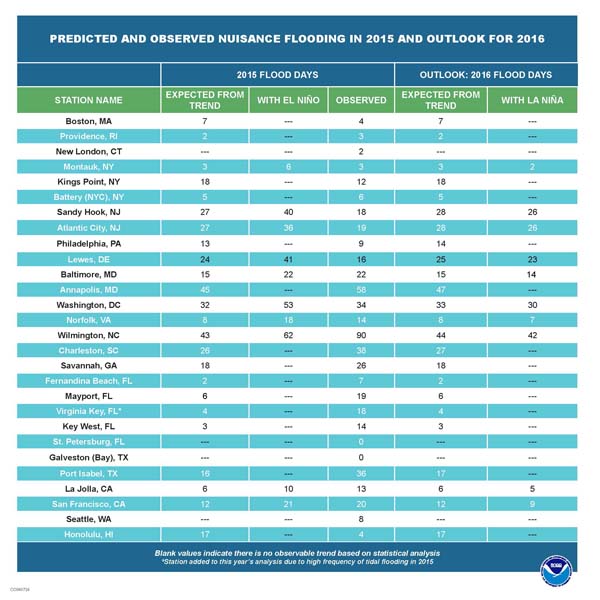
The frequency of nuisance tidal flooding in many U.S. cities was predicted for the 2015 meteorological year, from May 2015 to April 2016, according to a new NOAA report.

Simon Fraser University research aimed at helping people get to sleep will be highlighted at an international sleep conference next week. Luc Beaudoin, an adjunct professor in cognitive science and education, created the mySleepButton® app two years ago (a new version with the world's first configurable "body scan" will be released shortly).

It uses what he calls a "cognitive shuffle," or Serial Diverse Imagining (SDI), a method that essentially "scrambles" one's thoughts and keeps the mind off issues that may prevent sleep. "A racing mind, worries and uncontrollable thoughts are common bedtime complaints among poor sleepers," Beaudoin notes.

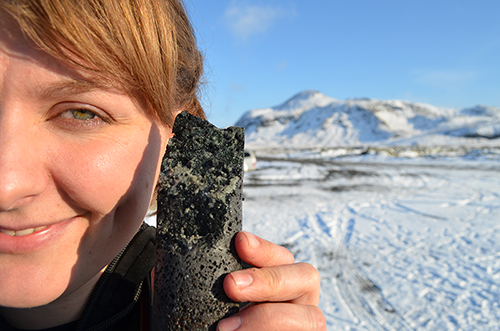
Hellisheidi power plant in Iceland is the world's largest geothermal facility and now it has one other distinction. Engineers there have shown that carbon dioxide emissions can be pumped into the earth and changed chemically to stone within months, far faster than believed.

A chain saw, sporting all the safety interlocks, might still kill you if you use it carelessly. You’re self-confident and you suffer the usual optimism bias.

Researchers have developed a compound that can transform near-infrared light into broadband white-light, offering a cheap, efficient means to produce visible light. The emitted light is also exceedingly directional, a desirable quality for devices like microscopes that require high spatial resolution, or for applications with high throughput, such as projection systems. Nils Wilhelm Rosemann and colleagues designed their compound of tin and sulfur, and with a diamondoid-like structure, then coating this scaffolding with organic ligands. When a laser directs near-infrared light into the compound, the structure of the compound alters the wavelength of the light through a non-linear interaction process, producing light at wavelengths that are visible to the human eye.

