


Some broad-spectrum antibiotics that disrupt the gut microbiome may raise the risk of complications from stem cell transplantation, according to a new study evaluating data from more than 850 transplant patients, as well as from mice.

The findings suggest that selecting antibiotics that spare "good" bacteria may help protect against graft-versus-host disease (GVHD), which occurs when transplanted donor cells, recognizing their new home as foreign, attack the recipient's body.

Transplant patients vulnerable to life-threatening bacterial infections are often treated with broad-spectrum antibiotics.

It has been one hundred years since the publication of Einstein's general theory of relativity in May 1916.

People are still trying to find ways to make him wrong, but mostly they just find new ways to show right, as in a recent EPJ Plus article which demonstrated that the rotational motion in the universe is also subject to the theory of relativity.

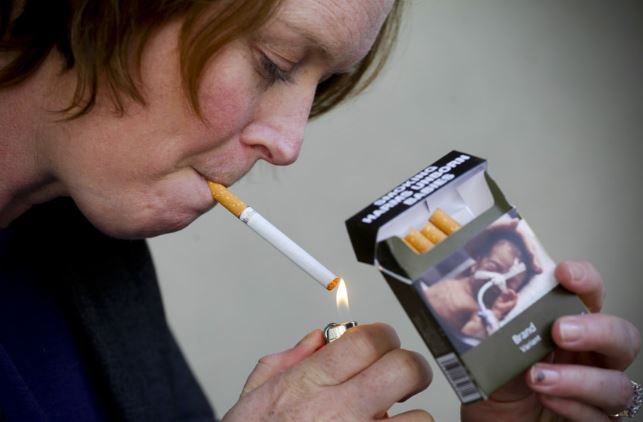
Tobacco kills nearly half of all long-term smokers and in the UK alone accounts for the deaths of 100,000 people annually, according to the public health charity ASH. This is the harsh reality behind plain packaging for tobacco, which comes into force in the UK on May 20 2016.

RIVERSIDE, Calif. (http://www.ucr.edu) -- When you're paid to sell things, it doesn't hurt to be able to stretch the truth or prey on people's emotions once in a while. Most advertisers probably don't spend too much time thinking about karma, then, but perhaps they should--at least if they want to get better at their jobs.

ATS 2016, SAN FRANCISCO - Home-based pulmonary rehabilitation may be equally effective in improving fitness and quality of life as a traditional center-based program for COPD patients, according to new research presented at the ATS 2016 International Conference.

"We know that pulmonary rehab is a highly effective treatment for COPD because it improves exercise capacity and symptoms and keeps people out of the hospital," said Anne Holland, PhD, professor of physiotherapy at Alfred Health and La Trobe University, Melbourne, Australia. "But less than 10 percent of all COPD patients in developed countries enter a pulmonary rehab program."

An international team of researchers under the leadership of the LIMES Institute and the excellence cluster ImmunoSensation of the University of Bonn unraveled a new regulatory mechanism how food components and environmental factors influence the immune system. Various substances present in the intestines can bind to an important controller, the Ah receptor. This system is in turn regulated by the Ah receptor repressor and as a result, it influences the degree of the immune response. If the controller is not properly adjusted during bacterial infections, there can be life-threatening septic shock, for example. The results are now being published in the journal Scientific Reports.

For the first time, scientists are looking at real data -- not computer models, but direct observation -- about what is happening in the fascinating region where the Earth's magnetic field breaks and then joins with the interplanetary magnetic field.

They don't know exactly what this new window of science will open to us -- that's the thrill of discovery and, for some, the scary part, too.

But enormous amounts of data now are arriving daily -- and publicly accessible -- from NASA's $1 billion Magnetospheric Multiscale Mission, called MMS for short, which was launched in March 2015.

People suffering from major depressive disorder may have altered purine metabolism, according to a new study from the University of Eastern Finland and Kuopio University Hospital. Purines are nitrogenous compounds that serve as building blocks for DNA and they also play a role in cellular signalling, among other things.

The study found that in people with depression, purine metabolism is partially hyperactive. "This can be the body's way of combating the adverse effects of increased oxidative stress present in depression," says PhD student Toni Ali-Sisto, the first author of the study. The findings were published in Psychoneuroendocrinology.

Compared to their surroundings, cities can be hot -- hot enough to influence the weather. Industrial, domestic, and transportation-related activities constantly release heat, and after a warm day, concrete surfaces radiate stored heat long into the night. These phenomena can be strong enough to drive thunderstorms off course. But it isn't only about the heat cities release; it's also about their spatial layout. By channeling winds and generating turbulence hundreds of meters into the atmosphere, the presence and organization of buildings also affect weather and air quality.

Holidays abroad may hold the key to tackling Scotland's vitamin D deficiency, research suggests.

People who take foreign breaks have higher levels of vitamin D in their blood, which has been linked to wide-ranging health benefits, a study has found.

Farmers also have higher levels of the vitamin -- which is produced in the skin after exposure to sunlight -- according to the findings.
Researchers at the University of Edinburgh surveyed the vitamin D levels of around 2000 people in Orkney -- 1 in 10 of the population -- as part of the ORCADES study.

The team were interested to see whether widespread vitamin D deficiency in Orkney might explain why rates of multiple sclerosis are higher there than anywhere in the world.

