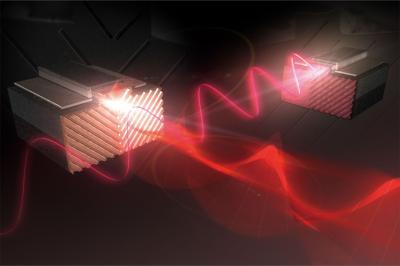





Applied scientists at the Harvard School of Engineering and Applied Sciences (SEAS) in collaboration with researchers from Hamamatsu Photonics in Hamamatsu City, Japan, have demonstrated, for the first time, lasers in which the direction of oscillation of the emitted radiation, known as polarization, can be designed and controlled at will. The innovation opens the door to a wide range of applications in photonics and communications. Harvard University has filed a broad patent on the invention.

BERN, Switzerland, April 13 /PRNewswire/ --

- In the connect PBX converged-IP service for SMEs, Switzerland's largest cable network relies on SmartNode(TM) VoIP CPE to satisfy the stringent demands of classic ISDN users.

- SmartNode(TM) VoIP... more than just talk.

Patton-Inalp Networks AG -- creator of SmartNode(TM) industry-leading VoIP technology --announced today that Cablecom -- the largest cable-network operator in Switzerland -- has selected the SmartNode(TM) 4630 Multiport BRI VoIP Router as customer premise equipment for its connect PBX ISDN VoIP and data service for small-to-medium enterprises.

Our modern age has become accustomed to regular improvements in information technology, says Slava Rotkin, but these advances do not come without a cost.

Take the laptop, for example. Its components, especially its billions of semiconductor electronic circuits, are growing ever tinier while the instrument's power and capacity increase. But heat generated by electric current can cause the circuits to melt and the laptop hardware to fail.

Indeed, says Rotkin, an assistant professor of physics, a laptop in use can generate heat faster than an everyday hotplate and almost as fast as a small nuclear reactor.

There was a time when it was virtually impossible not to believe in God.   That made sense; life had (and certainly still has) many mysteries and a divine hand made sense of an irrational world, at least in the sense that you could believe in one supernatural thing rather than many.

But over time two important things happened that should have killed religion; the world got 'smaller' in the sense that a lot more information about people and cultures became available and science was able to explain a much larger, very fundamental and far-reaching set of things about the world in terms of natural laws.

A team of UCSF researchers has used microRNAs to help turn adult mouse cells back to their embryonic state. These reprogrammed cells are pluripotent, meaning that, like embryonic stem cells, they have the capacity to become any cell type in the body.

A drop of blood or a chunk of tissue smaller than the period at the end of this sentence may one day be all that is necessary to diagnose cancers and assess their response to treatment, say researchers at the Stanford University School of Medicine.

In a Nature Medicine study, the scientists used a specialized machine capable of analyzing whether individual cancer-associated proteins were present in the tiny samples and even whether modifications of the proteins varied in response to cancer treatments. Although the study focuses on blood cancers, the hope is that the technique might also provide a faster, less invasive way to track solid tumors.

In parallel human and mouse studies, two groups of researchers have come to the same conclusion: that a new kind of gene is associated with progressive hearing loss. The new gene, a microRNA, is a tiny fragment of RNA that affects the production of hundreds of other molecules within sensory hair cells of the inner ear.   The research provides important new genetic understanding of a condition that is common in humans but remains poorly understood.
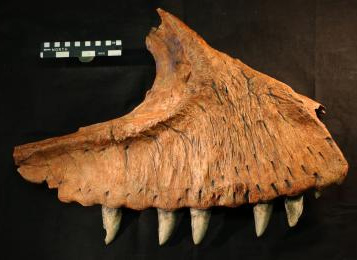
Afraid of  being eaten alive? Most folks are. Lucky for those living in Nigeria today the dinosaurs went extinct some 65 million years ago. Had they lived on, one of the fiercest meat-eating killers on the planet would be wreaking havoc in Africa.

Those frightening killers do live on in the fossil record, though the record is sparse. Evidence of 95-million year old therapods from Africa is quite scare making one think that each fragment would be treated like gold, this was not the case the first evidence of Carcharodontosaurus iguidensis, a newly described dinosaur from the Cenomanian of Nigeria and published in this months issue Journal of Vertebrate Paleontology.
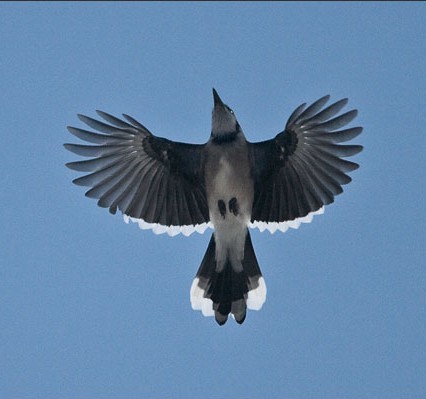
Spring has officially arrived. I don’t need the budding trees or the warmer temperatures to tell me – I can tell just by the chatter of birds that has returned, kicking into high gear as soon as the sky begins to lighten each morning. We have a large tree in our back yard, and it appears to be one of the neighborhood meeting places for local birds of all shapes and sizes. It’s not something I mind; in fact I’m sure I’ve encouraged it by hanging a fairly substantial bird feeder on one of the lower branches of this particular “meeting tree.”

It's spring cleaning time, and while most of us are thinking of packing a way our winter linens and airing out our summer clothes, a historian at the Vatican has decided to drag out another mouldering old bit of cloth to dangle before u

