










By Jay Rosen, New York University


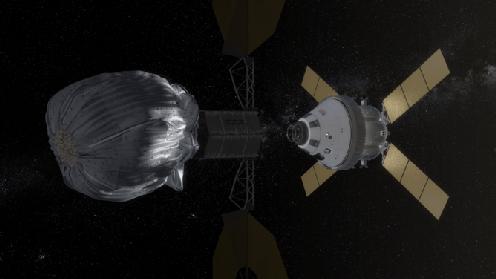
Capturing an asteroid. Credit: NASA

By Monica Grady, The Open University


Shia LaBeouf, Brad Pitt and more less cramped outside their tank in Fury. image by Sony Pictures

By Clifford Williamson, Bath Spa University

The latest corner of World War II to be dramatized for the big screen is small. Cramped, even. In Fury, starring Brad Pitt and Shia leBeouf, we follow the story of five American soldiers, a crew serving in one tank in Germany, 1945.

A few months ago, a Chinese team writing in Nature claimed to have found the cause for why organisms age, but a new group refuted a basic assumption of the Nature article. 

No-till farming is prized by organic and conservation-minded farmers alike because it seeks a chemical-free management practice, avoiding conventional plowing and otherwise disturbing the soil.

It sounds terrific but a new meta-analysis finds it is a lot more limited in value than believed.

As the core principle of conservation agriculture, no-till has been promoted worldwide in an effort to sustainably meet global food demand. Results from 610 peer-reviewed studies say it isn't so. Instead, no-till often leads to yield declines compared to conventional tillage systems.

The Ebola virus problem in West Africa has gotten lots of high-profile media coverage in developed nations - and no lack of reasons for people to clamor for more funding. No less than Dr.

Due to increased awareness of suicide and military life, there has been concern military lifestyle may be causing more suicides. A new study instead finds that new soldiers are twice as likely to have three or more psychological disorders, or comorbidity, prior to enlisting as civilians.

They may regard the military as a solution to their problems. 

Ferns are an old plant species, dinosaurs munched on them over 200 million years ago. If we want to know how to survive against nature's onslaught over the long haul, ferns are as good a place as any to start.

Even recent ones can show us how to evolve and outlast. A group of ferns evolved much more recently, and they did it while colonizing the extreme environment of the high Andes. Their completely new morphology (form and structure) arose and diversified within the last 2 million years. How this group of ferns grew in a unique ecosystem of the Andean mountains was the subject of a new study by Dr. Patricia Sanchez-Baracaldo and Dr. Gavin Thomas.

There is no substitute for a hearing test, especially in an age group that doesn't self-report very well.

Currently, the American Academy of Pediatrics and
the Bright Futures children's health organization
recommends screening adolescents with subjective questions but that does not reliably identify teenagers who are at risk for hearing loss, according to researchers at Penn State College of Medicine. 

"We found that you can't rely on the Bright Futures questions to select out teenagers at high risk for hearing loss who would warrant an objective screen," said Deepa Sekhar, M.D., M.Sc., assistant professor of pediatrics.

Think you're extreme? 12,000 years ago Ice Age Humans lived and worked at an altitude of almost 15,000 feet, high in the Peruvian Andes.

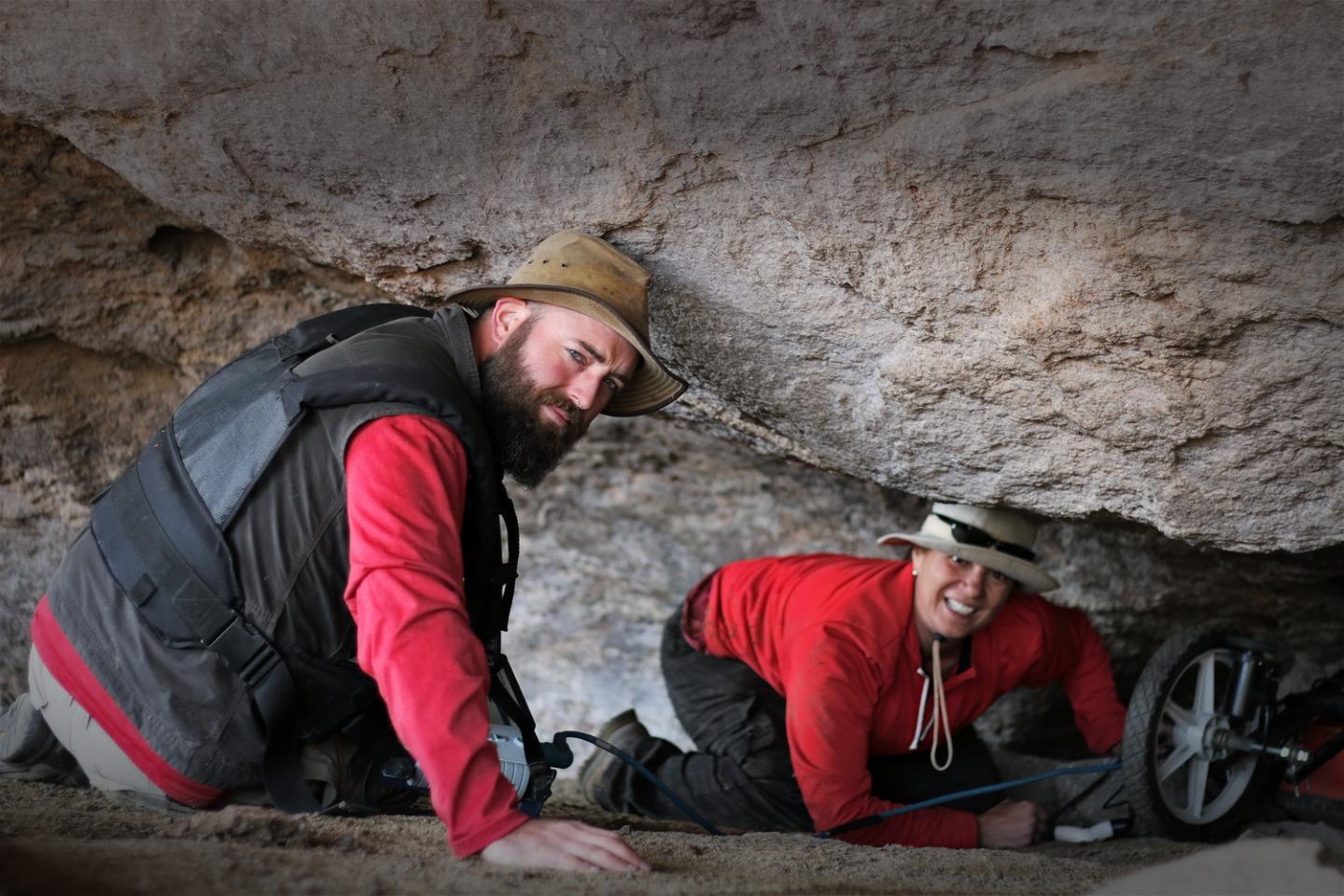
The sites in the Pucuncho Basin, located in the Southern Peruvian Andes, are the highest-altitude Pleistocene archaeological sites found to-date. The primary site, Cuncaicha is a rock shelter at 4,480 meters above sea level, with a stone-tool workshop below it. There is also a Pucuncho workshop site where stone tools were made at 4,355 meters above sea level.

