





Researchers at the University of California, Santa Cruz, have performed atomic spectroscopy with integrated optics on a chip for the first time, guiding a beam of light through a rubidium vapor cell integrated into a semiconductor chip.

Based on the interactions of light and matter, spectroscopy is often used to identify substances by the wavelengths of light they absorb or emit. Conventional systems have many large components, whereas the compact, fully planar device developed at UCSC enables the study of atoms and molecules on a chip-based platform with integrated optics, said Holger Schmidt, associate professor of electrical engineering.

New charcoal and plant microfossil evidence from Mexico’s Central Balsas valley links a pivotal cultural shift, crop domestication in the New World, to local and regional environmental history. Agriculture in the Balsas valley originated and diversified during the warm, wet, postglacial period following the much cooler and drier climate in the final phases of the last ice age.

A significant dry period appears to have occurred at the same time as the major dry episode associated with the collapse of Mayan civilization, Smithsonian researchers and colleagues report.

Designing the first fuel-cell manned intercity aircraft is the goal of a recently launched EU-funded project.

The Environmentally Friendly Inter City Aircraft powered by Fuel Cells (ENFICA-FC) project is receiving €2.9 million from the EU as part of the aeronautics and space priority of the Sixth Framework Programme (FP6).

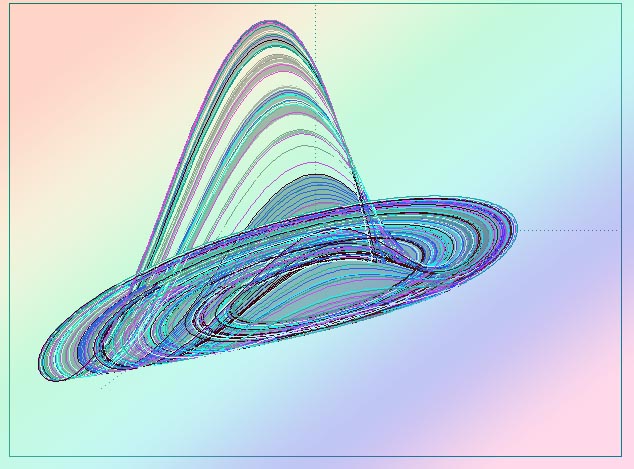
Belgian mathematician hopes to use the science of chaos, the butterfly effect and strange attractors to help build a complete model of climate and resources that will lead to a new approach to sustainable development. Jacques Nihoul of the department of Model Environment at the University of Liège, in Belgium, writing in the inaugural issue of the International Journal of Computing Science and Mathematics published by Inderscience, explains how a new approach to sustainable development and climate change could emerge from his research.


Chaos pattern. Credit: urbanhonking.com

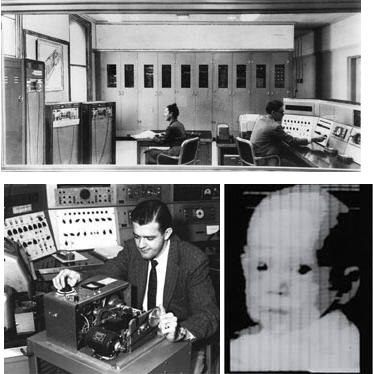
It was a grainy image of a baby—just 5 centimeters by 5 centimeters—but it turned out to be the well from which satellite imaging, CAT scans, bar codes on packaging, desktop publishing, digital photography and a host of other imaging technologies sprang.

Particles of light serving as “quantum keys”—the latest in encryption technology—have been sent over a record-setting 200-kilometer fiber-optic link by researchers from the National Institute of Standards and Technology (NIST), NTT Corp. in Japan, and Stanford University.

The experiment, using mostly standard components and transmitting at telecommunications frequencies, offers an approach for making practical inter-city terrestrial quantum communications networks as well as long-range wireless systems using communication satellites.

Scientists at the University of Liverpool have found that humans’ ability to walk upright developed from ancestors foraging for food in forest tree tops and not from walking on all fours on open land.

It was traditionally thought that humans became upright walkers in a slow process which had its origins in ‘knuckle-walking’ – movement on all fours – just as chimpanzees and gorillas walk today. It was believed that this developed once human ancestors moved out of the forests into the savannahs of East Africa.

A new test for diagnosing Tuberculosis offers a quick and simple alternative to existing three-day methods, according to research published today in the journal Clinical Infectious Diseases.

The study shows that the test, which involves taking three sputum samples from a patient over the course of one day, is just as effective as other more invasive and complicated testing methods, which take three days.

The doctoral thesis Potencial terapéutico de nuevos fármacos antitumorales. Estudio sobre líneas celulares epiteliales (Therapeutic Potential of New Antitumor Drugs. A Study on Epithelial Cell Lines) has allowed for the development of six new drugs to fight colon and breast cancer more effectively than other currently used drugs. The study was conducted at the Department of Human Anatomy and Embryology at the University of Granada by Octavio Caba Pérez, member of the research group "Avances en Biomedicina" (Progress in Biomedicine), under the direction of professors Antonia Aránega, Juan Antonio Marchal and Fernando Rodríguez.

Aspirin didn’t pan out. Neither did two other potential anti-aging agents. But a synthetic derivative of a pungent desert shrub is now a front- runner in ongoing animal experiments to find out if certain chemicals, known to inhibit inflammation, cancer and other destructive processes, can boost the odds of living longer.

University of Michigan scientist Richard A. Miller reports early results from a mouse study his lab and two others are conducting for the National Institute on Aging. The study, now in its fourth year, will test as many as two dozen possible anti-aging agents in animals in the next five years.
