

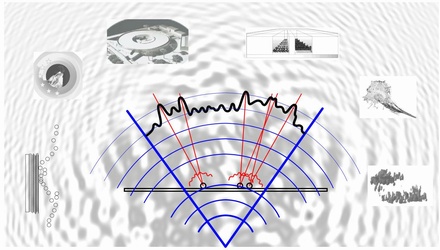


By monitoring changes in vibrations of bridges it is possible to identify hidden cracks and fractures, according to a Queensland University of Technology researcher.

QUT engineering researcher Henry Shih said variations in bridge vibrations of a bridge could be a telling sign of its structural "health".

Breastfeeding and the good fats in Omega-3 fatty acids help new moms fight depression, according to new review.

The review was authored by Kathleen Kendall-Tackett, a health psychologist and researcher at UNH's Crimes against Children Research Center. Kendall-Tackett presents her findings in the article "A New Paradigm for Depression in New Mothers: The Central Role of Inflammation and How Breastfeeding and Anti-Inflammatory Treatments Protect Maternal Mental Health." The full article is available at http://www.internationalbreastfeedingjournal.com/content/2/1/6.

"Depression in new mothers is common in many cultures, affecting anywhere from 10 percent to 20 percent of postpartum women. In some high-risk populations, the percentage can even be as high as 40 percent or 50 percent.

Engineers at Washington University in St. Louis have developed a unique photocatlytic cell that splits water to produce hydrogen and oxygen in water using sunlight and the power of a nanostructured catalyst.

The group is developing novel methodologies for synthesis of nanostructured films with superior opto-electronic properties. One of the methods, which sandwiches three semiconductor films into a compact structure on the nanoscale range, is smaller, more efficient and more stable than present photocatalytic methods which require multiple steps and can take from several hours to a day to complete.

Screens that not only display images but also generate their own power are on the horizon.

One of the new display technologies will be suitable for cellphones, making their batteries last far longer than they do now. The other could lead to selfpowered electronic billboards.

Freeze-dried ice cream looks like the original product, and even tastes pretty good, but "drying" ice cream at room temperature would leave a sour-smelling, sloppy mess. Similarly, diamonds ejected from deep in the Earth can survive the journey intact only if they head toward the surface quickly and under just the right conditions.

Diamonds, found almost exclusively within kimberlite formations, are stable at great depth and at the planet's surface but rapidly turn to graphite under the high temperature/low pressure condi-tions of most eruptions.

Drought tolerance is a critical determinant of tropical plant distributions, researchers working at the Smithsonian Tropical Research Institute in Panama report in the May 3rd issue of Nature. In a novel coupling of experimental measurements and observed plant distributions across a tropical landscape, drought tolerance predicted plant distributions at both local and regional scales. This mechanism to explain a common observation will contribute significantly to models of land use and climate change.

In studies going back to the 1930’s, mice and many other species subsisting on a severely calorie-restricted diet have consistently outlived their well-fed peers by as much as 40 percent. But just how a diet verging on the brink of starvation extends lifespan has remained elusive.

Now, researchers at the Salk Institute for Biological Studies have cracked open the black box of how persistent hunger promotes long life and identified a critical gene that specifically links calorie restriction (CR) to longevity.

Tens of thousands of Americans die each year from secondhand tobacco smoke, according to a 2006 report by the U.S. Surgeon General. While the health risks associated with indoor secondhand smoke are well documented, little research has been done on exposure to toxic tobacco fumes outdoors.

Now, Stanford University researchers have conducted the first in-depth study on how smoking affects air quality at sidewalk cafés, park benches and other outdoor locations. Writing in the May issue of the Journal of the Air and Waste Management Association (JAWMA), the Stanford team concluded that a non-smoker sitting a few feet downwind from a smoldering cigarette is likely to be exposed to substantial levels of contaminated air for brief periods of time.

Scientists have found that sperm from diabetic men have greater levels of DNA damage than sperm from men who do not have the disease. They warn that such DNA damage might affect a man’s fertility.

A Cornell researcher and his wife have conducted the first comprehensive review of later-life diseases that develop in people who were exposed to environmental toxins or drugs either in the womb or as infants. They have found that most of the diseases have two things in common: They involve an imbalanced immune system and exaggerated inflammatory reactions (at the cellular level).

