




Fairness of kidney allocation is essential for public trust.

While the field of transplantation is quite young, substantial advancements and success have led to the current imbalance between the supply of organs and the demand for them. The United Network for Organ Sharing (UNOS) coordinates the nation's transplant system through a point system based primarily on wait time, sensitization and HLA matching.

Eating low-calorie soup before a meal can help cut back on how much food and calories you eat at the meal, a new Penn State study shows. Results show that when participants in the study ate a first course of soup before a lunch entree, they reduced their total calorie intake at lunch (soup + entrée) by 20 percent, compared to when they did not eat soup.

Researchers in Italy have created an ultrashort light pulse—a single isolated burst of extreme-ultraviolet light that lasts for only 130 attoseconds (billionths of a billionth of a second).

Their achievement currently represents the shortest artificial light pulse that has been reported in a refereed journal. Shining this ultrashort light pulse on atoms and molecules can reveal new details of their inner workings—providing benefits to fundamental science as well as potential industrial applications such as better controlling chemical reactions.

Researchers at Arizona State University's Polytechnic campus and the Military Amputee Research Program at Walter Reed Army Medical Center are teaming up to create the next generation of powered prosthetic devices based on lightweight energy storing springs.

The device, nicknamed SPARKy, short for Spring Ankle with Regenerative Kinetics, will be a first-of-its-kind smart, active and energy-storing transtibial (below-the-knee) prosthesis.

When four forensic pathologists tell physiologists about the deaths that puzzle them, they will do so with the hope of sparking laboratory research to help define the cause of these deaths and prevent more of them.

The four pathologists, all medical examiners and professors, will present their insights, as well as uncertainties, about deaths that happen as struggling individuals are arrested, as infants sleep in their cribs, and following years of drug abuse. By sharing these experiences with physiologists, the medical examiners hope to spur research to clarify how these deaths occur, how to identify them during autopsy, and how to prevent them.

Medicinal plants are an integral part of African culture, one of the oldest and most diverse in the world. In South Africa, 21st century drug therapy is used side-by-side with traditional African medicines to heal the sick. While plants have been used in African medicine to treat fever, asthma, constipation, esophageal cancer and hypertension, scientific analyses of the purported benefits of many plants is still scant. A team of researchers has now examined the effectiveness of 16 plants growing in the country’s Kwa-Zulu Natal region and concluded that eight plant extracts may hold value for treating high blood pressure (hypertension).

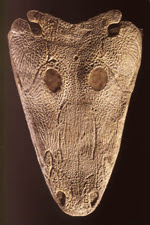
The beautiful thing about the Antarctic is that it is one of Earth’s last unexplored frontiers. New information about climate, geology, and paleontology is discovered regularly and today, the Journal of Vertebrate Paleontology announced the discovery of a fossilised amphibian which lived more than 245 million years ago in the Triassic of Antarctica. Its presence suggests that the climate at the time was mild enough to allow cold-blooded creatures to live near Pangea’s southern margin, at least seasonally.

A compound derived from green tea greatly diminished the neurotoxicity of proteins secreted by the human immunodeficiency virus, suggesting a new approach to the prevention and treatment of HIV-associated dementia, also known as AIDS dementia complex. The disorder is the most severe form of HIV-related neuropsychiatric impairment.

The first clinical trial to test a revolutionary treatment for blindness in children has been announced by researchers at UCL (University College London). The trial, funded by the Department of Health, is the first of its kind and could have a significant impact on future treatments for eye disease.

Aided by new observations from the Coupled Boundary Layer Air-Sea Transfer (CBLAST) hurricane field program, scientists at the Rosenstiel School of Marine and Atmospheric Science have helped to develop and test a new, high-resolution computer model to better understand how air-sea interactions directly affect hurricane intensity, a factor not yet possible in the current operational forecast models.



