





A 17-year University of Utah study of ground movements shows that the power of the huge volcanic hotspot beneath Yellowstone National Park is much greater than previously thought during times when the giant volcano is slumbering.


Wyoming's Teton Range looms behind a Global Positioning System (GPS) antenna in Jackson Hole that was part of a 17-year University of Utah study in which GPS devices were used to measure gradual movements of Earth's crust in Grand Teton National Park, Yellowstone National Park and surrounding areas.

Researchers at Yale have identified multiple pathogenic "alien islands" in the genome of the A. baumannii, bacteria that has been responsible for new and highly drug-resistant infections in combat troops in the Middle East, according to a report in the March 1 issue of Genes and Development.

"Drug resistant bacterial infections are a rapidly growing problem in hospital settings, and now in difficult conditions of combat. We targeted A. baumannii as a growing threat for our troops in Iraq," said s principal investigator Michael Snyder, the Lewis B Cullman Professor of Molecular Cellular & Developmental Biology.

During Rosetta's recent Mars swingby, the OSIRIS cameras captured a series of images of Mars and of Phobos transiting Mars' disk. The OSIRIS team have produced a cool animated sequence and a 3D view of the Red Planet.

The animated sequences (one faster, one slower) show the shadow of Phobos transiting Mars' disk on 24 February; the images were captured around 22:08 CET, a few hours prior to Rosetta's successful Mars swingby on 25 February.


The animated sequence shows the shadow of Phobos transiting Mars' disk on 24 February; the sequence was captured around 22:08 CET, a few hours prior to Rosetta's successful Mars swingby on 25 February. The movie was produced by combining a series of separate images.

Researchers have used the world's thinnest material to create the world's smallest transistor – a breakthrough that could spark the development of a new type of super-fast computer chip.

Professor Andre Geim and Dr Kostya Novoselov from The School of Physics and Astronomy at The University of Manchester, reveal details of transistors that are only one atom thick and less than 50 atoms wide, in the March issue of Nature Materials.

They believe this innovation will allow the rapid miniaturisation of electronics to continue when the current silicon-based technology runs out of steam.

In recent decades, manufacturers have crammed more and more components onto integrated circuits.

Among the central mysteries of neurobiology is what properties of the young brain enable it to so adeptly wire itself to adapt to experience—a quality known as plasticity. The extraordinary plasticity of the young brain occurs only during a narrow window of time known as the critical period.

Scientists of the US CMS collaboration joined colleagues around the world in announcing today (February 28) that the heaviest piece of the Compact Muon Solenoid particle detector has begun the momentous journey into its experimental cavern 100 meters underground. A huge gantry crane is slowly lowering the CMS detector's preassembled central section into place in the Large Hadron Collider accelerator at CERN in Geneva, Switzerland. At 1,950 metric tons, the section, which contains the detector's solenoid magnet, weighs as much as five jumbo jets and is 16 meters tall, 17 meters wide and 13 meters long.

Atmospheric scientists have uncovered fresh evidence to support the hotly debated theory that global warming has contributed to the emergence of stronger hurricanes in the Atlantic Ocean.

The unsettling trend is confined to the Atlantic, however, and does not hold up in any of the world's other oceans, researchers have also found.

Scientists at the University of Wisconsin-Madison and the National Climatic Data Center (NCDC) of the National Oceanic and Atmospheric Administration reported the finding in the journal Geophysical Research Letters. The work should help resolve some of the controversy that has swirled around two prominent studies that drew connections last year between global warming and the onset of increasingly intense hurricanes.

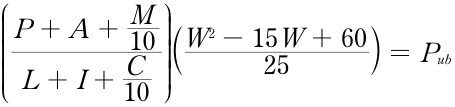
In this equation, it's probably pretty obvious what you should do. But is your life ruled by should? Do you gimp through your week yessir-ing and nomam-ing and cowtowing to avoid punishment? Okay, so do most of us—but here's your chance to break the mold and stike a blow for the proletariat (viva la revolucion...). And at least if you get caught blowing off the rest of the day in favor of a four-hour, three-martini, expense account lunch at the pub, you can blame the numbers.


Should I order a sandwich at my desk or head to the bar on the corner for a blowout lunch?

Lunch at Pub Equation

People who see the world as essentially fair can just maintain this perception through a diminished sense of moral outrage, according to a study by researchers in New York University's Department of Psychology. The findings appear in the March issue of the journal Psychological Science, which is published by the Association for Psychological Science.

Psychologists have long studied system-justification theory, which posits that people adopt belief systems that justify existing political, economic, and social situations or inequities in order to make themselves feel better about the status quo. Moreover, in order to maintain their perceptions of the world as just, people resist changes that would increase the overall amount of fairness and equality in the system.

The function of an enzyme in the brain – strongly linked to a number of major brain diseases such as Alzheimer's, schizophrenia and bi-polar disorder – has been identified for the first time by researchers at the University of Bristol, UK.

These findings, published today in Neuron, will help in the understanding of how memories are laid down and what goes wrong in these disorders.

The research showed how controlling the activity of glycogen synthase kinase-3 (GSK3) might prevent a memory being erased by improving the strength of connections between neurons in the brain, thus allowing better consolidation of new information.

Professor Collingridge from the University of Bristol said: "While GSK3 has previously been implicated in major neurological disorders, until now its rol


