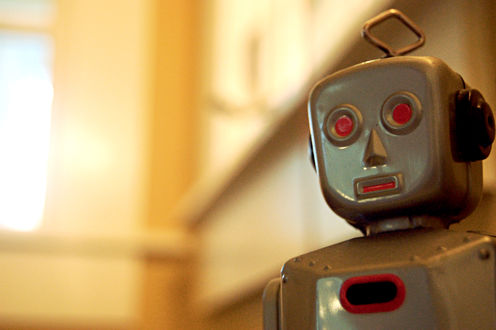

When we talk about artificial intelligence (AI) – which we have done lot recently, including my outline on The Conversation of liability and regulation issues – what do we actually mean?

AI experts and philosophers are beavering away on the issue. But having a usable definition of AI – and soon – is vital for regulation and governance because laws and policies simply will not operate without one.

We’ve been saying for years that the anti-GMO folks haven’t a scientific leg to st

Behind the success of the new wave of location based mobile apps taking hold around the world is digital mapping.
Location data is core to popular ride-sharing services such as Uber and Lyft, but also to companies such as Amazon or Domino’s Pizza, which are testing drones for faster deliveries.

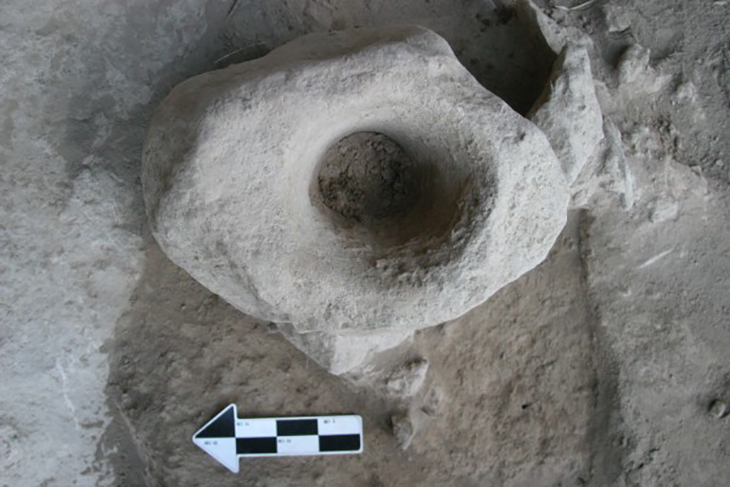
By Joel Shurkin, Inside Science - Once upon a time, there lived a people we call the Natufians. They were among the first to quit their nomadic ways and settle on land where they grew crops, lived in complex settlements, put up stone buildings, domesticated dogs, and might have invented cemeteries before their society disappeared into the mists of history.

Israeli researchers now think they also may have developed a unique telegraph system to let everyone know when a catered funeral was underway and were among the first people to put up grave markers.

Both daily and less frequent use of marijuana among college students has risen sharply, to the highest prevalence since the Monitoring The Future study began.

In a silver lining aspect, cigarette smoking continues to decline - marijuana use surpassed daily cigarette smoking in 2014.  Smoking tobacco using a hookah (a type of water pipe) in the prior 12 months rose substantially among college students, from 26 percent in 2013 to 33 percent in 2014. 

The most recent Australian suicide statistics from 2013 show that, out of the whole population, men aged 85 years and over have the highest suicide rates. While the attention these figures have garnered is a positive sign, this is hardly a new phenomenon.

Over 38 men in every 100,000 of that age group die by suicide, which is more than double the rate among men under 35. The rate is around seven times higher than in women of all ages.

Scientists have pinpointed a population of neurons in the brain that influences whether one drink leads to two, which could ultimately lead to a cure for alcoholism and other addictions.

A new study finds that alcohol consumption alters the structure and function of neurons in the dorsomedial striatum, a part of the brain known to be important in goal-driven behaviors. The findings could be an important step toward creation of a drug to combat alcoholism. 

"Alcoholism is a very common disease," said Jun Wang, M.D., Ph.D., the lead author on the paper and an assistant professor in the Department of Neuroscience and Experimental Therapeutics at the Texas A&M College of Medicine, "but the mechanism is not understood very well."

The first really exciting thing from Run 2 at the CERN Large Hadron Collider (at least for me) has finally appeared. A 2.9 TeV dielectron event was recorded by CMS on August 22. At this mass a new Z' boson is not excluded by Run 1 searches.... And in the whole Run 1 data the highest-mass dielectron event collected by CMS was only 1.8 TeV. So by raising the centre-of-mass energy by 60% we collect a 60%-higher-mass event, but with 0.5% of the collisions. It is nice to think that the event might really be the first hint of a new resonance !
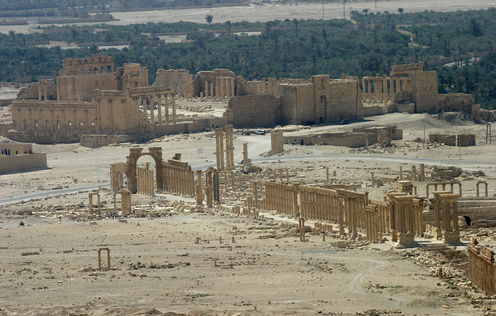
There has been much public condemnation of the destruction of the Temple of Bel at Palmyra by Islamic State (IS), as well as the wider devastation being inflicted on the cultural heritage of Syria and Iraq by both IS and its opponents in Syria’s civil war.
Both Syria and Iraq are party to all relevant treaties protecting cultural heritage, but this has not stopped the rampant violations. This implies that the problem doesn’t lie with inadequate laws, but rather with compliance and enforcement.

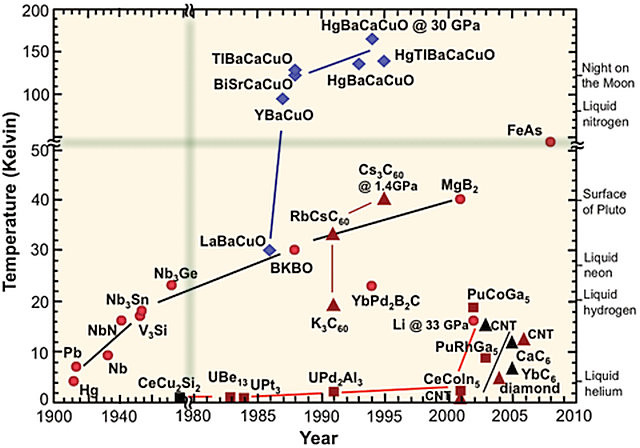
Back around 1960, at school I enjoyed a laboratory lecture on liquid nitrogen, watching a deep frozen squash ball being shattered at a temperature well below that at which it turns from a rubber into a glass, and then seeing a nail being driven into a block of wood with a hammer whose head was made of frozen mercury.  The repeated impacts left an impression of the nail head in the soft metal.