



The latest national survey of 100% biodiesel (B100) "blend stock" samples by the U.S. Department of Energy's National Renewable Energy Laboratory (NREL) found that 95% of the samples from 2011-12 met ASTM International fuel quality specifications, a big improvement over 2007 when less than half of the samples met quality specifications. 

The ASTM standards serve as guidelines for industry and are designed to ensure quality at the pump for consumers, along with reliable operation of the nation's vehicles powered by biodiesel blends.  

One group writing in the European Heart Journal found that digoxin increases mortality in patients with atrial fibrillation (AF). Another group just found that it did not and published in the same journal.

They used the same data.

A new type of exceptionally powerful and long-lived cosmic explosion, powerful blasts of high energy gamma-rays, known as gamma-ray bursts, that lasts hours rather than the more common minute, may mean a new hypothesis; that they arise in the violent death throes of a supergiant star. 

The first example astronomers found was on December 25th, 2010, but it lacked a measurement of distance and so remained shrouded in mystery, with two competing ideas put forward for its origin. The first model suggested it was down to an asteroid, shredded by the gravity of a dense neutron star in our own galaxy, the second that it was a supernova in a galaxy 3.5 billion light years away, or in the more common language of astronomers at a redshift of 0.33. 

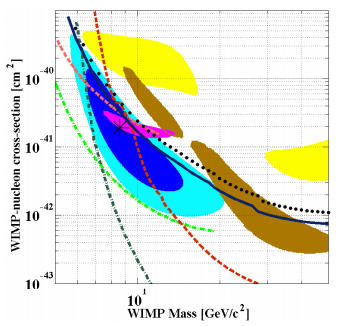
Cryogenic Dark Matter Search (CDMS) collaborators are reporting what could be a weakly interacting massive particle (WIMP) signal at the 3-sigma level. In common parlance, that is 99.7 confidence - which sounds high.  But to physicists it really means they have 3 bumps in their data that could be a WIMP, which means it might be a hint of dark matter.

That sounds like a lot of qualifiers but particle physics is conservative that way. Data means what it means and not much more.  But certainly not less, and that is pretty important too.
There is no question that Darwin's tremendous insight into the mechanisms by which evolution occurred was one of the singularly most significant events in biology.  Similarly with the discovery of DNA and genetics, the processes by which organisms were formed received a similar boost.  So the purpose of this article is not to argue that Darwin or genetics is wrong.  Instead, the point is to suggest that it is necessarily incomplete.  In the same way that Darwin's work was incomplete because he lacked the necessary information about genetics.  The modern evolutionary synthesis is also incomplete, because it fails to extend the issues of natural selection in an organism's development to their co-evolutionary pa

President Obama’s

 Average sea level changes have averaged about 3 millimeters annually in recent years, leading the 2007 Intergovernmental Panel on Climate Change report to estimate that sea levels could rise between 18 and 59 centimeters (7 to 23 inches) this century.  

The potential impact of rising oceans on populated areas is one of the most pressing concerns. Many of the world's major cities, such as New York, Miami, Amsterdam, Mumbai and Tokyo, are located in low-lying areas near the water.

A technique reported in Nature Biotechnology
directly converts skin cells to the type of brain cells destroyed in patients with multiple sclerosis, cerebral palsy and other so-called myelin disorders.  

Myelinating cells provide a vital sheath of insulation that protects neurons and enables the delivery of brain impulses to the rest of the body. In patients with multiple sclerosis (MS), cerebral palsy (CP), and rare genetic disorders called leukodystrophies, myelinating cells are destroyed and cannot be replaced. The new technique involves directly converting fibroblasts - an abundant structural cell present in the skin and most organs - into oligodendrocytes, the type of cell responsible for myelinating the neurons of the brain.


Ants and Earthquakes

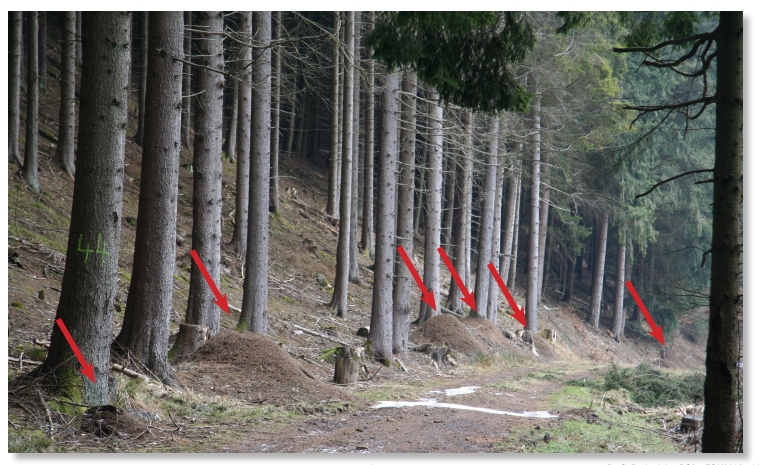
A recent paper linking red wood ant behaviour to earthquakes has been widely reported but not widely discussed.  Such discussion and comment as there has been in the media has focused on the mechanism/s by which these ants might predict earthquakes.  I believe that there is an important question to be addressed which may help explain the evolution of quake-detection mechanisms.  Given that these ants seem to prefer to build their colonies along active faults, I suggest that the question to be addressed is: "why would any creature build its home on an active fault line?"

