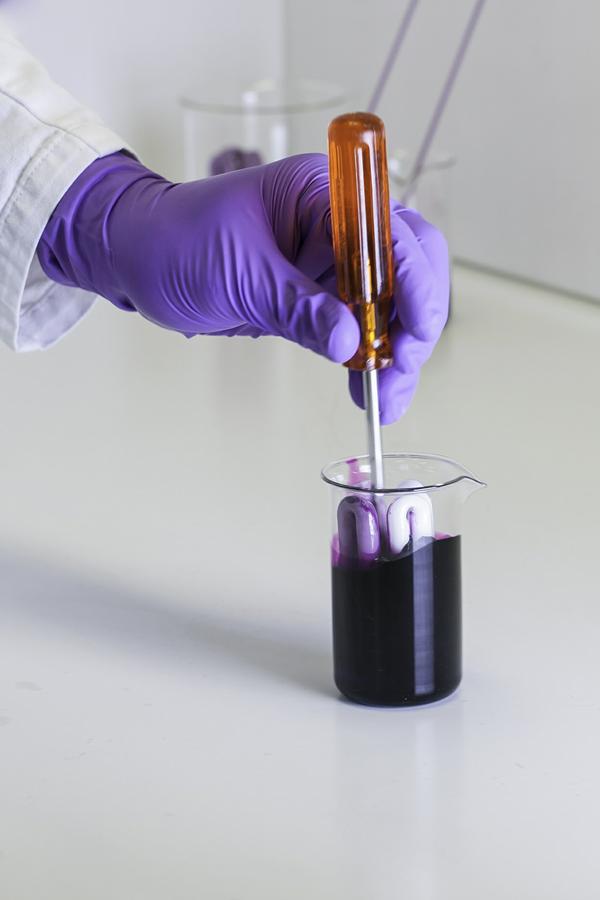



Compact fluorescent bulbs save energy but they also contain mercury, a toxic metal.

While environmentalists have promoted them as safe, and the US government has given them a de factor mandate and subsidy by banning incandescent bulbs, there are still concerns among the public about the risks of having hazardous materials in their homes.

Mercury lamps, on the other hand, have been around since 1860. They were rarely used in the home, they are a big part of the reason why incandescent bulbs were invented in the first place, because they made human skin look 'green' and the risks in an enclosed space were too high but are more common in street lamps, because they have long life.

Babies delivered at home by midwives had a roughly four times higher risk of neonatal deaths than babies delivered in hospitals, also by midwives. 

The paper is not out to indict the midwife delivery fad but suggests they aren't going to be qualified to deal with problems the way a hospital setting and doctors would be.
The authors link the increased neonatal mortality risk with the location of a planned birth, rather than the credentials of the person delivering the baby. 

Though you may have read otherwise, numerous studies from China, Spain and the United States have have found that the biodiversity of insects and related arthropods is not reduced by genetically modified (GM) rice, cotton, or maize fields.

A new study from South Africa published in Environmental Entomology shows similar results, that biodiversity is the same as that among conventional crops.

A total of 8,771 arthropod individuals, comprising 288 morphospecies, were collected from 480 plants sampled from Bt maize and non-Bt maize fields over a two-year period. The researchers found no significant differences in abundance or diversity in detritivores, herbivores, predators, or parasitoids.

I used to have the “meta” itch, but I learned to live with it and stop scratching it. It only irritates anyway, without doing much good work.

Let me explain.

If you are a regular (or even occasional) reader of Rationally Speaking you know that we often publish essays that have to do with ethics and moral philosophy. That's because ethics is one of those things that always lurks in the background (and sometimes the foreground) of our lives, whether we reflect on it or not. And I of course think it is better to reflect on it, at least from time to time.
Middle-aged women the world over are now...chuckling.

At least I imagine they are, given the news this week that testosterone supplementation may increase the risk of heart disease.

If you already have heart disease.

Or if you’re over 65.

Five Empa laboratories were involved in the EU «NanoHouse» project, along with four other European research institutes and four industrial partners. The aim of the project was to investigate the opportunities and risks presented by the nanomaterials used in the surface coatings applied to building façades. For the first time not only were freshly manufactured products studied to see if they set free nanoparticles, but also aged samples.

Increased awareness and a much broader range of conditions being part of the autism 'spectrum' has been good for therapists but is placing huge demands on health care systems and health care professionals.

A review published in the Canadian Medical Association Journal (CMAJ) seeks to help physicians provide appropriate medical support to families of children who may have an autism spectrum disorder (ASD), everything from detection to treatment.

ASD includes a wide variety of traits that range from mild to severe and is estimated to affect about 1% of the population.

The most comprehensive genetic study to date of the blood cancer multiple myeloma has revealed that the genetic landscape of the disease may be more complicated than previously thought. Through results published in Cancer Cell today, a team of Broad researchers has shown that an individual patient's tumor can harbor populations of cancer cells equipped with different mutations. These findings could have therapeutic implications for patients in the future.

While the ability of human embryonic stem cells (hESCs) to become any type of mature cell, from neuron to heart to skin and bone, is indisputably crucial to human development, no less important is the mechanism needed to maintain hESCs in their pluripotent state until such change is required.

In a paper published in this week's Online Early Edition of PNAS, researchers from the University of California, San Diego School of Medicine identify a key gene receptor and signaling pathway essential to doing just that – maintaining hESCs in an undifferentiated state.

RIVERSIDE, Calif. — Insects represent remarkable diversity and have adapted to all sorts of ecological nooks and crannies. For example, they have taste receptors — novel proteins — with which they taste chemicals and make important choices about not only foods but also mates and where to deposit their eggs. These receptors are widely seen as being at the leading edge of behavioral adaptations.

Now, using the common fruit fly, researchers at the University of California, Riverside have performed a study that describes just how the fly's taste receptors detect sweet compounds.


