




Two of the world's most devastating plagues, the Justinian Plague and the famous Black Death hundreds of years later, were each responsible for killing as many as half the people in Europe.

A new study finds that they were caused by distinct strains of the same pathogen - one that faded out on its own, but the other spreading worldwide and then re-emerging in the late 1800s.  A form of that plague still kills thousands every year and these findings suggest a new strain of plague could emerge again in humans in the future.

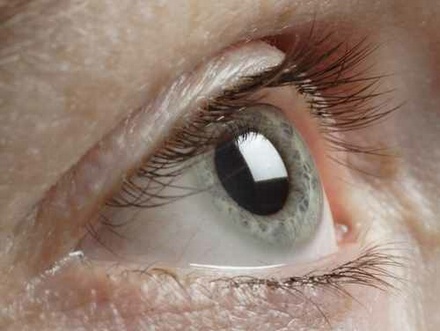
When we open our eyes, visual information floods the brain and it interprets what we're seeing. Researchers recently non-invasively mapped this flow of information in the human brain by combining two existing technologies, which allowed them to identify both the location and timing of human brain activity.

They scanned individuals' brains as they looked at different images and were able to pinpoint, to the millisecond, when the brain recognizes and categorizes an object, and where these processes occur. 

When and where

If you care about what is in your food, you have no greater sympathetic intellect than me.

But if you are an anti-science activist, you may not understand the distinction between what is in your food and what it simply is - and there we part company. A genetic modification (GMO) is your food, for example, it is no different than any other food from a health perspective. Cataloging the numerous ways agriculture has genetically engineered food for as long as food has been grown is outside the scope of this piece, but GMOs don't bother me and that science shouldn't bother you either. (1) 

Backboned animals, at least the ones with jaws, have four fins or limbs, one pair in front and one pair behind.

Thanks to that random prankster known as evolution, these have been modified into a marvelous variety of fins, legs, arms, flippers, and wings. But how did our earliest ancestors settle into such a consistent arrangement of two pairs of appendages?

It's because we have a belly say theoretical biologists (yes, that's a real thing) at the University of Vienna and the Konrad Lorenz Institute for Evolution and Cognition Research. 

Can a big name lead to a boost, even for low-profile work?

Indeed it can, according to an analysis which found that scientific papers written by well-known scholars get more attention than they otherwise would receive because of their authors’ high profiles - but there are some subtle twists in how this happens.
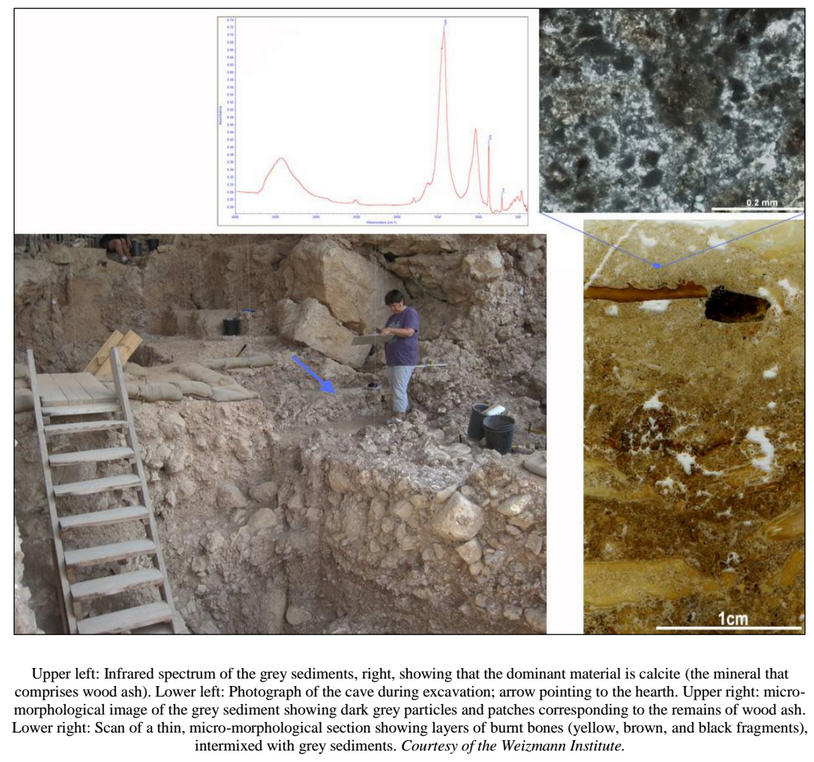
It's believed that humans discovered fire over a million years ago but when it became something controlled and used for daily needs is unknown.

Fire is central to the rise of human culture and a discovery by archeologists at Qesem Cave, a site near present-day Rosh Ha’ayin in the Central District of Israel, has pushed the date for  unequivocal repeated fire building over a continuous period back a little farther - back to around 300,000 years ago.

In a way, you could be walking on water right now.

Water is carried to the mantle by deep sea fault zones which penetrate the oceanic plate as it bends into the subduction zone. Subduction, where an oceanic tectonic plate is forced beneath another plate, causes large earthquakes such as the recent Tohoku earthquake, as well as many earthquakes that occur hundreds of kilometers below the Earth's surface.

Over the age of the Earth, the Japan subduction zone alone could transport the equivalent of up to three and a half times the water of all the Earth's oceans to its mantle, according to a new paper which shows that deep sea fault zones could transport much larger amounts of water from the Earth's oceans to the upper mantle than previously thought. 

Around 25.8 million Americans have diabetes and up to 79 million may be at risk for for it.

A paper in the European Journal of General Practice
 says that a simple blood test reveals an individual's risk of developing type-2 diabetes before they develop either condition — far earlier than previously believed.

In healthy people, glucose is absorbed from the blood for use by various tissues. But the cells of people with type-2 diabetes are resistant to insulin, which is produced by the pancreas and is central to regulating carbohydrate and fat metabolism in the body. These individuals have higher-than-normal blood glucose levels. People with a "prediabetes" risk of getting diabetes have blood glucose levels somewhere between normal and diabetic. 

A new study has found that  a therapeutic music process that includes writing song lyrics and producing videos
helps adolescents and young adults undergoing cancer treatment gain coping skills and resilience-related outcomes.

Children suffer from the consequences of maternal drug exposure during pregnancy and Cannabis is one of the most frequently used substances.

A new study was done using mice and human brain tissue to decipher the molecular basis of how the major psychoactive component from Cannabis called delta-9-tetrahydrocannabinol or THC affects brain development of the unborn fetus.


