
I feel stuck, stuck in the continued reflection of what DSM labels mean to individuals and how they conceive their identities. Perhaps this is because so much of what I read on the internet in our online community is about identity and labels. It seems many of us are focused on what it means to be autistic and who controls the right to label and define.

Mountain glaciers respond to climate change by rapidly advancing or receding as global temperatures have spiked upward and downward numerous times throughout geological history. Those changes in glacier extent control hydrology, sediment transport, and deposition in rivers downstream. 

The sedimentary record in glaciated catchments therefore is an important archive with that can help unravel past climate changes but, unlike rivers, whose flow is controlled entirely by land surface topography, glaciers are able to flow uphill and across ridgelines - a process called "transfluence." Glacier advance and recession can result in drainage capture by transfluent ice flow, and so change catchment drainage areas and hydrological budgets. 

How some dahlias, white, yellow, red or purple, get their color is well known, but the  molecular mechanism behind the black dahlia has been a mystery. A new study shows that the distinctive black-red coloring is based on an increased accumulation of anthocyanins as a result of drastically reduced concentrations of flavones.

Dahlia variabilis hort. is a popular garden flower. Continuous dahlia breeding worldwide has led to the availability of a huge number of cultivars, 20,000 varieties, many of them showing red hues. However, black hues of dahlia flowers occur rarely, in comparison.

Want to be more creative? No problem, just take a ball and squeeze it (but only in your left hand, otherwise the consequences are as yet unknown).
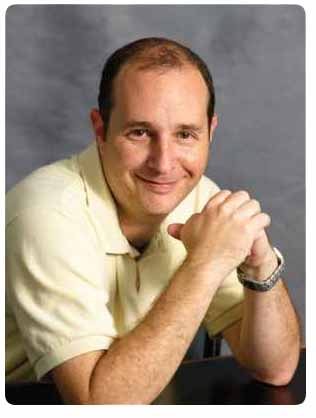
Dr. Abraham Goldstein (pictured) along with colleagues at the Brain Research Center of Bar-Ilan University, Israel, published their finding in the journal Psychonomic Bulletin&Review.

Some people have a distinct, disabling sleep disorder called "primary hypersomnia" - they regularly sleep more than 70 hours per week and have difficulties awakening.

Even when awake, they still have reaction times comparable to someone who has been awake all night. Their sleepiness often interferes with work or school attendance, and conventional treatments such as stimulants bring little relief.

A universal approach to helping people who witnessed or experience genocide may be misguided, says an anthropologist.

The experience of genocide as transmitted trauma may not be universal but in the fields of human rights and memory studies, giving testimony about one's personal experience of genocide is believed to be both a moral duty and a psychological imperative for the wellbeing of the individual and the persecuted group to which they belong. The coping strategies for victims of genocide tend to be uniform: tell your story and do not let the violence you suffered be forgotten. What about descendants?

Einstein infamously said, and he said so many times, that god does not play dice.  He said this in order to refute indeterminism, and therefore, we cannot say that he was correct:  The meaning he intended to communicate was probably wrong (depending on your definition of “god”).  However, the most relevant meaning of his statement is self-evidently true:  Randomness (indeterminism) is not satisfyingly explained by merely postulating some more mystical randomness (god’s dice).

Bones are resilient and heal well after most fractures but in cases of traumatic injury, where large pieces of bone are missing, healing is much more difficult and sometimes impossible.

"Large segmental defects" are a major clinical problem,  especially among the military in places like Afghanistan, and orthopedic surgeons struggle to treat them but new research results confirm that the bone healing process of large segmental defects is sensitive to its mechanical environment and suggests that "reverse dynamization," a straightforward and inexpensive process, could help speed healing of these traumatic injuries.

Studying the genetic variability of endangered species will be necessary for species conservation and monitoring but endangered species are difficult to observe and sample and typically have very limited genetic diversity.

 A research team has taken advantage of DNA sequencing methodology developed by Floragenex to identify the genetic markers for the Bornean elephant, an endangered species, using blood from very few animals. The results showed that Bornean elephants have very low genetic variability that can impact on their survival to a threatened habitat, but that variable genetic markers can still be identified. The study opens new avenues for the conservation of other endangered species.

An enzyme used in nature can make powerful chemicals as diverse as catnip and a cancer drug, vinblastine, which opens up the prospect of producing these chemicals cheaply and efficiently.