CD-adapco has released the STAR-CCM + Battery Simulation Module, designed to simulate spirally wound lithium-ion battery cells, which could help the automotive and battery industries more quickly design and develop advanced electric drive vehicle power sources.
Being able to print electronic equipment has led to a cost-effective device that could change the way we interact with everyday objects - namely by using a phone's emitted radio waves for wireless power.
Can't tell a $4 bottle of wine from a $40 one? Neither can the best sommeliers in the world. But in the future you might at least seem like an expert, thanks to the power of semantic Web technology.
Deborah McGuinness, professor at Rensselaer Polytechnic Institute, has been developing applications for tech-savvy wine connoisseurs since her days as a graduate student in the 1980s, before what we now know as the World Wide Web had even been envisioned. We must assume she had a wine lovers BBS.
Excuse my use of the personal pronoun in this short article, but I am writing to get input as much as I am to simply observe a phenomenon.
I am increasingly drawn to the connection between bench science and the companies that provide them with their tools - from commercial assays, probes, and imaging chambers to engineered animals and so-called "experiment in a box" products.
As a journalist I am drawn to the subject for many reasons: it is an industry that is almost completely uncovered and one that supports, via advertisements and sponsorships, a growing number of science magazines and science venues.
And there seem to be a growing number of 'artifactual' findings due to reliance on them.
Dark matter, up to 25 percent of the universe, hasn't actually been found. It is a hypothesis, though not an unreasonable one, given that something must create a gravitational force.
There are calls in some quarters that we need to be more like people in the past; war, pestilence, disease, early death, it's all good as long as we use no pesticides.
And clear cutting forests is what ancient man did too.
During the Neolithic Age, 10,000 B.C., early man changed from being hunter-gatherers to farmers - ancient scientists told that the food supply was running low and listening to calls for mitigation and rationing instead invented domesticated livestock and agriculture. As a result, we got larger, permanent settlements with a variety of domesticated animals and plant life. and that transition brought about significant changes in terms of culture, economics, architecture, etc,
Affinium Pharmaceuticals announced today that full recruitment has been achieved in its multi-center Phase 2 clinical trial evaluating oral AFN-1252 in acute bacterial skin&skin structure infections ("ABSSSI"). This Phase 2 trial is the first human efficacy study conducted with a new class of antibiotics designed to specifically inhibit staphylococcal fatty acid biosynthesis via a new drug target, the fatty acid synthase II (FASII) system. Results expected in late 2012 will represent a significant proof-of-concept milestone for this unique, Staphylococcus-specific antibiotic, AFN-1252.
In the last year, I've had the occasion to review several books that deal with the unconscious mind. Each author has had an interesting take on the same material, and it's been illuminating to see how writers with different areas of expertise handle the unconscious mind and render the research readable for a popular audience.
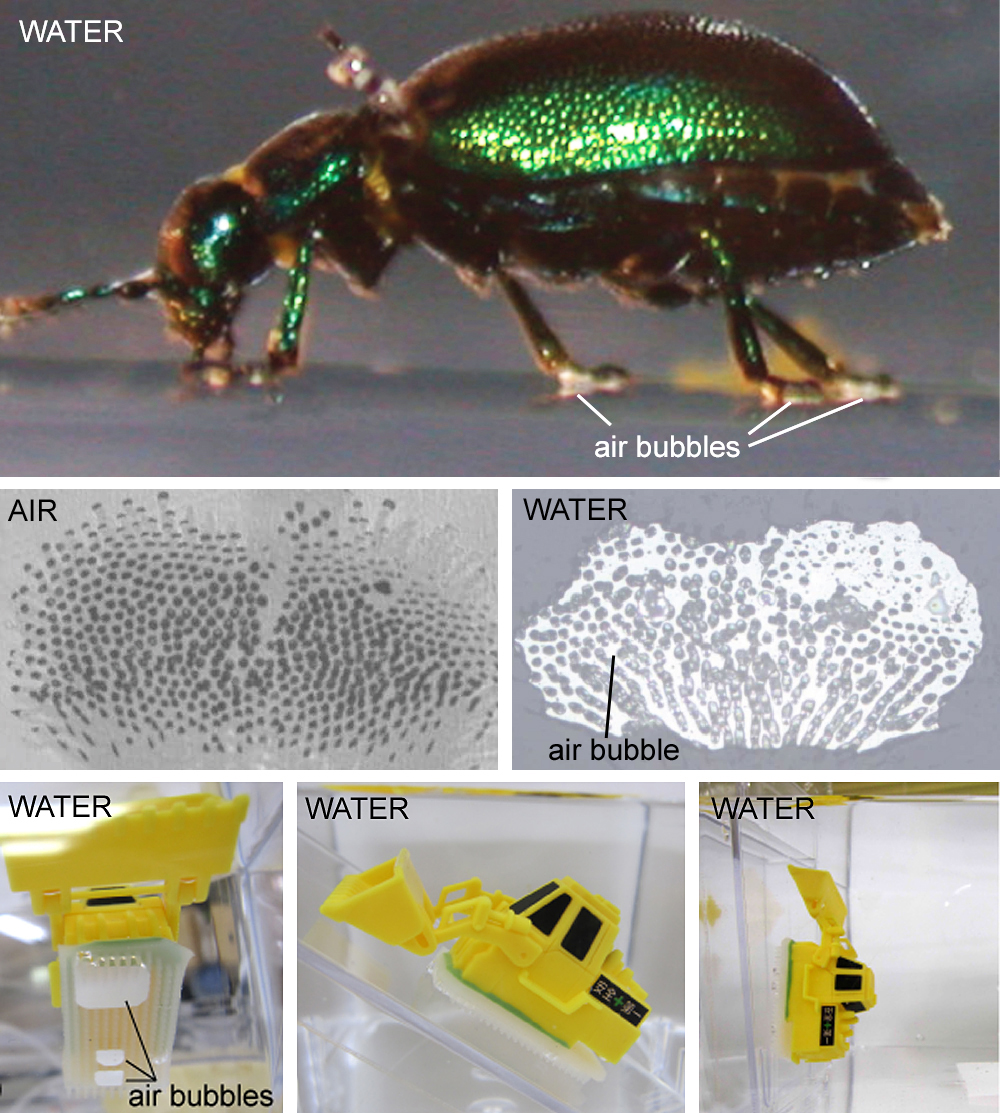
Everyone knows insects have adhesion on dry surfaces - the liquid surface tension between air, liquids and solids known as the capillary force. In order to stick to dry surfaces insects use capillary forces with the aid of their oil-covered adhesive setae. The ability to stay on slippery plants after a rain is a bigger mystery, though.
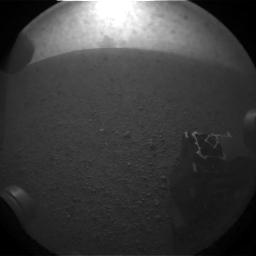
The landing of a cute robot on Mars really resonated with American popular culture this past weekend; and so the first few images Curiosity snapped have caught fire as well, including a blotch that was no longer there in later pictures.
Curiosity landed at 10:32 p.m. Aug. 5 PDT near the foot of a mountain three miles tall inside Gale Crater, which is 96 miles in diameter. Curiosity is the largest mission ever sent to another planet. Its 9 month, 350 million mile journey ended with 'seven minutes of terror' and no one knew precisely where it would end up or when it would get down to business.
200 milliseconds after the HazCam shutter opened it caught a hazy shimmer in the distance.