California had the highest number of cases of whooping cough (pertussis) in 60 years, despite the fact that it has a readily available vaccine. A new study in The Journal of Pediatrics describes that 2010 whooping cough epidemic and details strategies to decrease the incidence of this infection.
Some science education would be a good place to start. California has a strong anti-vaccine mentality, especially in coastal regions, and results showed much higher incidents of Whooping Cough in those areas, despite those being high income, well-educated communities.
Global emissions of carbon dioxide (CO2), considered the main cause of global warming, increased by 3% last year, reaching an all-time high of 34 billion tons in 2011.
We
live in times of extraordinary discovery. Exoplanets appear to be quite common
in our galaxy. NASA’s Kepler Telescope has identified over 2,000 planetary
candidates orbiting other stars. And yet the universe appears to be silent – at
least when it comes to any detectable signs of alien civilizations, either at
present in our galaxy or their remnants from the last couple of billion
years.
Redheads are dangerous to human men but in wild boars, red hair means a danger to themselves.
New research has found that boars with more reddish hair tend to have higher levels of oxidative stress; damage that occurs as toxins from cell respiration build up. The researchers suggest it is because the process of producing reddish pigment eats up a valuable antioxidant that would otherwise be fighting the free radicals that lead to oxidative stress.
Southern dumpling squid are tuckered out by sex. So say Australian researchers Franklin et al. in the journal
Biology Letters. Sure, it's salacious science, but so what?
 Dumpling squid: they are frisky. Photo by Mark Norman, published in Biology Letters.
Data visualization is gaining increased importance. Unlike arcane statistics (damned lies), visualizing data can provide context for a very big story - even enormous datasets like the heating and cooling effects of the sun.
Nicholeen Viall, a solar scientist at NASA's Goddard Space Flight Center in Greenbelt, Md., creates images of the sun with broad strokes of bright color splashed across a yellow background. But it's not simply art. The color of each pixel contains a wealth of information about the 12-hour history of cooling and heating at that particular spot on the sun. That heat history holds clues to the mechanisms that drive the temperature and movements of the sun's atmosphere, or corona.
Neanderthals - Cave Men, in colloquial terms (as if Cro-Magnon emerged in a medieval castle; they all lived in caves if they could) - don't get a lot of respect for being smart. But they probably had a few things going for them, since they survived until around 20,000 B.C.
Maybe even medicine.
50,000-year-old Neanderthal teeth from the El Sidrón site in northern Spain show that they were not just meat-eaters, nor were they eating plants just as foragers. They may even have understood natural medicine.
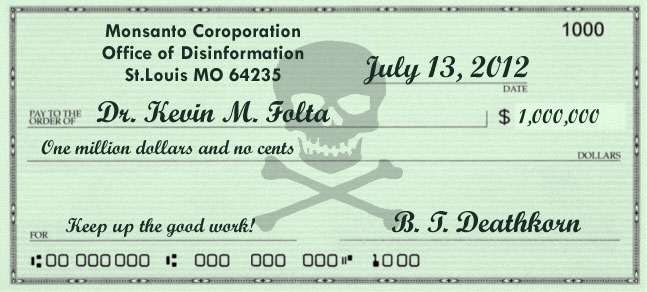
Why Throw-Away Statements Harm the Anti-GMO MovementAs an academic research scientist active at the public interface, I enjoy communicating about complex science topics. With regard to trasngenic (GMO) crops, if you read my blogs, comments left online, or listen to audiences in public discussions, you'll see that they ultimately reach a common point.
Someone always indicates that Monsanto is my employer. Like clockwork.
Silymarin is an extract of milk thistle. Millions of people use this herbal remedy to treat chronic liver disease but it doesn't do much for patients, according to a new study.
Milk thistle fruit extracts have been widely used by patients in treating liver disease based on previous evidence showing that it has anti-inflammatory, anti-oxidant, and potentially anti-viral properties so the new study set out to assess true efficacy in a group of hepatitis C patients who were previously unsuccessfully treated with interferon-based therapy – the standard anti-viral method used to treat the disease.
According to the "2011 Journal Citation Reports" (JCR) published by Thomson Reuters, Elsevier saw 58% of its journal Impact Factors increase from 2010 to 2011, which mirrored the overall trend - 54% of other journals also increased.
Impact Factor helps evaluate a journal's impact compared to others in the same field by measuring the frequency with which recent articles in a journal have been cited in a particular year - that, in turn, helps funding groups evaluating grant proposals to establish a metric for how valuable a researcher's work is to the broad science world. The 2011 Impact Factor takes into account citations in 2011 to papers published in 2009 and 2010.