According to the "2011 Journal Citation Reports" (JCR) published by Thomson Reuters, Elsevier saw 58% of its journal Impact Factors increase from 2010 to 2011, which mirrored the overall trend - 54% of other journals also increased.
Impact Factor helps evaluate a journal's impact compared to others in the same field by measuring the frequency with which recent articles in a journal have been cited in a particular year - that, in turn, helps funding groups evaluating grant proposals to establish a metric for how valuable a researcher's work is to the broad science world. The 2011 Impact Factor takes into account citations in 2011 to papers published in 2009 and 2010.
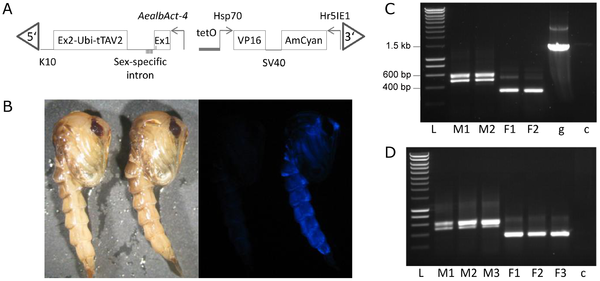
A new flightless strain of the Asian tiger mosquito, Aedes albopictus, has been created by Oxitec scientists, a breakthrough that could help stop the spread of this dangerous and invasive pest.
Aedes albopictus is a serious nuisance biter, but is also capable of transmitting dengue fever, Chikungunya, West Nile Virus and a host of other diseases. In the last few decades it has spread throughout the world where it has gone from bothersome pest to increasing health concern.
The Asian tiger mosquito is difficult to control using conventional methods rely; chemical pesticides harm other insects and become increasingly ineffective as mosquitoes develop resistance.
A newly discovered exoplanet is two-thirds the size of Earth and a relatively close 33 light years away.
But is it really a planet? UCF 1.01 is being called an exoplanet candidate. The reason is because a measured mass is needed to verify that it is a planet, but even the most sensitive instruments currently available are unable to measure exoplanet masses this small.
UCF 1.01 is so close to its star it orbits in 1.4 days. The planet's surface likely reaches temperatures of more than 1,000 degrees Fahrenheit and it probably has no atmosphere. Its surface may be volcanic or molten.
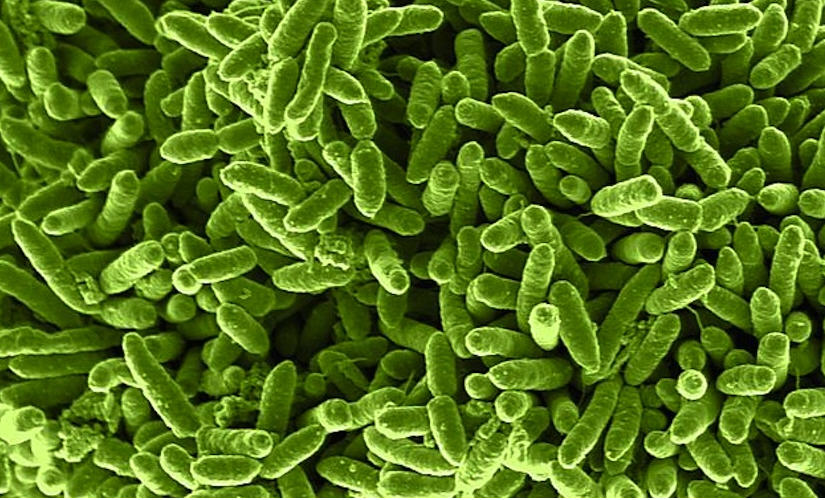
Microbes have been evolving for millions of years to efficiently digest organic material. Now researchers are tapping these natural processes to maximize energy output from the breakdown and use it to power farms and even waste facilities.
One process, developed by researchers at Michigan State University, mimics the natural mechanism of waste digestion and generates 20 times more energy than existing processes by creating ethanol and hydrogen for fuel cells.
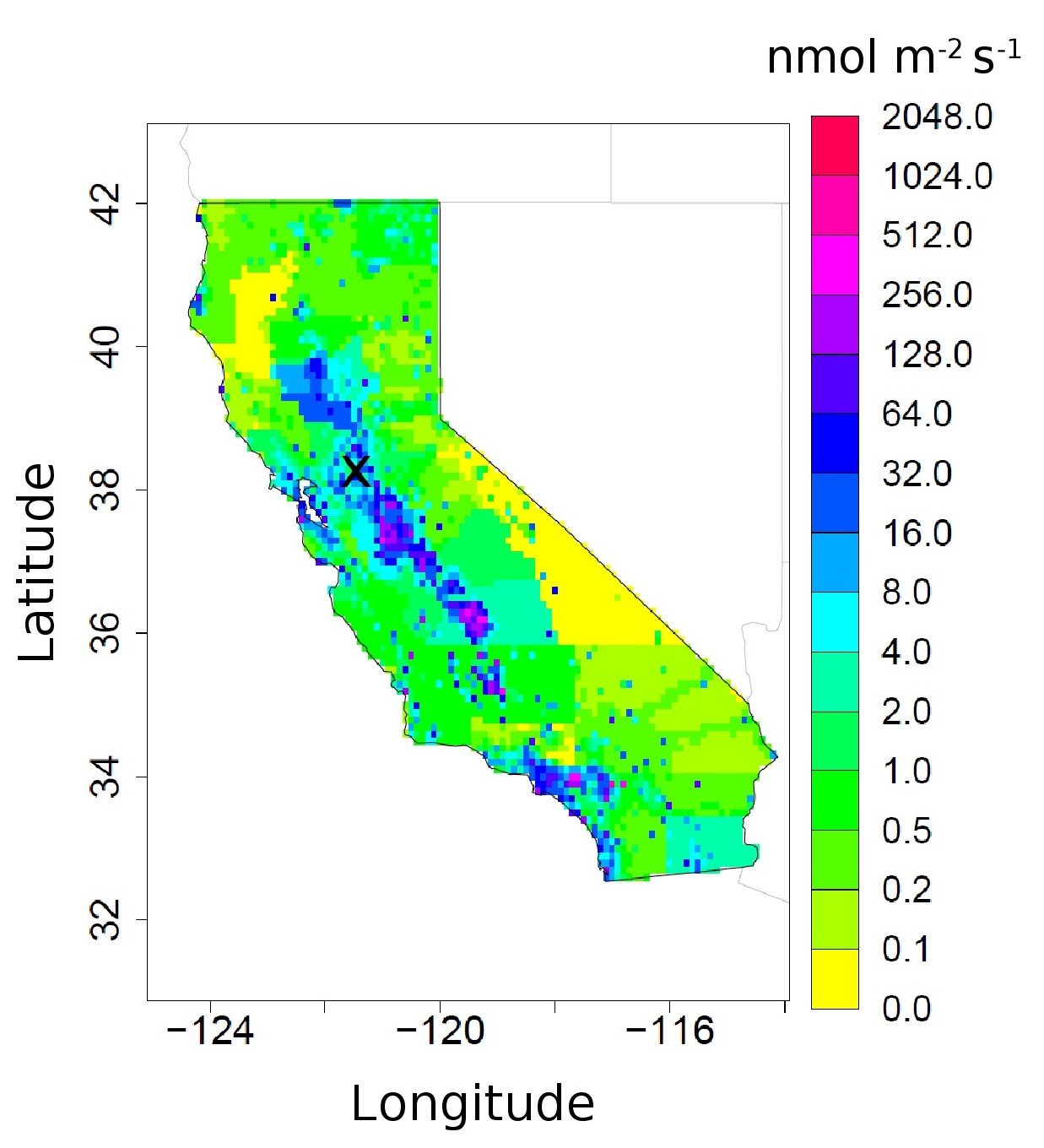
Methane, a potent greenhouse gas, has been underrated in the quest to discuss carbon dioxide, but it shouldn't be - it has about 23 times the warming effect of CO2. And methane levels are at least one-and-a-half times higher in California than previously estimated, says a new study.
Researchers recently combined highly accurate methane measurements from a tower with model predictions of expected methane signals to revise estimated methane emissions from central California. They found that annually averaged methane emissions in California were 1.5 to 1.8 times greater than previous estimates, depending on the spatial distribution of the methane emissions.
Is psychology a science?
Increasingly, the respect of science (and scientists) by the public has been dropping and a part of that reason is because the line of what science is has become fuzzy. If economics calls itself science, well, the public knows they don't know what they are talking about, so maybe it applies to climate science too. Is sociology science? What about parapsychology?
If the definition of science becomes relative, then so does acceptance of science, in a slippery slope world, so we can't expect people will accept FDA findings as science if political science is funded by the National Science Foundation and the public knows that isn't scientific at all.
Over the last year there has been increasing recognition that it isn't "the right" who are anti-science. The left has far more anti-science people; percentage-wise,
there are more anti-vaccine people who vote Democrat than there are Republicans who deny evolution or global warming. Ditto for anti-GMO stances, people who believe in psychics and UFOs, etc. The list of kooky positions that turn out to be held by people on the left is huge but you wouldn't know that from science media of the past decade.
We are currently witnessing the USDA public commentary period on the Arctic Apple, a transgenic apple that does not exhibit browning upon injury or cutting. The anti-browning trait was installed by scientists at Okanagan Specialty Fruits. A copy of the apple gene for polyphenol oxidase (PPO) was overexpressed, which triggers a plant response to silence the over-expressed gene. The same process also suppresses the apple’s endogenous PPO genes. Without this protein, the apple flesh cannot brown.
Eugenics, the darling of elite, educated progressives 100 years ago in their quest to create Utopia, has been out of favor since those crazy Germans took it too far in the late 1930s, but there is one sound reason it found favor; why wouldn't we eliminate serious diseases beforehand instead of treating them after?
If you want to scare somebody, convince them that there is a remote chance of danger in their food, water or medicine. Even if there is no evidence to back up the claim, people respond strongly to such information, causing them to abandon safe foods for alternatives. Today this fear factor is being played to influence food policy and politics, as activists realize they can change consumption with distortions of truth and perpetuation of food phobias and food anxiety. Because it works like a charm.
The Red Scare of 1976