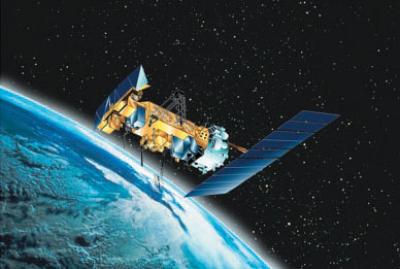
Shortly after celebrating the tenth anniversary of its time in service, engineers have declared the Envisat satellite lost, following numerous attempts to re-establish contact since April 8th.
Which countries are the best at providing higher education?
The Universitas 21 Ranking was announced today at Lund University in Sweden. Universitas 21, a network of research universities, has developed their own ranking as a benchmark for governments, education institutions and individuals to highlight the importance of creating a strong environment for higher education institutions that will contribute to economic and cultural development, provide a high-quality experience for students and help institutions compete for overseas applicants.
So calibrate accordingly when the metrics for 'higher education' don't actually mention education.
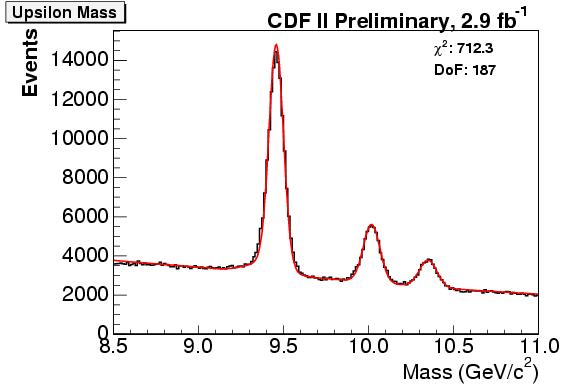
The family of Upsilon resonances is among the few things that can always cheer me up and remind me about my fascination for elementary particles when I get bored about my job. The sight of their mass peaks implies that heavy quarks bind together exactly as electrons and positrons do, orbiting around one another for a brief instant of time. An impossibly brief one, and yet quite long for subnuclear standards. It is always a refreshing and inspiring sight (below, see the three lowest-lying Upsilon states as they are seen by the CDF experiment at the Fermilab Tevatron collider, in a sizable fraction of their Run II data: lovely, aren't they ?).
The word
'Shirk' normally carries quite pronounced negative connotations.
But are there circumstances when shirking might have beneficial effects? For example in the efficient operation of teams?Shirk : verb ‘To avoid work, duties or responsibilities, especially if they are difficult or unpleasant.’ [source: Cambridge Advanced Learner's Dictionary ]
According to new research from Tadashi Sekiguchi associate professor of Game Theory at Osaka Prefecture University, and colleagues from Wakayama University and Kyoto University in Japan the answer is yes.
How can basically honest scientists using a rigorous methodology have different data? Numerical models are tricky business and while climate scientists are rapidly becoming experts in statistics and creating better models, that was not always the case.
One vital component of getting clean models is accurate calibration. Calibration is life, in science. A satellite temperature record put together by the University of Alabama in Huntsville in 1989 has often been cited by climate change skeptics as evidence of doubt that models showing the impact of greenhouse gases on global warming are accurate.
Last week, word came from Prudhoe Bay that sent chills through me as surely as if I’d been standing in the Alaskan North Slope drilling outpost myself. The United States Department of Energy – in collaboration with energy giant ConocoPhillips and the Japanese nationalized minerals corporation – reported success from a month-long test extraction of methane gas tucked into an icy lattice below the permafrost.
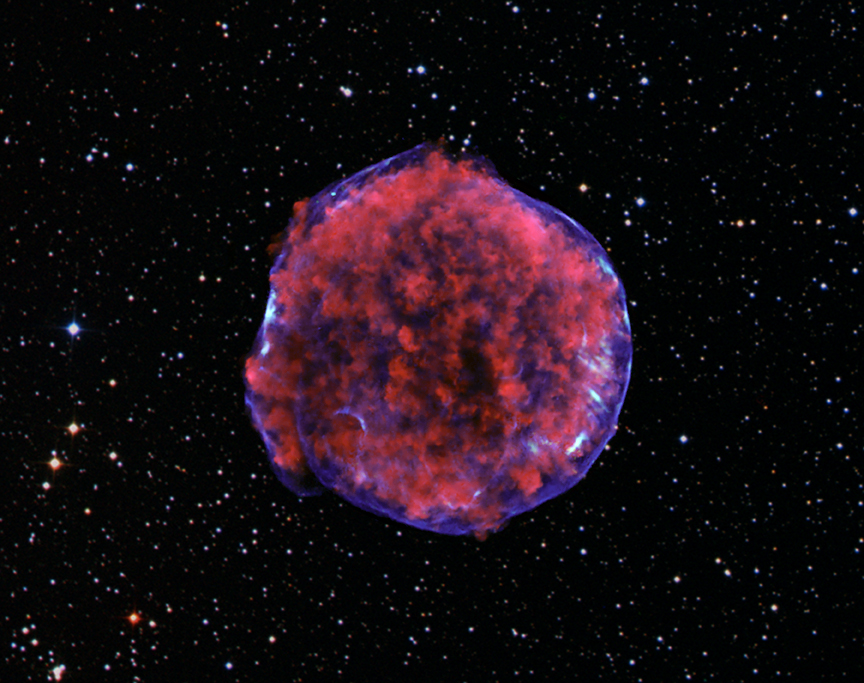
Type Ia supernovae are important for measuring the universe because they're bright enough to be seen across large distances and similar enough to be a reference, an an object of known luminosity - but astronomers still don't know what star systems make Type Ia supernovae.
Two very different models might explain the possible origin of Type Ia supernovae and different studies support each model. Some new evidence says both models are correct because some supernovae are produced one way and some the other.
A new paper by Natural Resources Defense Council says hydraulic fracturing (fracking) generates massive amounts of polluted wastewater in in the Marcellus Shale that threatens the health of drinking water supplies, rivers, streams, and groundwater - and that federal and state regulations have not kept pace with the dramatic growth of fracking and must be strengthened to reduce the risks of health issues throughout the Marcellus region.
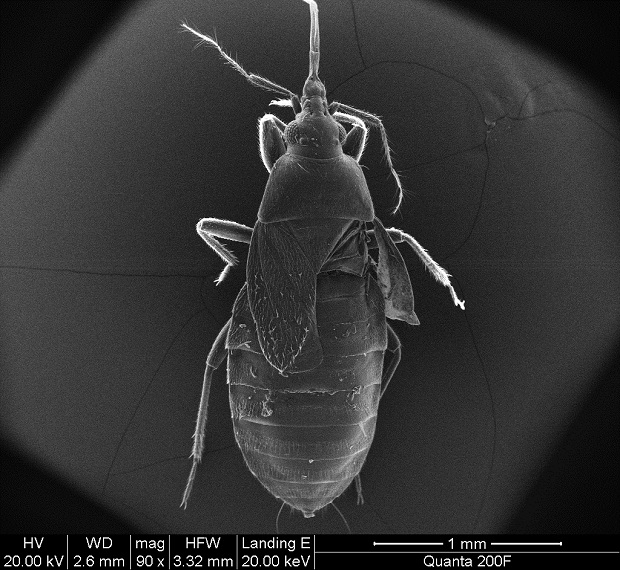
If bugs have their own Tori Amos, she is likely writing about sexual conflict and how reproduction exists at all given that it can be so costly, especially to females. One aspect of this conflict concerns how females respond to increased mating events that are of more benefit to males than to themselves.
New work discusses how some males, instead of mating conventionally, take the awkward step of piercing and penetrating their mate through her body wall. This mating behavior is known as traumatic insemination and it potentially comes at a great physiological cost to the female.
Many proteins and other functional molecules in our bodies display a striking characteristic: They can exist in two distinct forms that are mirror images of each other, chirality or "handedness", like your right hand and left hand, and each of our bodies prefers only one of these molecular forms.
Researchers have been exploring how and why chirality arises, and new findings on the physical origins of the phenomenon were published in Nature Communications.

 last image.jpg "The End For Envisat")