It was back in 2005 that inventor
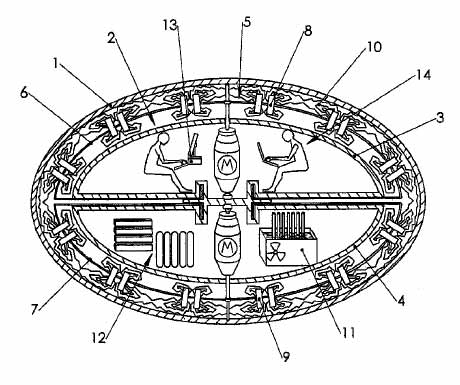
Boris Volfson was granted a US patent for a device which has been erroneously summarised by some as a 'Flying Saucer'. But which is more accurately described as a
Space Vehicle Propelled by the Pressure of Inflationary Vacuum State. Although the patent explained at length how “A levitating, rotating, superconducting disk“ might be able to develop a temporary egg-shaped space-time anomaly sufficient to allow a passenger vehicle to travel faster than light, the exact physics behind the crucial component known as the ‘Phonon Maser’ may have remained opaque to many readers.
It's called
Knowledge and it's a short story by John Frizell in
Nature. Did you know that
Nature publishes short stories, one at the back of every issue? They do!
No human could have grasped the squid's name. Human eyes could not distinguish the differences in shades of colour or register the intervals at which they changed to define the unique pattern that was his name. The squid was concentrating hard because he was holding two conversations at once, one deliberately misleading, the other closer to the truth, as he glided through the deep ocean, his mantle pulsing gently, powering him with puffs of water.
Proteins are large, organic - in the science sense of organic, not the food marketing sense - molecules that help us to convert food into energy, supply oxygen to our blood and muscles and drive our immune systems.
Proteins consist of one or more polypeptides, chains of amino acids held together by peptide bonds. If a protein in water is heated to temperatures approaching the boiling point of water, these chains will lose their structure and the protein will denature (unfold).
Evolution has various mechanisms and one of them is natural selection. While most religious people have no disagreement with science overall, Biblical literalists contend man cannot have changed or evolved. Some confusion about evolution is understandable - evolution is darn complex - and the disagreement with evolution does not fall strongly into any demographic except the religious. In America, we hear more about 'the religious right' but primarily we hear about them from the secular left - while noting that 39% of Republicans don't accept evolution they fail to mention 30% of Democrats don't either.
We created clocks and calendars to give people a common way to communicate about the future and the past and about when to have dinner. But time is, as they say, relative. A clock on top of a mountain moves differently than one at sea level - that's
gravitational time dilation. NIST researchers have even been able to show that
tall people age differently than short ones. And if you lived your life in a car traveling 20 miles per hour, you would age slower than people who just walk around. Time is not only relative in physics, it is relative in culture. We feel like time moves faster the older we get.
We seem to not be able to “explain” certain aspects like the nature of time, and not for lack of trying. Especially: We cannot explain a single subjective feeling in ways that satisfy many – not subjective sounding of sound, not the redness of the color red, not why pain “really” hurts. In spite of all the science we threw at them, something unexplained seems left about how feeling feels. Do we simply commit another ‘regress-error’ here?
Regress Error versus Recursion
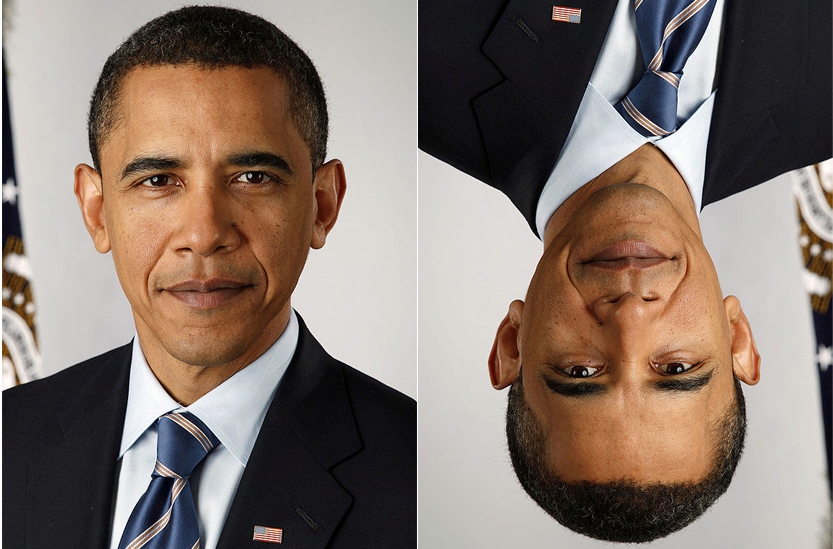
People with Body Dysmorphic Disorder (BDD) have an obsession relating to their body image, where they believe that they have a defect in their appearance.
BDD is estimated to affect one to two per cent of the population. Individuals with BDD engage with time-consuming compulsive behaviors such as mirror-checking, applying make-up to camouflage and seeking reassurance about their appearance.
Despite much research, the genetic causes why animals have such different longevities remain largely unknown, much because so many factors act on ageing that isolating the effect of a single gene is almost impossible.
But now, a study just published in the journal AGE might help to change that as researchers Pedro Magalhães and Yang Li from the Institute of Integrative Biology, at the UK University of Liverpool, unveil a new method that has already help them to identify several proteins involved in DNA-repair and in the recycling of abnormal molecules as being linked to longevity.
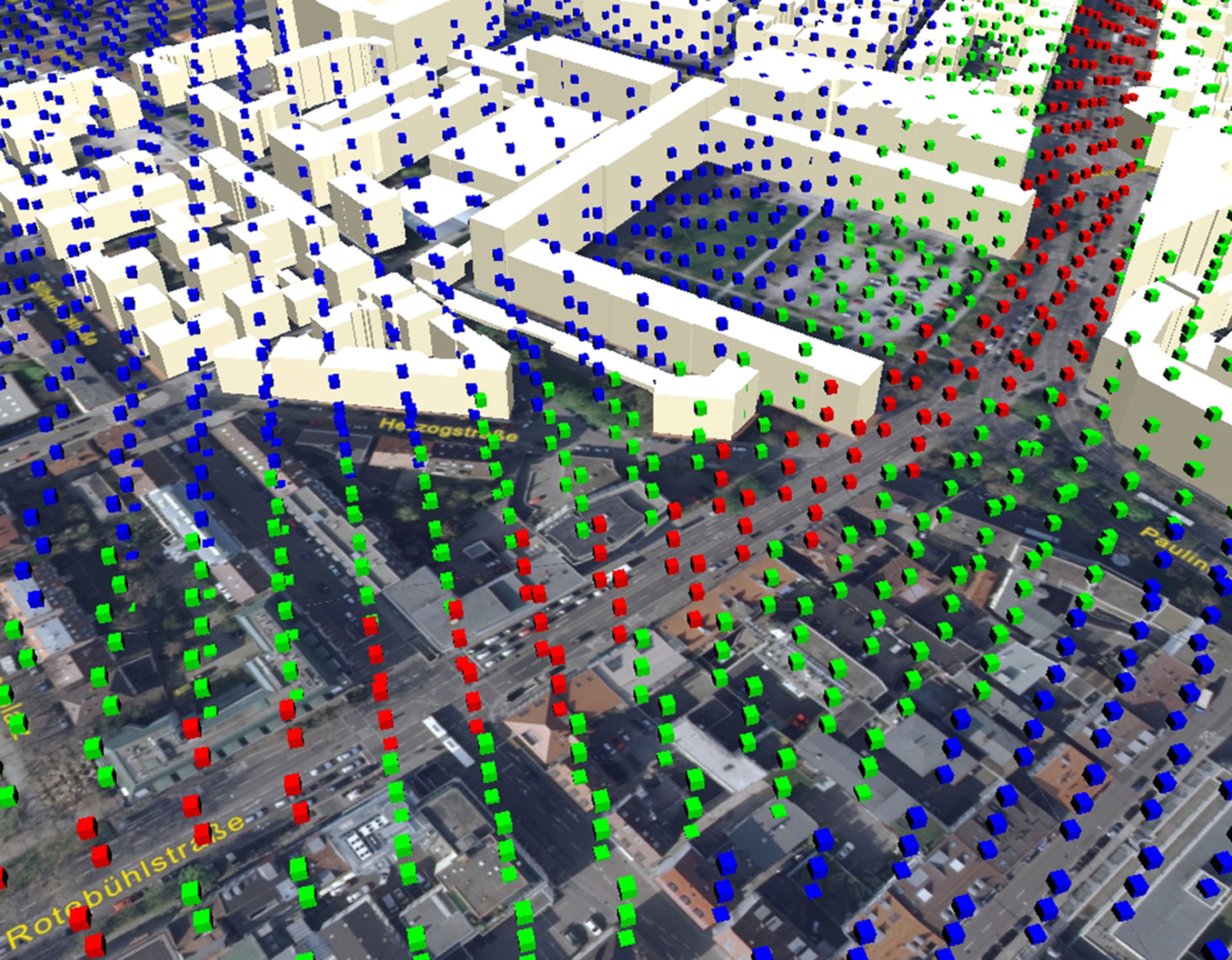
Noise levels, fine particulate matter that leads to smog and traffic volumes are a big concern to urban planners and residents now but they will be even bigger issues in the 'city of tomorrow'.
Three-dimensional tools will soon make it easier to simulate those issues: as the user virtually moves through his city, the corresponding data are displayed as green, yellow or red dots.
A new study estimates that more than 260,000 dogs and cats were sent to UK rescue shelters in 2009, the first full year of the worldwide recession.
Dogs and cats are popular pets in the UK and two of the authors of the new estimate study, Dr. Jane Murray and Professor Tim Gruffydd-Jones, having previously estimated the owned cat and dog populations at approximately 10.3 and 10.5 million respectively.