






I spend quite a lot of time here at Squid A Day blathering about one fishery or another, and I ought to remember that the word "fishery" isn't exactly common parlance. It's not jargon in the same way as "chromatophore" or, Lord help us, "mesopelagic." Still, it doesn't have an intuitive meaning to a lot of folks.

So when I wrote a short essay for the Squids4Kids program about squid fisheries, I opened with a discussion of just what a fishery is, before going on to talk about squid.
It may turn out that coffee is bad for you. The World Health Organization already lists it as a possible carcinogen, despite any evidence, but they do the same thing about cell phones, in contrast to any evidence - perhaps Big Tea donates a lot to WHO.

Until a group more scientifically valid than WHO finds a problem with coffee, Science 2.0 will continue to push articles extolling it - the bolder the better, like us.  Even decaffeinated coffee may be terrific. Researchers from Mount Sinai School of Medicine have discovered that decaffeinated coffee may improve brain energy metabolism associated with type 2 diabetes, a known risk factor for dementia and other neurodegenerative disorders like Alzheimer's disease. 
If you've ever wondered why the man in your life can't recall your discussion of organic squash from 20 minutes ago but he can vividly recall the time 11 years ago when you insulted his "Captain Planet ad the Planeteers" figurines, there is a science answer; women let things go and men don't.

Or...men have better memories. 

Research undertaken by University of Montreal researchers at Louis-H Lafontaine Hospital showed a woman's memory of an experience is less likely to be accurate than a man's if it was unpleasant and emotionally provocative.
Plants help keep us cool by absorbing CO2 - sometimes too cool. 

The arrival of the first plants 470 million years ago triggered a series of ice ages, according to a research team that set out to identify the effects that the first land plants had on the climate during the Ordovician Period, which ended 444 million years ago. During this period the climate gradually cooled, leading to a series of 'ice ages'. This global cooling was caused by a dramatic reduction in atmospheric carbon, which this research now suggests was triggered by the arrival of plants.

NGC 3324, on the northern outskirts of the chaotic environment of the Carina Nebula in the constellation of Carina (The Keel, part of Jason’s ship the Argo), is about 7500 light-years from Earth and has been sculpted by many other pockets of star formation. A rich deposit of gas and dust in the NGC 3324 region fueled a burst of star birth there several millions of years ago and led to the creation of several hefty and very hot stars.

We are all familiar with velocities. Velocities tell us how positions change with time. Velocities can not be assigned to individual objects, as they describe a relation between pairs of objects. We know this since Galileo Galilei. Yet, in common day language this profound fact is mostly ignored.
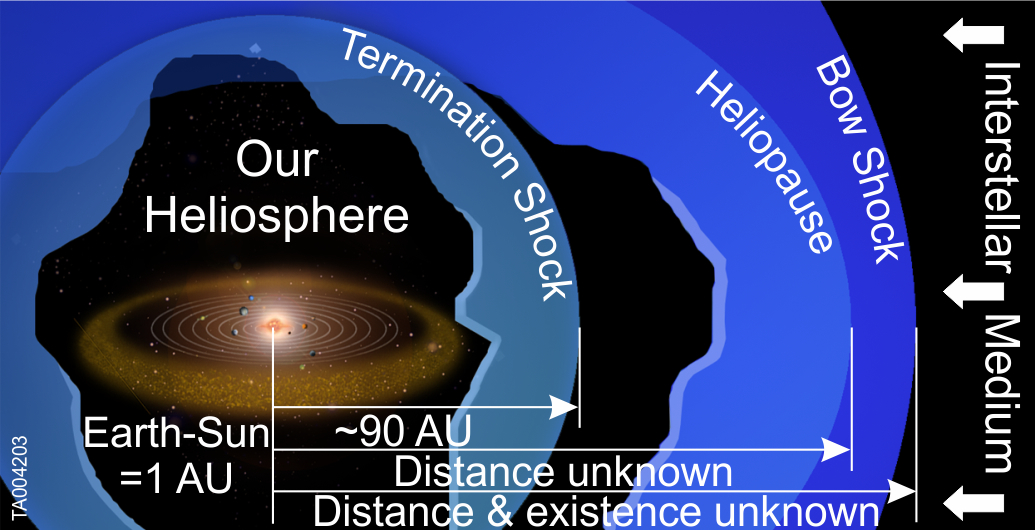
NASA's Interstellar Boundary Explorer (IBEX) spacecraft has allowed researchers to measure neutral "alien" particles entering our solar system from interstellar space; a first look at the constituents of the interstellar medium, the matter between star systems, and how they interact with our heliosphere.
If you ask Europeans about the metric system, they declare America should get with the program because it is more popular. When it comes to speaking English, however, barely a third of the EU's 500 million citizens speak English yet that is how the business of the EU's 27 member countries is conducted.  No one is expected to speak 23 different languages.

A study of 64,659 women, recently published in the journal Academic Radiology, found that while 1,246 of these women were at high enough breast cancer risk to recommend additional screening with MRI, only 173 of these women returned to the clinic within a year for the additional screening.

“It’s hard to tell where, exactly, is the disconnect,” says Deborah Glueck, PhD, investigator at the University of Colorado Cancer Center and associate professor of biostatistics and informatics at the Colorado School of Public Health, the paper’s senior author.

The Wall Street Journal published an excellent case study in denialism on Friday, in the form of a letter from sixteen scientists seeking to perpetuate gridlock in climate policy.  While nothing they have to say raises any scientific issues about climate change, the letter is interesting to peruse simply to see what arguments they use, and what that says about their motivations.

The letter uses several denialist tactics, including,
1) Cherry-picked examples placed out of context,
2) Unsupported claims
3) Irrelevant distractions
4) Implications of conspiracy, and
5) Self-portrayal as stubborn heroes fighting against the odds.


