





Who do you think will win the Republican presidential nomination? Obsession with this question possesses the entire United States. Today a brief search on Google for “GOP primary prediction” returned close to 40 million results. Over the past few months, the news media has been a continuous spin cycle of talking heads, pontificating pundits, bleating politicians, and outraged citizens, all converging on the topic of who will eventually be crowned the Republican candidate for the American presidency. The amount of effort expended on this process is staggering—even though many people felt that the probable outcome was more or less obvious from the start.
A long time ago, in an ocean far, far away . . .


I'm sorry, I couldn't resist! I just couldn't resist. But of course it's not really true. Argentina and the British-owned Falkland Islands have been fighting over their squid resources since "a long time ago", but this latest news is hot off the press. And the ocean may feel "far, far away" to those of us in the northern hemisphere, but it's very close to home for all the squid fishermen in the Southern Ocean, and the civilians who depend on the economies they support.
Not to play favorites but there is one area where physics has the life sciences beat: sharing.  With preprints and data, the newest findings zip around the globe, before peer review, and science does not collapse.
Rightly or wrongly, the marketing campaign for organic food has worked.  People have demonstrated that they will overpay for organic food despite their being no difference in nutritional value, the same way they will pay for homeopathy or magic crystals.

But the billions that the organic food industry now generates means there is ample opportunity for fraud - and that's just wrong. If you go into Whole Foods to spend your Whole Paycheck, you should at least be assured the country of origin is what they say it is.
Solitons, also called solitary waves, are an intriguing topic. They are waves which behave much like particles, yet not in the sense of the quantum physical particle-wave-duality, but in a purely classical sense: They travel much like particles, meaning they do not change their shape for example, and they even bump against each other and can annihilate with their anti-solitons. On the oceans, solitons can appear as rogue waves (not bore, which is a different phenomenon), and many an ocean faring vessel has succumbed to them. They do not just lift the ship like usual waves. They smash it – again, much like one would expect from a solid particle.


In November 2011, NASA launched its biggest, most ambitious mission to Mars. The $2.5 billion Mars Science Lab spacecraft will arrive in orbit around the Red Planet this August, releasing a lander that will use rockets to control a slow descent into the atmosphere. Equipped with a “sky crane,” the lander will gently lower the one-ton Curosity rover on the surface of Mars.

An extremely hot, massive young galaxy cluster named ACT-CL J0102-4915 is the largest ever seen in the distant Universe, and has been has been nicknamed El Gordo — the "big" or "fat one" in Spanish. It consists of two separate galaxy sub-clusters colliding at several million miles per hour, and is so far away that its light has traveled for seven billion years to reach Earth.
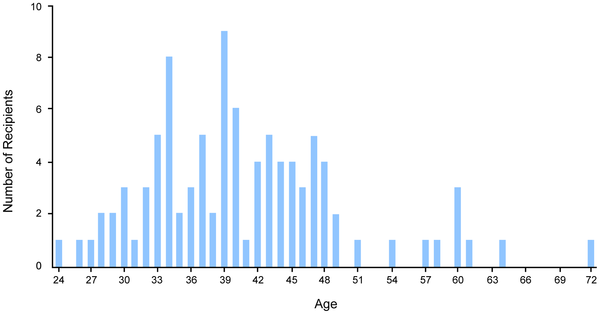
A new study has used an interesting metric to highlight their concern about a disconnect between government funding of biomedical research and young investigators; Nobel Prizes. 

As has been noted here numerous times, and by me at various talks, the average age of biomedical researchers getting their first grant from the National Institutes of Health (NIH) in 2008 was 42, a substantial change from even the decade previous. Over the past 30 years, the article notes, the average age of Nobel winners when they performed their research was 41. That's a concern, says Kirstin Matthews, a fellow in science and technology policy at the Baker Institute and first author of the paper in PLoS One.

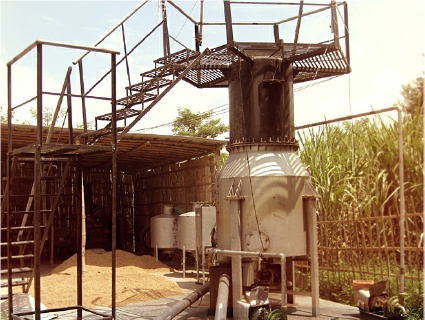
In Bihar, one of the poorest states in India, 85 percent of people are not connected to the electricity grid so households use kerosene lamps when they can afford it and businesses use expensive and dirty diesel generators.

Some view this 'energy poverty' as a development problem, others view it as an environmental problem. The founders of Bihar-based Husk Power Systems view it as an opportunity to build a social enterprise.

Their motto is tamaso ma jyotir gamaya - ‘from darkness to light’


Many First Nations sites were inhabited continually for centuries. The discarded shells and scraps of bone from their food formed enormous mounds called middens. Left over time, these unwanted dinner scraps can transform through a quiet process of preservationTime and pressure leach the calcium carbonate, CaCO3, from the surrounding marine shells and help “embalm” bone and antler artifacts that would otherwise decay. Calcium carbonate is a chemical compound that shares the typical properties of other carbonates.

