


The creation, trapping and storage of antihydrogen atoms for up to 1,000 seconds not only represents the longest time period so far that antihydrogen has been captured, but it also brings us closer to answering the question, do matter and antimatter obey the same laws of physics?

Antimatter particles are routinely produced in particle accelerators as well as in space, but holding onto them, particularly the neutral ones, is difficult because antimatter and matter will annihilate on contact and conventional containers are made of matter.

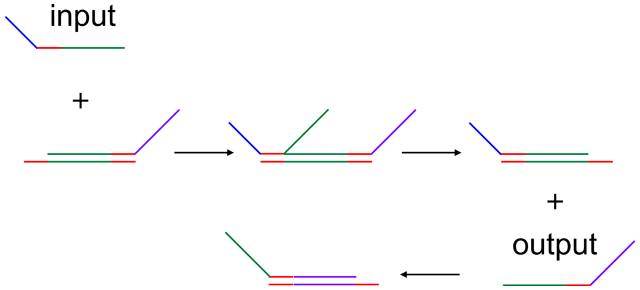
Figuring out the structure of DNA, and the ongoing research into its workings, have provided scientists with a lot of new knowledge. One of the, perhaps unexpected, new areas of research that have sprouted forth from this knowledge, is the area of DNA computing, where DNA molecules are used to perform computational operations.

Simon Baron-Cohen "sat down with me" this week via email and graciously took the time to answer my questions stemming from my review of  his new book, The Science of Evil, that appeared on my blogs last week. What follows is a response that is every bit as thorough as my original review; between the two (and I recommend you read both as a complete piece), there's 15 single spaced pages of material. I thoroughly enjoyed this opportunity and I think readers will, too. There's even dueling databases, which I absolutely loved, below!


My questions are in italics; SBC's in regular font.
Back in April, a well-known fisheries biologist named Ray Hillborn published an op-ed in the New York Times that was titled (by the editors, not Hillborn) "Let Us Eat Fish." The gist of it was: our fisheries are doing great, so chow down on seafood with a clear conscience!
Government work is usually a thankless job - yes, thanks to guaranteed pay raises and a union that can shut down the government, government employees make more money than the private sector and have better benefits and retirement, so it is not exactly thankless, but there are few instances where we can say 'government gets it right'.
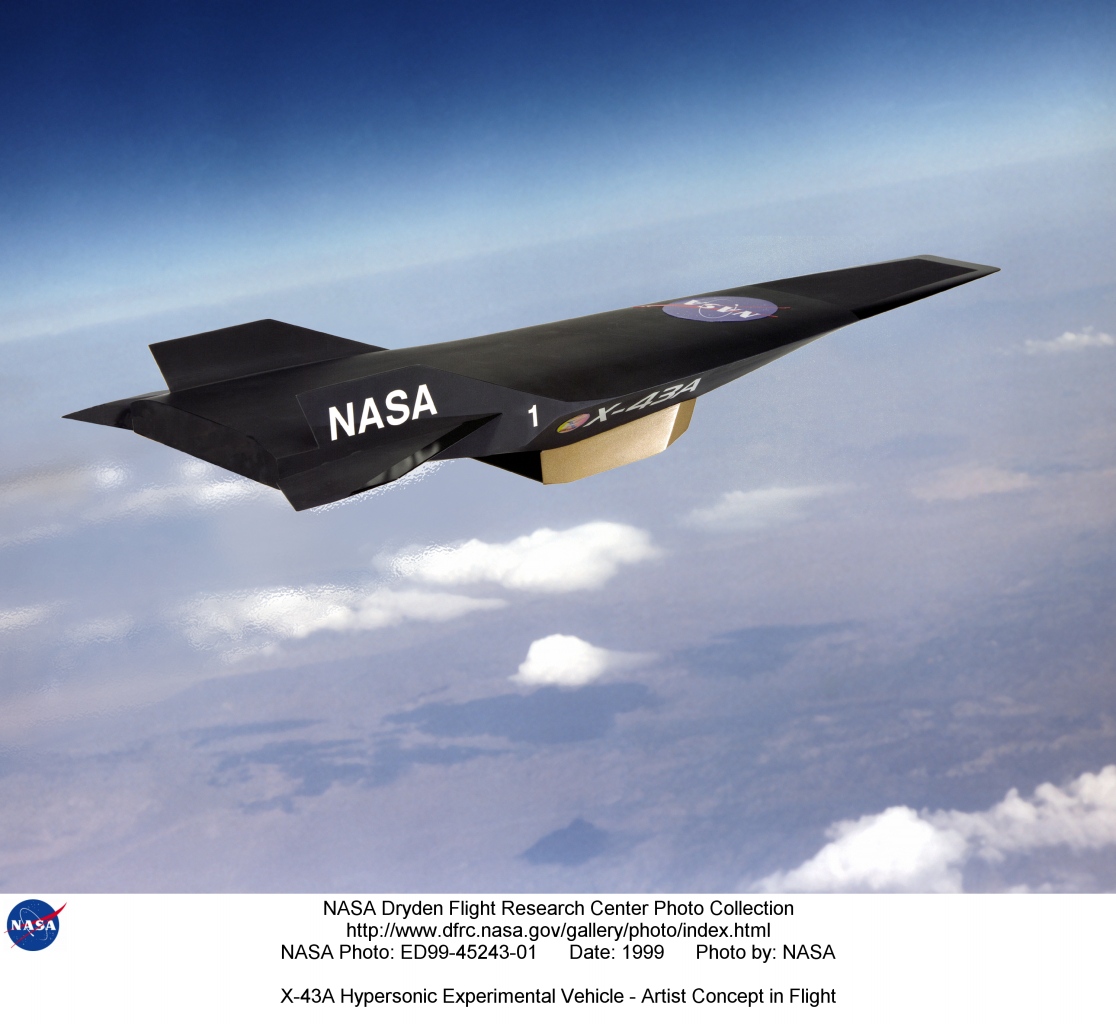
NASA historically has received 0.5% to 1% of the federal budget, a penny or less per dollar.  I don't want to make that sound small-- I'd love a penny for every federal dollar-- but in terms of government programs, it's not the largest.

We all know the money goes to 'space stuff',  but since that includes everything from airplane work (the first 'A' in NASA is Aeronautics, after all) through Earth observing and providing satellites for NOAA, up to deep space cosmology stuff.  In the process, NASA invents and tests a heck of a lot of technology.

On June 6th 2005, EPFL (École Polytechnique Fédérale de Lausanne, Switzerland) and IBM launched the Blue Brain Project, an ambitious attempt at simulating a mammalian brain down to a molecular level. Headed by professor Henry Markram, the Blue Brain Project, along with a dozen international partners, has recently proposed the Human Brain Project, with as ultimate goal the simulation of a human brain. Recently, the group has been awarded a grant of roughly 1.4 Euros by the European Commission to formulate a detailed research proposal. If the decision of the European Commission (expected in 2012) is favorable, up to 1 billion pounds could be awarded to the project…

Squid are often considered to be one of the more sustainable seafood choices. Squid grow like weeds, right? They have short life cycles, make tons of babies, and adapt easily to changing environments. It's like eating dandelions.

Only not.
What's ailing biology?

Wilson da Silva, Editor-in-Chief of COSMOS, a science publication in Australia, was attending a lecture by Freeman Dyson lecture at the Perimeter Institute in Canada when Dyson said, "It's sad but true that most discoveries in biology are made by physicists."

