






Women ask for considerably lower salaries in salary negotiations than men but it may be because they are expected to do so, according to a dissertation in psychology by Una Gustafsson at Lund University in Sweden.

Conceptions of good and poor negotiators are tied to stereotypical notions of masculine and feminine characteristics: good negotiators are regarded as being decisive, strong, and self-assertive - masculine qualities. Poor negotiators are seen as being concessive, emotional, and overly focused on relationships, which are regarded as feminine qualities, she says.

But Una Gustafsson also warns against placing the entire blame on the women’s own behavior.

A University of Pittsburgh School of Medicine study of nearly 2,220 pneumonia patients finds that men who come to the hospital generally are sicker than women, and have a 30 percent higher risk of dying over the next year, despite aggressive medical care. Researchers further found significant differences in immune system response to infection, leading to speculation that future pneumonia treatments could be gender-based.

The University of Pittsburgh researchers evaluated data from 1,136 men and 1,047 women with symptoms of pneumonia who were treated at 28 hospital emergency departments in the United States.

On average, men arrived at the emergency departments with poorer vital signs, were more likely to be smokers and had a greater variety of complicating health conditions. After hospitalization, men received timely antibiotic treatments more often than women and were twice as likely to be admitted immediately to intensive-care units.

Hydrogen is touted as replacing carbon-based fuels for transportation in the future, but researchers first must develop a method to store and release large amounts of the highly flammable, odorless invisible gas economically and safely. There are materials that are known to trap relatively large quantities of hydrogen, at normal pressures, but to date they all require heating to fairly high temperatures to release the hydrogen.

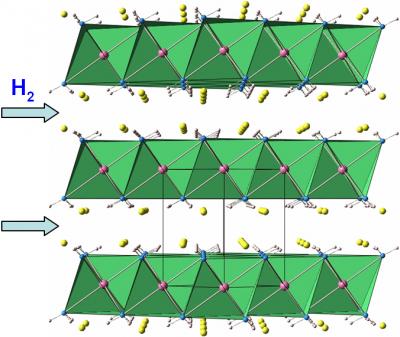
A materials scientist at the National Institute of Standards and Technology (NIST) has deciphered the structure of a new class of materials that can store relatively large quantities of hydrogen within its crystal structure for later release.

Hui Wu, a research associate from the University of Maryland working in a cooperative research program at the NIST Center for Neutron Research, has been investigating a new hydrogen storage compound that mixes lithium amide with lightweight metal hydrides. Lithium amide can hold more than 10 percent of hydrogen by weight, well above the 6 percent target set by the U.S. Department of Energy as a 2010 goal for a hydrogen storage material for transportation. The material absorbs and releases hydrogen reversibly, but both absorbing and releasing the hydrogen requires high temperatures and also produces a toxic byproduct, ammonia.

A research team working at the National Institute of Standards and Technology (NIST) has found an explanation for the extreme sensitivity to mechanical pressure or voltage of a special class of solid materials called relaxors. The ability to control and tailor this sensitivity would allow industry to enhance a range of devices used in medical ultrasound imaging, loudspeakers, sonar and computer hard drives.

Relaxors are highly sensitive piezoelectrics — they change shape when a battery is connected across opposite ends of the material, or they produce a voltage when squeezed.

“Relaxors are roughly 10 times more sensitive than any other known piezoelectric,” explains NIST researcher Peter Gehring. They are extremely useful for device applications because they can convert between electrical and mechanical forms of energy with little energy loss.

Also known as Seville orange, sour orange, and Zhi shi, bitter orange has been used in traditional Chinese medicine and by indigenous people of the Amazon rain forest for nausea, indigestion and constipation.

Current uses of bitter orange are for heartburn, loss of appetite, nasal congestion and weight loss. Users also apply it to skin for fungal infections such as ringworm and athlete’s foot.

Bitter orange has been used as a substitute for ephedra, a dietary supplement for weight loss now banned by the U.S. Food and Drug Administration (FDA). The dried fruit and peel of bitter orange (and sometimes the flowers and leaves) are taken by mouth in extracts, tablets and capsules. Bitter orange oil also can be applied to the skin.

Last summer, researchers writing in the international journal Tectonics concluded that geological faults in the Sichuan Basin, China “are sufficiently long to sustain a strong ground-shaking earthquake, making them potentially serious sources of regional seismic hazard."

An international team of scientists including Dr. Alexander Densmore (Institute of Hazard and Risk Research, Durham University), Dr. Mike Ellis (Head of Science for Climate Change at the British Geological Survey) and colleagues from research institutes in Chengdu, carefully mapped and analysed a series of geologically young faults that cross Sichuan Province like recently healed scars.

The team mapped the densely populated Sichuan Basin and adjacent mountains using what is known as ‘tectonic geomorphology’. This technique can demonstrate significant changes in ground movement over time, such as observations of offset river channels, disrupted floodplains, abnormally shaped valleys and uplifted landscape features. These subtle signals of deformation, when combined with the ability to measure the age of the disfigured landscapes (using cosmogenic nuclides that bombard the Earth from all corners of the universe), produced surprising results.

Changing the sugars attached to a hormone produced in the pituitary gland increased fertility levels in mice nearly 50 percent, a research group at Washington University School of Medicine in St. Louis has found. The change appears to alter a reproductive "thermostat," unveiling part of an intricate regulatory system that may one day be used to enhance human fertility.

Sugars are the most common addition to hormones and other proteins after they have been assembled from instructions in DNA. Nearly all proteins in the blood and on the surface of cells have sugars attached. Scientists believe sugar attachments modify and adapt proteins, enabling them to fill more than one job or changing the way they do their jobs in different contexts. But direct demonstration of such changes has been challenging.

"To adjust for the right amount of key reproductive hormones such as estrogen and testosterone, we may someday alter the sugars that are added to this hormone or others like it," says the group's leader, Jacques Baenziger, M.D., Ph.D., professor of pathology and immunology and of cell biology and physiology.

New data from an international, multicenter Phase III clinical trial has found that the experimental targeted therapy everolimus (RAD001) significantly delays cancer progression in patients with metastatic kidney cancer whose disease had worsened on other treatments. The study was led by Robert Motzer, MD, an attending physician at Memorial Sloan-Kettering Cancer Center (MSKCC), who will present the findings on May 31 at the annual meeting of the American Society for Clinical Oncology.

“This study has given us a new and clearly useful tool for treating renal cell tumors, and everolimus is an important step forward in terms of disease management and quality of life for patients living with this disease,” said Dr. Motzer.

Kidney cancer is among the ten most common cancers in both men and women. The American Cancer Society estimates that there will be about 54,390 new cases of kidney cancer diagnosed in the US in 2008, and that about 13,010 people will die from the disease.

HOOFDDORP, Netherlands, May 16 /PRNewswire/ -- CEVA Group Plc will publish its Quarter 1 2008 results on Friday, May 23, 2008. The Interim Financial Statement will be made available on CEVA's website http://www.cevalogistics.com at 09:00 GMT. A press release with the highlights of the Report will be issued the same date.

CEVA. Making Business Flow

