






GOTHENBURG, Sweden, May 7 /PRNewswire/ --

- Increases the Total Raised to EUR25 Million (USD $40 Million)

Albireo, a recent spinout from AstraZeneca focused on gastrointestinal diseases, today announced a second closing of its Series A financing.

The capital increase was subscribed for by TPG Growth, the investment platform for the early stage and growth investments of TPG, a leading private equity firm that has more than $50 billion of assets under management. This addition increases the total equity for the round to EUR25 million (USD $40 million) which will be used to develop the company's clinical and preclinical gastrointestinal pipeline.

A comparison of recorded Antarctic temperatures and snowfall accumulation to predictions by major computer models of global climate change offer both good and bad news.

The good news is that the numerical models’ predictions covering the last 50 years broadly follow the actual observed temperatures and snowfall for the southernmost continent, although the observations are very variable.

The bad news is that a similar comparison that includes the last 100 years is a poor match. Projections of temperatures and snowfall ranged from 2.5 to five times what they actually were during that period.

St. Jude Children's Research Hospital investigators have found that an electrically powered amplification mechanism in the cochlea of the ear is critical to the acute hearing of humans and other mammals. The findings will enable better understanding of how hearing loss can result from malfunction of this amplification machinery due to genetic mutation or overdose of drugs such as aspirin.

Sound entering the cochlea is detected by the vibration of tiny, hair-like cilia that extend from cochlear hair cells. While the cochlea’s “inner hair cells” are only passive detectors, the so-called “outer hair cells” amplify the sound signal as it transforms into an electrical signal that travels to the brain’s auditory center. Without such amplification, hearing would be far less sensitive, since sound waves entering the cochlea are severely diminished as they pass through the inner ear fluid.

Children who speak a second or third language may have an unexpected advantage later in life, a new Tel Aviv University study has found. Knowing and speaking many languages may protect the brain against the effects of aging.

Dr. Gitit Kavé, a clinical neuro-psychologist from the Herczeg Institute on Aging at Tel Aviv University, together with her colleagues Nitza Eyal, Aviva Shorek, and Jiska Cohen-Manfield, discovered recently that senior citizens who speak more languages test for better cognitive functioning. The results of her study were published in the journal Psychology and Aging.

However, Kavé says that one should approach these findings with caution. “There is no sure-fire recipe for avoiding the pitfalls of mental aging. But using a second or third language may help prolong the good years,” she advises.

Nano-whatever is all the rage. They're a big deal because they can make a blacker version of black and lots of other things but what does that even mean?

Richard Compton and his team at Oxford University are here to help make carbon nanotubes understandable to everyone - namely, by making it relevant to food. They have developed a sensitivity technique to measure the levels of capsaicinoids, the substances that make chilis hot, in samples of hot sauce. They report their findings in The Analyst.

The current industry procedure is to use a panel of taste-testers, which is highly subjective. Compton’s new method unambiguously determines the precise amount of capsaicinoids and is not only quicker and cheaper than taste-testers but more reliable for purposes of food standards; tests could be rapidly carried out on the production line.

KENT, Washington, May 7 /PRNewswire/ --

Avure Technologies, Inc. has recently delivered a high-capacity Hot Isostatic Press (HIP) to Bodycote's Northwest regional service center in Camas, Washington. The system was commissioned in late 2007, and is identical in size to a HIP installed in Camas in 1998. Both units rank as the largest such presses ever built.

(Photo: http://www.newscom.com/cgi-bin/prnh/20080507/AQW031)

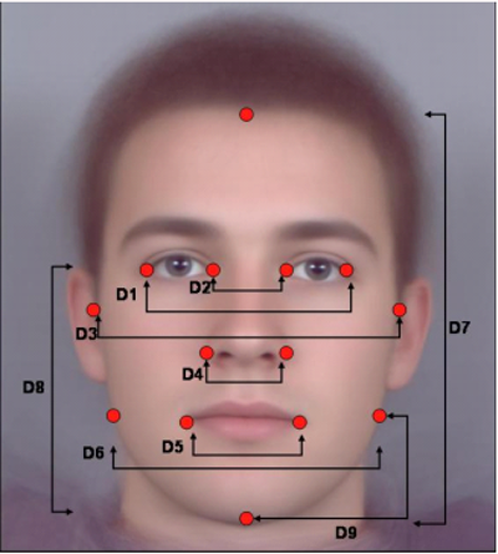
In humans, faces are an important source of social information. One property of faces that is rapidly noticed is attractiveness. Research has highlighted symmetry and sexual dimorphism (how masculine/feminine a face is) as important variables that determine a face’s attractiveness.

But why are these traits attractive?

One idea is that both traits are adverts of genetic quality or some other aspect of quality such as fertility. An alternative view is that preferences for these traits arise through visual experience and therefore not linked to any underlying biological factors. Faces certainly have the potential to be advertisements of mate ‘quality’ and one way to examine this idea is to look at interrelationships between proposed adverts of quality.

SANTA CLARA, California, May 7 /PRNewswire/ --

DALLAS, May 7 /PRNewswire/ --

Parks Associates and the Consumer Electronics Association (CEA(R)) today announced Enure Networks, MoCA, support.com, and Motorola as Advisory Sponsors for CONNECTIONS(TM) Europe Summit, taking place May 19, 2008, in cooperation with TM Forum's Management World 2008 in Nice, France.

The CONNECTIONS(TM) Europe Summit in Nice, at the Hotel Palais de La Mediterranee, will address the new challenges and opportunities for service providers in today's hyper-competitive worldwide market. Research from Parks Associates indicates service providers will supply over 70 million households worldwide with residential gateways by 2012.

Think it's tough for humans to find the right mate? Malagasy mouse lemurs are so similar that picking a mate of the right species, especially at night time in a tropical forest, was thought to be more luck than science, but new research has shown that our desperately cute distant cousins use vocalizations to pick up a partner of the right species.

Until recently, grey, golden brown, and Goodman’s mouse lemurs were all thought to be the same species. But genetic testing revealed that they are, in fact, three distinct, species so similar that they cannot be told apart by their appearance—so called cryptic species.

“A fundamental problem for cryptic species that live in the same area and habitat is the coordination of reproduction and discrimination between potential mates of the same species and remarkably similar individuals of other species” say Pia Braune and colleagues from the Institute of Zoology, University of Veterinary Medicine, Hannover University.

