






Israelis and Palestinians may not be able to agree right now on their present or future, but, if a pair of Los Angeles archaeologists have their way, they soon will see eye to eye on their past.

Working tirelessly for the past five years, Ran Boytner, a University of California, Los Angeles archaeologist and Lynn Swartz Dodd, an archaeologist at the University of Southern California, have guided a team of prominent Israeli and Palestinian archaeologists to arrive at the first-ever agreement on the disposition of the region's archaeological treasures following the establishment of a future Palestinian state.

Patient safety incidents cost the federal Medicare program $8.8 billion and resulted in 238,337 potentially preventable deaths during 2004 through 2006, according to HealthGrades' fifth annual Patient Safety in American Hospitals Study.

HealthGrades' analysis of 41 million Medicare patient records found that patients treated at top-performing hospitals had, on average, a 43 percent lower chance of experiencing one or more medical errors compared to the poorest-performing hospitals.

The overall incident rate was approximately three percent of all Medicare admissions evaluated, accounting for 1.1 million patient safety incidents during the three years studied. With the Centers for Medicare and Medicaid Services scheduled to stop reimbursing hospitals for the treatment of eight major preventable errors, including objects left in the body after surgery and certain post-surgical infections, starting October 1, the financial implications for hospitals are substantial.

The Texas Petawatt laser reached greater than one petawatt of laser power on Monday morning, March 31, making it the highest powered laser in the world, Todd Ditmire, a physicist at The University of Texas at Austin, said.

When the laser is turned on, it has the power output of more than 2,000 times the output of all power plants in the United States. (A petawatt is one quadrillion watts.) The laser is brighter than sunlight on the surface of the sun, but it only lasts for an instant, a 10th of a trillionth of a second (0.0000000000001 second).

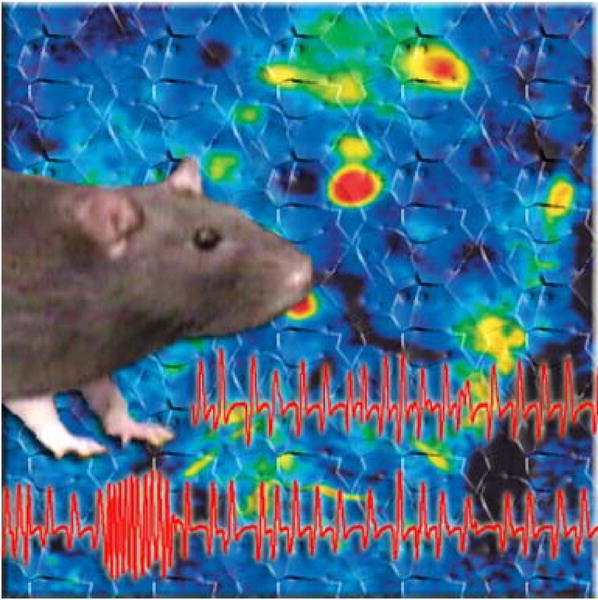
140 milliseconds. So in less time than it took you to read those two words a rat knew everything he needed to know about what his nose detected.

Daniel Wesson and colleagues from Boston University write that rats are able to discriminate odors much more quickly than previously thought.

Odor perception in mammals begins when olfactory sensory neurons in the animal's nose detect an odor molecule and then transmit that information to the brain. The first brain area to receive these signals is the olfactory bulb, where the sensory neurons end in small structures called glomeruli. Olfactory cues trigger complex patterns of activity both in the olfactory sensory neurons and in the glomeruli within the brain.

Fungi processing audio signals. E. Coli storing images. DNA acting as logic circuits. It’s not only possible, in some cases it’s already happened.

Performing digital signal processing using organic and chemical materials without electrical currents could be the wave of the future, according to Sotirios Tsaftaris, Northwestern University research professor of electrical engineering and computer science, and Aggelos Katsaggelos, Ameritech Professor of Electrical Engineering and Computer Science, in their recently published “point of view” piece in the Proceedings of the IEEE (Institute of Electrical and Electronics Engineers.)

Digital signal processing uses mathematics and other techniques to manipulate signals like visual images and sound waves after those signals have been converted to a digital form. This processing can enhance images and compress data for storage and transmission, and such processing chips are found in cell phones, iPods, and HD TVs.

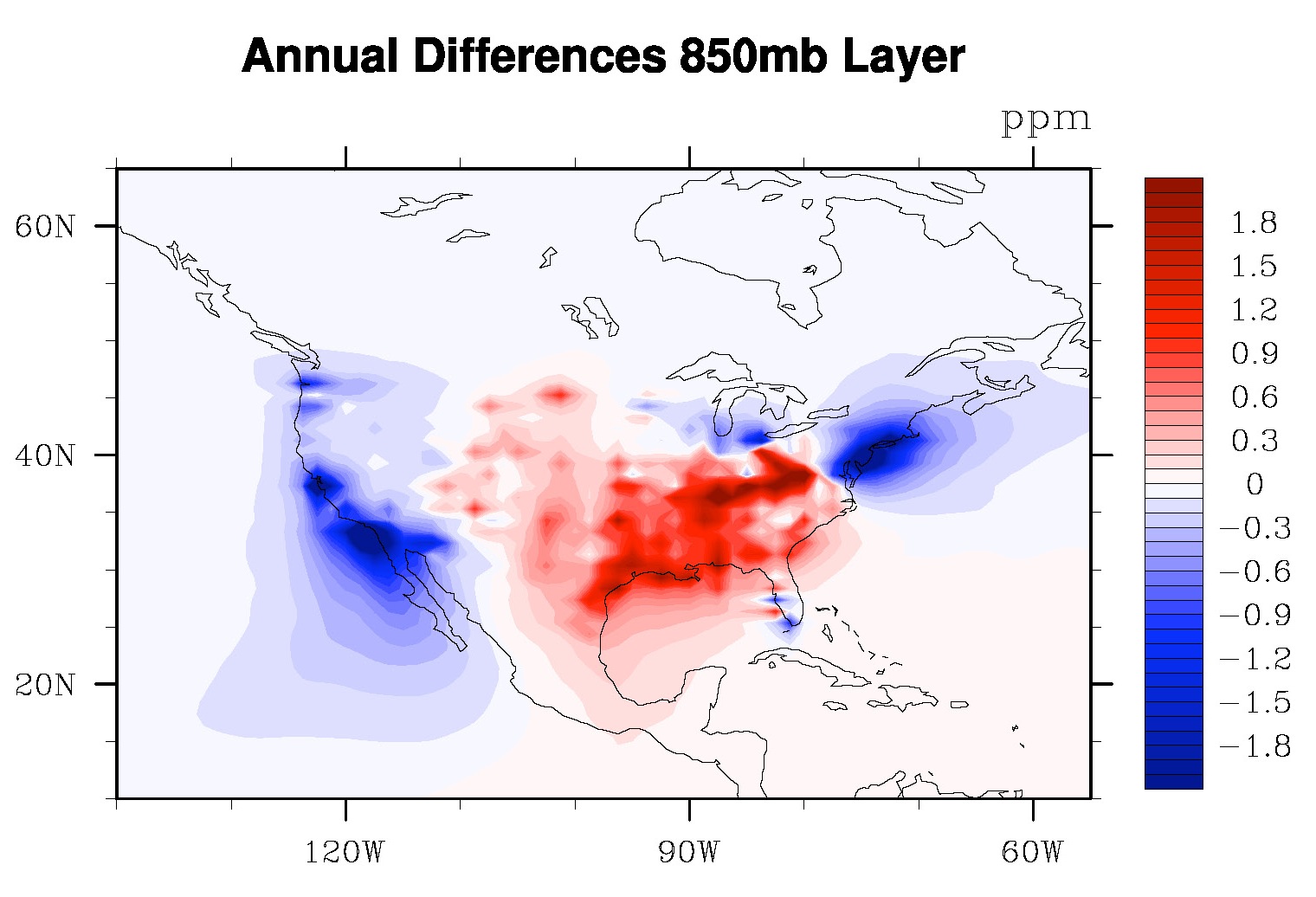
An interactive map of U.S. carbon dioxide emissions from fossil fuels says we still have things to learn about where it's coming from - and where the worst offenders are.

The maps and system, called Vulcan, show CO2 emissions at more than 100 times more detail than was available before. Until now, data on carbon dioxide emissions were reported, in the best cases, monthly at the level of an entire state. The Vulcan model examines CO2 emissions at local levels on an hourly basis.

Researchers say the maps also are more accurate than previous data because they are based on greenhouse gas emissions instead of estimates based on population in areas of the United States.

Oprah Winfrey introduced the so-called "first pregnant man" to viewers of her April 3rd show this past week. Thomas Beatie appeared, six months pregnant, with his wife Nancy and his obstetrician, Dr. Kimberly James (by satellite hookup). You can see the complete show here. But many viewers thought the whole thing was blown out of proportion because Thomas was born with a perfectly normal uterus.

At the end of my first column on the issue, I said I would post another piece discussing the actual science of male pregnancy.

Is it really possible today? The answer, as I abstract from my 1997 book, Remaking Eden, is "almost certainly yes, but . . ."

Even with oil prices at $100 a barrel, it could take 10 or more years of intensive research and development to reduce the cost of solar energy to levels competitive with petroleum, according to Harry Gray, Ph.D., the Arnold O. Beckman Professor of Chemistry and Founding Director of the Beckman Institute at the California Institute of Technology. He is the principal investigator in an NSF funded Phase I Chemical Bonding Center (CBC) – a Caltech/MIT collaboration – and a principal investigator at the Caltech Center for Sustainable Energy Research (CCSER).

The single biggest challenge, Gray said, is reducing costs so that a large-scale shift away from coal, natural gas and other non-renewable sources of electricity makes economic sense. Gray estimated the average cost of photovoltaic energy at 35 to 50 cents per kilowatt-hour. By comparison, other sources are considerably less expensive, with coal and natural gas hovering around 5-6 cents per kilowatt-hour.

Researchers have confirmed the first case of a frog without lungs - the aquatic frog Barbourula kalimantanensis apparently gets all the oxygen it needs through its skin. Previously known from only two specimens, two new populations of the aquatic frog were found during a recent expedition to Indonesian Borneo.

Of all tetrapods (animals with four limbs), lunglessness is only known to occur in amphibians. There are many lungless salamanders and a single species of caecilian, a limbless amphibian resembling an earthworm, known to science. The complete loss of lungs is a particularly rare evolutionary event that has probably only occurred three times.

Airborne soot's heating effects have been found to be 60 percent of CO2's, yielding a 40/60 soot/CO2 global atmospheric heating combination. In higher altitudes soot is just as important as CO2 in melting tropical glacial packs like the Himalayas (and perhaps Kilimanjaro) while also devasting Arctic ice by making it more heat-absorbant.

INDOEX lead researcher V. Ramanathan has co-authored a paper on his team's findings that airborne soot (aka black carbon, or BC for short) plays a far greater role in atmospheric warming than the UN's IPCC reports have yet indicated.

