





"Empathy is one of those ski
The Science Of Fiction

Tip of the hat to Eric Diaz for reminding me of the muse.


Long before writing was invented, amazing stories were told through the medium of the ballad and the saga.  Those old tall tales and modern science fiction often have a few common themes - ethics,  morality, gadgets and heroic deeds.  Gadgets run the full gamut  - from the bag of wind used by Odysseus to fill his ship's sails, to the talking computers and planet busters in movies.

Science 2.0 is Openness and transparency.  Those buzz words mean open* access to both reading and publishing and sharing ones opinion on what is published.  Transparency means a process where any editorial decisions that are made are based on known written criteria which are the minimum to keep a science 2.0 website/journal free of spam and pornography.  The only question is how open and how transparent?  In my opinion the answer is that science 2.0 has to be open to everyone who is interested in practicing science.  There should be no initial litmus test based on educational attainment, employment status, reputation, or any other such traditional criteria.  

Before I go on examples of websites that look like science 2.0 but are not quite there yet. 

AT&T has announced that they will end their unlimited mobile data plan next week. It doesn’t sound like the result will be bad, though: the outgoing unlimited plan is $30 per month. The new plans are $15 per month for 200 megabytes, and $25 per month for 2 gigabytes — both with reasonably priced options to add more if you exceed the limit.

This all comes with some meaningless estimates about what you might be able to do with that much data:

The lowest-priced data option is called DataPlus and will cost $15 a month.

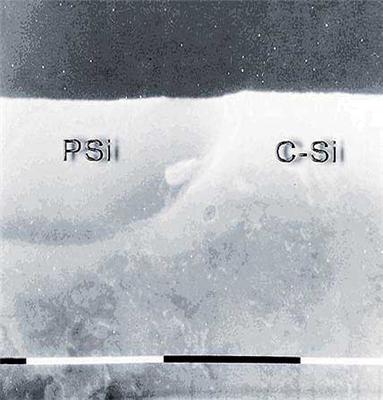
For solar cells to be viable (not relying on government mandates and subsidies) costs have to come down and efficiency must go up.   Buried channel solar cells (BCSC) are one possible group of high efficiency devices.

Characteristic for buried channel solar cells are that the front contacts (lighted surface) are placed in deep trenches, formed in silicon crystal. The idea, is to be minimized the width of the contact bars, by the increasing the contact thickness in deep. In this way the formed element has lower shadowing effect and additionally the contact resistance is decreased. The collected efficiency of the created by the light excess carriers is increased too.
Rock-paper-scissors, RPS. Who hasn't played it as a child? The game, known by a variety of names such as Rochambeau, Jan-ken and Kauw-bauwi-bo, is played all over the world. The rules are straightforward, and can be explained to a five-year old:

Both players simultaneously make one of three gestures representing rock (clenched fist), paper (open hand) or scissors (index and middle finger apart). Rock gets beaten (wrapped) by paper, paper gets cut by scissors, and scissors get smashed by rock. Identical gestures create a tie. The objective is to select a gesture that beats that of the opponent.

Moncktonian Climatology

Christopher Monckton presents himself as an expert on climate.

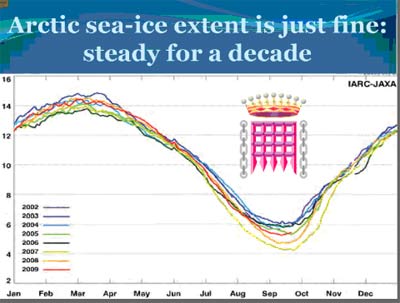
Since he is an expert on climate, it follows that we should all trust and believe him when he says that there is no problem with the Arctic sea ice.
"Arctic ice extent is just fine: steady for a decade"

Christopher Walter Monckton, 3rd Viscount Monckton of Brenchley.

My dear, if you find science confusing, you should try politics!

Margaret Thatcher, to President of the Royal Society, March 1990


.


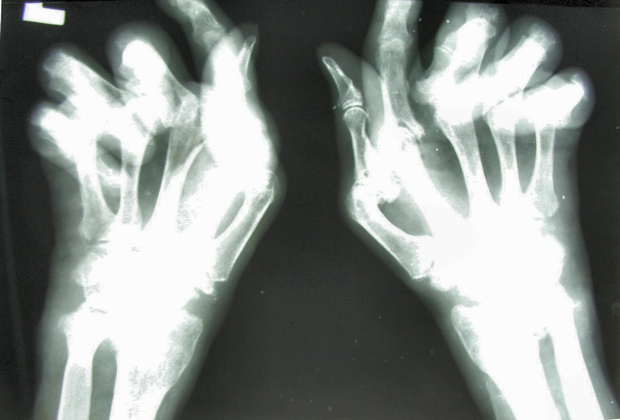
Portuguese scientists have just published a revolutionary new approach to treat rheumatoid arthritis (RA) which, if translated to humans, can change the way we treat autoimmunity (and so diseases like RA but also diabetes and MS) and, with it, the lives of millions of patients

The new treatment by Joana Duarte, Luis Graca and colleagues from the Instituto de Medicina Molecular (IMM) in Lisbon is remarkable because it specifically stops the abnormal immunological response behind RA without touching the rest of the immune system, and a short treatment has long lasting effects suggesting that it might even cure the disease.

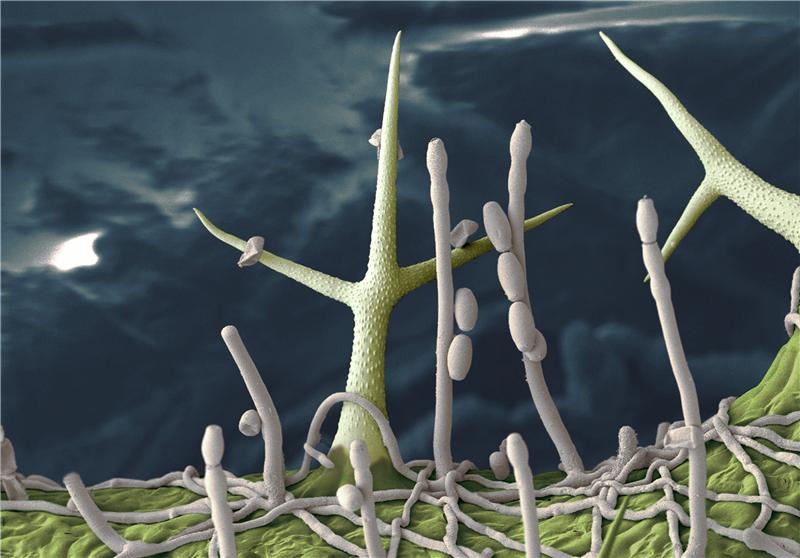
Scientists from Tübingen say they have revealed an evolutionary dilemma - plants that are more resistant to disease grow more slowly and are less competitive than susceptible relatives when enemies are rare.

Individuals of one and the same plant species often differ greatly in their ability to resist pathogens. While one rose succumbs to bacterial infection, its neighbor thrives. Scientists from the Max Planck Institute of Developmental Biology in Germany say they have tracked down an explanation for this common phenomenon. Their conclusion: disease resistance can incur high costs. Especially resistant plants of mouse ear cress (Arabidopsis thaliana) produce fewer and small leaves, and have a competitive disadvantage in the absence of enemies.

