Two California children who had not had contact with pigs recently recovered from infections with "unique" swine flu/swine influenza viruses, raising concern about possible human-to-human transmission and putting health authorities on alert, the Centers for Disease Control and Prevention (CDC) reported.
The two cases were in a 10-year-old boy in San Diego County and a 9-year-old girl in neighboring Imperial County, but they are apparently unrelated, the CDC said in an Morbidity and Mortality Weekly Report (MMWR) Dispatch report April 21st.
Here is the concluding part (for the first part
see here) of a discussion of a few subtleties involved in the extraction of small new particle signals hiding within large backgrounds. This is a quite common problem arising in data analysis at particle physics experiments, but it is not restricted to that field. Quite on the contrary: narrow Gaussian signals are commonplace in many experimental sciences, and their identification and measurement is thus an issue of common interest.
A Brief History of the English Language Part 3The historical development of English is an excellent model of how a grammar naturally develops. I am trying to capture some of that history in this short series. Part of the problem of understanding how language works evaporates completely if one can see the beauty in a flow of words, the magic in a few blots of ink.
Part 1 briefly covered the period from the 5th century CE to the 14th century.
Part 2 describes Chaucer's influence on the development of English.
If you are even a teensy little bit into reason and rationality, then you are likely to wince every time you open a newspaper, surf the web or watch television. The wince of the week definitely came from an interview that ABC’s George Stephanopoulos conducted with G.O.P. House opposition leader John Boehner.
(Sensors in the skin - does that sound like Frank Sinatra singing?)
Of the professors at Reading University, perhaps the one with the highest media profile is Kevin Warwick, well known for planting microchips inside himself as signalling devices. However, it seems that nature, as so often happens, got there first.
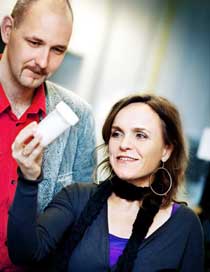
A piece of chalk in a laboratory at the University of Stavanger in Norway may be the key to unlocking a great mystery.
If the mystery is solved, it will generate billions in additional income. Okay, it will be billions of dollars for the oil industry and Arabs aren't exactly doing great things with their money now but uncovering the mechanisms behind 'water weakening' could provide crucial knowledge for oil companies to be able to predict reservoirs’ behavior.
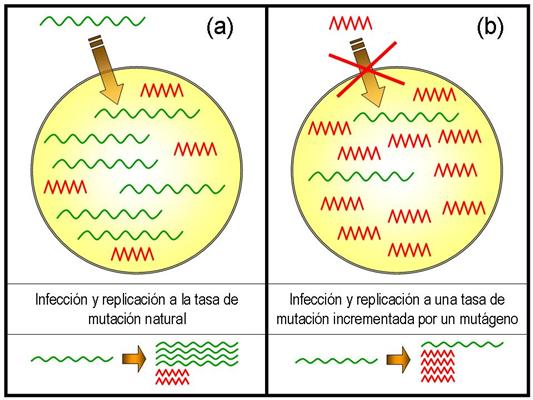
Two researchers from the Spanish Centre of Astrobiology (INTA-CSIC) have developed a mathematical model which demonstrates that a mild increase in the mutation rate of some viruses can reduce their infectivity, driving them to extinction. The study, published recently in Europhysics Letters, could have clinical uses in the medium term.
"The model we present shows how simple evolutionary mechanisms can cause the extinction of populations of fast mutating pathogens, such as certain viruses", co-author of the study and Centre of Astrobiology researcher Susanna C. Manrubia explained to Servicio de Información y Noticias Científicas (SINC).
A study led by researchers from the Madrid Carlos III Institute of Health associates the increase of cholera cases in Zambia with climate factors. They say their results confirm that the increase in environmental temperature six weeks before the rain season increases the number of people affected by this sickness by 4.9%.
DNA sequencing is the next frontier in biological research.As new sequencing technology becomes more efficient and affordable, it is increasingly available to small laboratories. Thus, sequencing data is being generated at a faster rate than ever before.
However, the computing capacity needed to analyze such vast amounts of data still has some catching up to do. Large networks of interconnected computers, called computer clusters, are required to analyze these data. Expensive to establish and maintain, these computer clusters are generally available only to labs that can afford them.
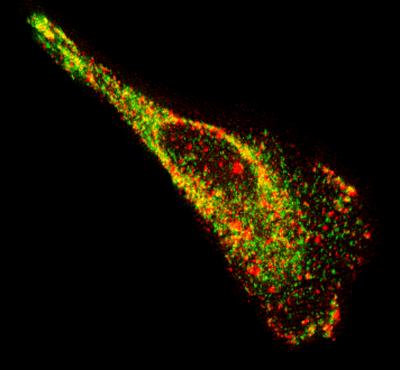
Biomedical engineers have developed a new type of probe that allows them to visualize single ribonucleic acid (RNA) molecules within live cells more easily than existing methods. The tool will help scientists learn more about how RNA operates within living cells.
Techniques scientists currently use to image these transporters of genetic information within cells have several drawbacks, including the need for synthetic RNA or a large number of fluorescent molecules. The fluorescent probes developed at the Georgia Institute of Technology circumvent these issues.