



Hallucinations and delusions in the general population are more common than previously thought, according to a study which found that hearing voices and seeing things others cannot impacts about five percent of the general population at some point in their lives.

Queensland Brain Institute researcher Professor John McGrath said the study, involving more than 31,000 people from 19 countries, was the most comprehensive ever completed.

Several genes have been lost from the Y chromosome in humans and other mammals but essential Y genes are rescued by relocating to other chromosomes, according to a new study.

The Y chromosome is dramatically smaller than the X chromosome and has already lost nearly all of the 640 genes it once shared with the X chromosome.

I have a wife, three children, three dogs, seven cats. I’m not a Franz Kafka, sitting alone and suffering.

So wrote Stanley Kubrick in 1972. And indeed, Kafka and Kubrick may not seem to have a whole lot in common. Kafka is Czech, Kubrick American.

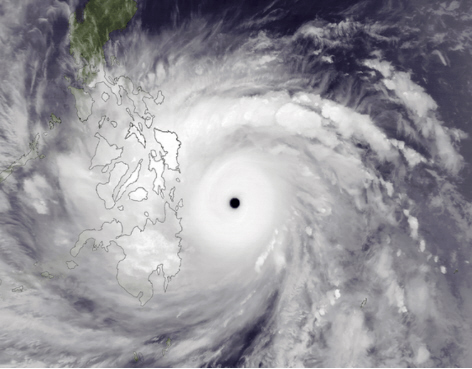
Typhoon Haiyan, which devastated large portions of the Philippines in November 2013, killed at least 6,300 people. It set records for the strongest storm ever at landfall and for the highest sustained wind speed over one minute ever, hitting 194 miles per hour when it reached the province of Eastern Samar.

It could become more common, according to a new model which factored in what controls the peak intensity of typhoons. The model finds that under climate change this century, storms like Haiyan could get even stronger and more common - as much as 14 percent, nearly equivalent to an increase of one category.
A multidisciplinary team from Mexico created ACORDE, a full cosmic ray detector, and Sergio Vergara Lemon, researcher at the University of Puebla says it is the first Mexican cosmic ray detector.

ALICE is one of five experiments installed in the Large Hadron Collider (LHC) and its function is to characterize other detectors and develop physics experiments of high energy with cosmic rays to record their passage. ALICE is made up of several screening instruments. "It's like an onion, you have a detector inside, one outside and one more, ACORDE, is all the way up," says Arturo Fernandez Tellez of the Faculty of Physical and Mathematical Sciences at  University of Puebla.
One of the main health targets proposed by the UN Sustainable Development Goals is to reduce premature mortality from non-communicable diseases such as cancer, stroke and dementia by a third.

The goals for 2016-2030 define "premature" mortality as deaths occurring among people aged 69 years old or younger, so if you die after that you have lived a full life and shouldn't expect much more. But that is blatant "ageism", according to Professor Peter Lloyd-Sherlock, professor of social policy and international development at University of East Anglia, and colleagues. 

The new disaster movie San Andreas draws on science fact - that earthquakes are a reality - and turns it into an action movie by creating a domino effect and pitting Duane "The Rock" Johnson against them.

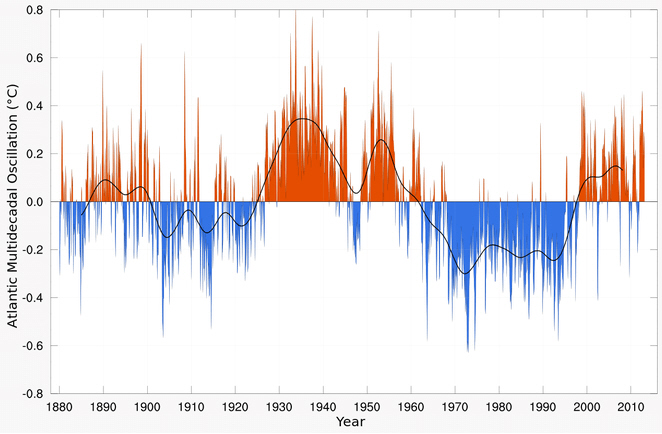
The Atlantic Ocean’s surface temperature swings between warm and cold phases every few decades. Like its higher-frequency Pacific relative El Nino, this so-called “Atlantic Multidecadal Oscillation” can alter weather patterns throughout the world.

The warmer spell we’ve seen since the late 1990s has generally meant warmer conditions in Ireland and Britain, more North Atlantic hurricanes, and worse droughts in the US Midwest.

However a colder phase in the Atlantic could bring drought and consequent famine to the developing countries of Africa’s Sahel region. In the UK it would offer a brief respite from the rise of global temperatures, while less rainfall would mean more frequent summer barbecues. A cold Atlantic also means fewer hurricanes hitting the southern US.

Why do good people do bad things? It's a question that has been pondered for centuries, and new research may offer some insight. 

In a series of experiments with undergraduates, participants who anticipated a temptation to act unethically were less likely to then behave unethically, relative to those who did not. These participants also were less likely to endorse unethical behavior that offered short-term benefits, such as stealing office supplies or illegally downloading copyrighted material.