






Biophysics researchers recently used short pulses of light to peer into the mechanics of photosynthesis to try and determine the role of molecule vibrations in the energy conversion process that powers life on earth.   

Through photosynthesis, plants and some bacteria turn sunlight, water and carbon dioxide into food for themselves and oxygen for animals to breathe. It's perhaps the most important biochemical process on Earth and scientists don't yet fully understand how it works.  New 'quantum biology' findings could potentially help engineers make more efficient solar cells and energy storage systems and provide evidence for exactly how photosynthesis manages to be so efficient.  

Eosinophillic esophagitis (EoE) is a chronic inflammatory disorder of the esophagus. The condition is triggered by allergic hypersensitivity to certain foods and an over-accumulation in the esophagus of white blood cells called eosinophils.

EoE can cause a variety of gastrointestinal complaints including reflux-like symptoms, vomiting, difficulty swallowing, tissue scarring, fibrosis, the formation of strictures and other medical complications. 

New research has identified a novel genetic and molecular pathway in the esophagus that causes eosinophillic esophagitis, opening up potential new therapeutic strategies for an enigmatic and hard-to-treat food allergy. 

A decreased ability to identify odors might indicate the development of cognitive impairment and Alzheimer's disease, according to results of research reported at the Alzheimer's Association International Conference 2014 in Copenhagen. 

Examinations of the eye could also indicate the build-up of beta-amyloid, a protein associated with Alzheimer's, in the brain.

An international research project has reported that a new oral medication is showing significant progress in restoring vision to patients with Leber congenital amaurosis (LCA). This inherited retinal disease that causes visual impairment ranging from reduced vision to complete blindness, has remained untreatable.  

"This is the first time that an oral drug has improved the visual function of blind patients with LCA," says the study's lead author, Dr. Robert Koenekoop, who is director of the McGill Ocular Genetics Laboratory at The Montreal Children's Hospital of the MUHC, and a Professor of Human Genetics, Paediatric Surgery and Ophthalmology at McGill University. "It is giving hope to many patients who suffer from this devastating retinal degeneration."

An archaeological dig in southeast Turkey has uncovered a large number of clay tokens that would ordinarily been have dated before the invention of writing - but the new find of tokens dates from a time when writing was commonplace, thousands of years after it was previously assumed this technology had become obsolete.

Sound strange? Perhaps not. Researchers compare it to the continued use of ink pens from the early 1800s in the age of computers. 

A new climate model says that southwestern Australia's long-term decline in fall and winter rainfall is caused by increases in man-made greenhouse gas emissions and ozone depletion.

In the 1980s, the discovery of soccer-ball-shaped carbon molecules called buckyballs helped to spur an explosion in nanotechnology research.

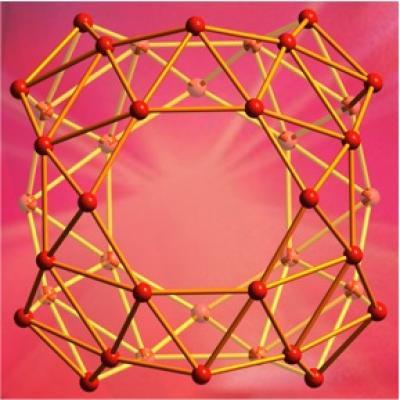
Now, there appears to be a new ball on the pitch - a cluster of 40 boron atoms forms a hollow molecular cage similar to a carbon buckyball. It's the first experimental evidence that a boron cage structure, previously only a matter of speculation, does indeed exist.

Carbon buckyballs are made of 60 carbon atoms arranged in pentagons and hexagons to form a sphere—like a soccer ball. Their discovery in 1985 was soon followed by discoveries of other hollow carbon structures including carbon nanotubes. Another famous carbon nanomaterial—a one-atom-thick sheet called graphene—followed shortly after.

A recent review in the British Journal of Nutrition concluded that the nutritional quality and safety of organic food was higher than conventional food. Fruits, vegetables, and grains, organic versions were better in all ways than conventional farming, they determined.

Organic food had fewer pesticides, a much different result than other studies, and also had more important nutrients, also a much different result than other studies.

A new study finds that Silverback gorillas appear to use odor as a form of communication with other gorillas.

Recent evidence has demonstrated that transplantation of mesenchymal stem cells can stimulate neurogenesis in the brain of adult rat or mouse models of Alzheimer's disease (AD) and improve tissue and function injury under the condition of cerebral ischemia. Few studies are reported on the therapeutic effect of adipose-derived stem cells (ADSCs) transplantation in mice with AD and on the effect on oxidative injury and neurogenesis in the brain of AD mice. Dr. Yufang Yan and her team, School of Life Sciences, Tsinghua University, China transplanted ADSCs into the hippocampus of APP/PS1 transgenic AD model mice.


