





Scientists working to make gene therapy a reality say they have figured out how to bypass a blood stem cell's natural defenses and efficiently insert disease-fighting genes into the cell's genome.

The drug rapamycin, which is commonly used to slow cancer growth and prevent organ rejection, enables delivery of a therapeutic dose of genes to blood stem cells while preserving stem cell function. The findings in Blood could lead to more effective and affordable long-term treatments for blood cell disorders in which mutations in the DNA cause abnormal cell functions, such as in leukemia and sickle cell anemia.

Methane is a simple molecule, it consists of a carbon atom bound to four hydrogen atoms. 

But it is the key component in the natural gas that has led to lower CO2 emissions in America and due to that it is getting some attention in global warming that was denied it when the cultural focus regarded carbon dioxide as a magic bullet to control the climate. 

Rather than simplistic tales of it being a runaway problem, like in some claims, its status is more positive. It hasn't really gone up even with the boom in natural gas and it has a far shorter life than CO2. It is also a kind of metabolic currency in many ecosystems.

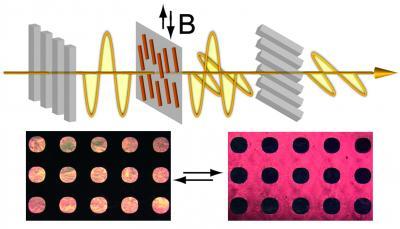
Chemists have constructed liquid crystals with optical properties that can be instantly and reversibly controlled by an external magnetic field and that paves the way for display applications using instantaneous and contactless nature of magnetic manipulation - like a poster that customizes based on the people around it.

Commercially available liquid crystals in electronic displays are composed of rod-like or plate-like molecules. When an electric field is applied, the molecules rotate and align themselves along the field direction, resulting in a rapid tuning of transmitted light.

About 450,000 (12 percent) of the 3.9 million babies born each year in the United States are premature. Thanks to modern medicine, the number of preterm infants who survive has also surged in middle income countries in Latin America, Asia, and Eastern Europe. 

In these parts of the world, rates of childhood blindness from retinopathy of prematurity (ROP) are estimated at 15 to 30 percent—compared to 13 percent in the United States. Some degree of  retinopathy of prematurity appears in more than half of all infants born at 30 weeks pregnancy or younger—a full-term pregnancy is 40 weeks—but only about 5 to 8 percent of cases become severe enough to require treatment.

The sign of a bad gambler is the belief that they are on a winning streak, that luck is just going their way.

Gambling is math and luck. If you can afford to keep doubling, you will win. And as long as you stop after you win, you can never lose. That is why casinos have table minimums and maximums, to prevent winning. 

But humans have a well-documented tendency to see instead winning and losing streaks in situations that, in fact, are random. Psychologists disagree about whether this "hot-hand bias" is a cultural artifact picked up in childhood or a predisposition deeply ingrained in the structure of our cognitive architecture. 

Melanoma is one of the worst, most metastatic cancers known today.

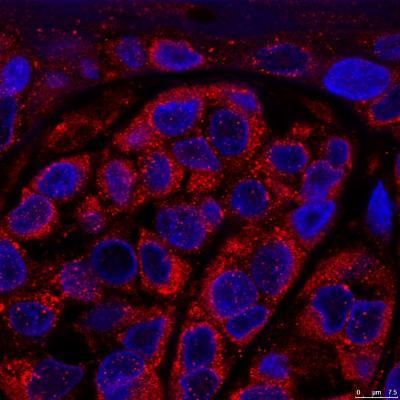
Researchers from the Spanish National Cancer Research Centre (CNIO) have discovered more than 40 genes that predict the level of aggressiveness of melanoma and that distinguish it from other cancers with a poor prognosis. The discovery will help to identify unique aspects of melanoma that could contribute to determine the risk of developing metastasis in patients with this disease. It explains why a drug, also described by CNIO, is being used to selectively attack the melanoma tumor cells.  

What is the function of these genes? Strangely, the factors that are increased in melanoma share a common mechanism: the formation of vesicles called endosomes.

Advocates for subsidized health care insist we face a black and white issue - the rich have health care and the poor do not.

Yet poor people in developing nations are healthier than wealthier countries. 

Hans Rosling,  Professor of International Health at the Karolinska Institute in Stockholm, is giving a presentation at
the 64th Lindau Nobel Laureate Meeting where he intends to underscore the fact that false assumptions regarding the reality of life for people throughout the world are an impediment to the urgently needed potential solutions to the rising global demand for health care. 

That the world of health is divided between rich and poor is more cliché

Surveys of 20 homeless, alcohol-dependent patients who had four or more annual visits to Bellevue Hospital's emergency department for two consecutive years determined that all began drinking in childhood or adolescence, and 13 reported having alcoholic parents. 13 patients reported abuse in their childhood homes and 19 left home by age 18. Only one was married and none of the subjects was employed. The three who were military veterans said that military life amplified their alcohol use. 

A small, drab and highly inconspicuous moth has been flitting nameless about its special niche among the middle elevations of one of the world's oldest mountain ranges, the southern Appalachian Mountains in North America. A team of American scientists has now identified this new to science species as Cherokeea attakullakulla.

It was frequenting these haunts for tens of millions of years before the first humans set foot on this continent, all the while not caring in the least that it had no name or particular significance, but it will probably still get listed as endangered. 


Tuberculosis (TB) remains a major cause of disability and death worldwide. An estimated 8.6 million people fell ill and 1.3 million people died from the disease in 2012, according to the World Health Organization. Although TB is curable, adherence to therapy is difficult as treatment requires taking antibiotic drugs for at least six months and sometimes up to two years. Poor adherence to medication and other factors have resulted in drug-resistant strains, and currently no effective TB vaccine exists.  

A new paper describes a type of tuberculosis (TB) treatment that involves manipulating the body's response to TB bacteria rather than targeting the bacteria themselves, a concept called host-directed therapy.


