


The land known as Israel today was once pretty bleak. Mark Twain spoke of the barren landscape and lack of people when it was owned by colonial European powers. Nothing much was there.

But then Jews began buying it up. They planted crops and modernized irrigation. After World War II, the United Nations made it a country and now the land is considered so valuable the Arab states insist they should own it instead.

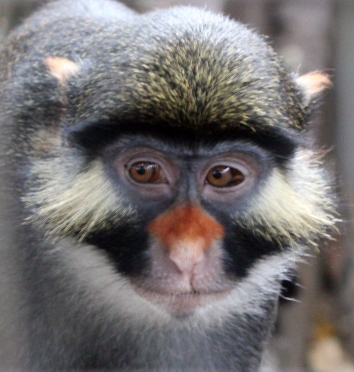
Old World monkeys have undergone a remarkable evolution in facial appearance as a way of avoiding interbreeding with closely related and geographically proximate species, according to a new paper which provides best evidence to-date for the role of visual cues as a barrier to breeding across species.

The researchers studied guenons—a group of more than two dozen species of monkeys indigenous to the forests of Central and West Africa. Many different species of guenons are often sympatric—they live in close proximity to each other, with multiple species often traveling, feeding, and sleeping side-by-side. Therefore interbreeding, which could result in afflicted infertile offspring, remains an unwelcome possibility. 

A blood testcould help predict the likelihood of a woman developing breast cancer, even in the absence of a high-risk BRCA1 gene mutation, according to researchers from University College London who identified an epigenetic signature in the blood of women predisposed for breast cancer owing to an inherited genetic mutation of the BRCA1 gene.

Epigenetic alterations are thought to be key molecular switches that are involved in the development of cancer. Strikingly, the same signature was discovered in the blood of women without a BRCA1 mutation but who went on to develop breast cancer, making it a potential early marker of women's cancer in the general population. 

What is believed to be the smallest force ever measured, 42 yoctonewtons, has been detected by at the Lawrence Berkeley National Laboratory.

A yoctonewton is one septillionth of a newton and there are approximately 3 x 10²³ yoctonewtons in one ounce of force.
 That's tiny. Using a combination of lasers and a unique optical trapping system that provides a cloud of ultracold atoms, the researchers detected the minute force.

Antibodies and their derivatives can protect plants and humans against viruses but members of this class of drugs are usually highly specific against components of a particular virus, and mutations in the virus that change these components can make them ineffective.

But a mini-antibody called 3D8 scFv can chew up viral DNA and RNA regardless of specific sequences and protect mammalian cells and genetically manipulated mice against different viruses.

Sukchan Lee, from Sungkyunkwan University in Korea, and colleagues had previously discovered that 3D8 has both DNase and RNase activity (that is, it can degrade both), and that it can inhibit viruses under certain circumstances. In this study, they genetically manipulated cells and mice to produce 3D8.

PHILADELPHIA (June 26, 2014)— In the first pilot study asking adults on the autism spectrum about their experiences with driving, researchers at Drexel University found significant differences in self-reported driving behaviors and perceptions of driving ability in comparison to non-autistic adults. As the population of adults with autism continues growing rapidly, the survey provides a first step toward identifying whether this population has unmet needs for educational supports to empower safe driving – a key element of independent functioning in many people's lives.

COLUMBUS, Ohio – Scientists have identified a potential Achilles' heel for Salmonella – the bacteria's reliance on a single food source to remain fit in the inflamed intestine.

When these wily bugs can't access this nutrient, they become 1,000 times less effective at sustaining disease than when they're fully nourished.

The research suggests that blocking activation of one of five genes that transport the nutrient to Salmonella cells could be a new strategy to fight infection.

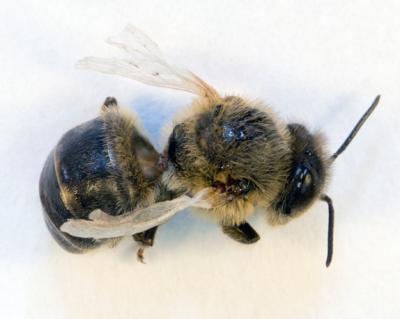
Honeybees are a key pollinating insect, associated with around $40 billion in crops. In recent years, there were higher than normal colony losses (colony collapse disorder) has been a concern. Environmentalist have focused on neonicotinoid pesticides while science has believed it is a combination of weather and parasites.

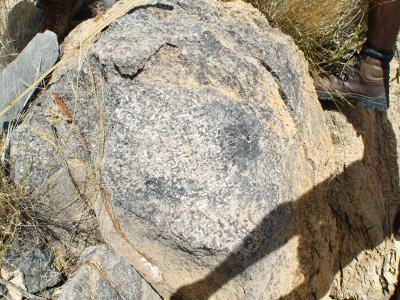
Cloudina were tiny, filter-feeding creatures that lived on the seabed during the Ediacaran Period, which ended 541 million years ago. Fossil evidence indicates that animals had soft bodies until the emergence of Cloudina. Now they are involved in a new study which sheds light on how one of Earth's oldest reefs was formed.  

Researchers have discovered that one of these reefs – now located on dry land in Namibia – was built almost 550 million years ago, by these first animals to have hard shells. Scientists say it was at this point that tiny aquatic creatures developed the ability to construct hard protective coats and build reefs to shelter and protect them in an increasingly dangerous world.  

WASHINGTON, D.C., June 26, 2014 - First-grade teachers in the United States may need to change their instructional practices if they are to raise the mathematics achievement of students with mathematics difficulties (MD), according to new research published online today in Educational Evaluation and Policy Analysis, a peer-reviewed journal of the American Educational Research Association.

VIDEO: Co-author Paul L. Morgan discusses key findings https://www.youtube.com/watch?v=xCAzLGSZ6aM&feature=youtu.be

