
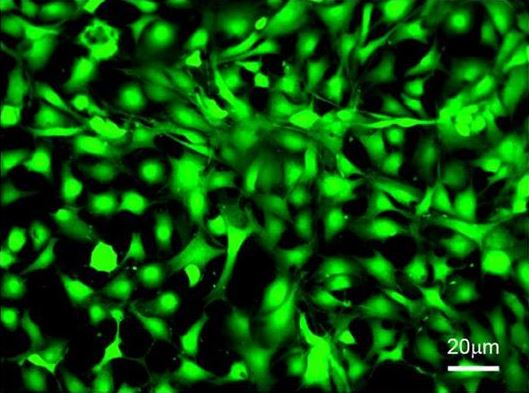
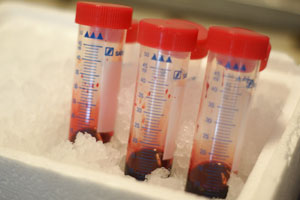
Four of the most common mosquito pesticides used along the east and Gulf coasts show little risk to juvenile hard clams and oysters, according to a NOAA study in Archives of Environmental Contamination and Toxicology.

The paper also determined that lower oxygen levels in the water, known as hypoxia, and increased acidification increased how toxic some of the pesticides were. Such climate variables should be considered when using these pesticides in the coastal zone, the study concluded.

Like breathing? Thank water. And the continents.

One of the greatest mysteries of evolution involves oxygen levels in the atmosphere. At various points throughout 4.5 billion years of geological history, carbon levels have been 10X what they are today, yet life pushed on. Today, oxygen concentration is 21% of the atmosphere. One of the biggest puzzles in geochemistry is how it went from trace amounts to just the right one.

More is often not better. In the old days, naive corporations believed that a product that was not harmful when used according to guidance could be overused and it was just a waste of money. Once DDT got banned in America because more was not better, companies got a little smarter about stressing smart application.

But in different regions and climates, the optimal amount of something like fertilizer can fluctuate. Helping farmers around the globe apply more-precise amounts of nitrogen-based fertilizer can even help combat climate change.

Understanding how clouds affect climate is been a difficult proposition, even for a difficult to understand field like climate science.

What controls the makeup of the low clouds that cool the atmosphere or the high ones that trap heat underneath? How does human activity change patterns of cloud formation?

New research in Science suggests we may be nudging cloud formation in the direction of added area and height - and there may be even be a new type. It seems that, in pre-industrial times, there was less cloud cover over areas of pristine ocean than is found there today. 

"Hello, World!" came the message from the International Space Station as NASA successfully beamed high-definition video via laser from space to ground on Thursday, June 5. The 175-megabit video transmission was the first of its kind for the Optical Payload for Lasercomm Science (OPALS) with the goal of improving the way we receive data from orbit and beyond. In fact, this emerging technology of optical communications--or lasercomm--is likened to an upgrade from dial-up to DSL.

"It's incredible to see this magnificent beam of light arriving from our tiny payload on the space station," said Matt Abrahamson, OPALS mission manager at NASA's Jet Propulsion Laboratory (JPL) in Pasadena, California.

Researchers have developed biomaterials for bone regeneration from beer brewing waste.
Every day thousands of people around the world have their lives saved or improved thanks to someone giving blood but it has limitations. It's shelf life can be limited, blood types need to match and the public needs to be willing to do it. That's without the safety concerns of donated blood. All of these things add to the cost.

The system works - over 85 million units of donated blood are given to people worldwide for use in hospitals - but there are worries about its use in routine operations, and the number of potential and active blood donors decreasing worldwide. 

Like with many things, a lot of variables go into evolution. Some is luck, some is necessity, some is circumstance. Over time, for example, a region of blacksmiths will grow bigger arms. It isn't an epigenetic or Lamarckian evolution event but it will happen over generations because holding a hammer becomes important in that circumstance.

Almost anything can claim an evolutionary basis, if you try hard enough. In the run up to the last American presidential election, there were even claims that people were born liberal or conservative. Yes, social psychologists and the political pundits who take them seriously believed the American left and right were evolving differently than the rest of the world.

Imagine a world where the tedious moments of life, cleaning or driving a car or whatever, could be spent visiting the Louvre or meeting new people or learning history. 

The whole universe of information is at your fingertips. The only evidence of intelligence is how well you utilize the system, multitasking and parsing information while chatting and even letting someone ride shotgun in your experiences. Genius itself would be redefined.

Then imagine it all disappeared. Could you remember what people told you without a digital archive of the conversation? How they look? Could you find your way home?
It's not surprising that in a trial, mothers participating in the Women, Infants, and Children (WIC) who received subsidized vouchers for fruits and vegetables at area farmers markets used them - and chose fruits or vegetables more often then they would at supermarkets. 

But prices at local supermarkets are lower, notes a new University of Illinois study, so the question becomes how much should taxpayers spend in hopes that families will eat more vegetables, if they don't buy them at supermarkets. Should we mandate their behavior by giving them vouchers for farmer's markets rather than grocery stores?

