

Academic researchers are already bogged down in a sea of government and institutional bureaucracy, committee meetings, guidelines, unspoken rules and lengthy regulations.

Will they embrace a formalized top-down process for collaborating?

A group of scholars in communications, neuroscience, psychology, population studies, statistics, biomedical engineering and pediatrics hope so. They think their framework would improve things for the researchers that study genes, brain, and environmental factors that matter to the outcomes of population. They seek acknowledgement that future research needs to focus on the examination of the broader population to provide better science on the lives of all individuals in our society. 

As we near the end of 2013, if a mutual fund manager does not have successful Company X - be it Netflix or anything else that has done well this year - the owners of the mutual fund shares are going to have a lot of questions.

As a result of that competitive pressure, the mutual fund manager may buy Company X - at its all-time high, after others are quite profitable in it - just to show it in the portfolio.

Typhoon Francisco was already spreading fringe clouds over southern Japan when NASA's Aqua satellite flew overhead and captured a picture of the storm from space on Oct. 22nd at 04:30 UTC/12:30 a.m. EDT.

Aqua captured Typhoon Francisco approaching Japan with a tightly wound center and small eye. Bands of thunderstorms wrapped into the center from the northern and southern quadrants of the storm as Francisco moved toward Japan. The image was created by the NASA MODIS Rapid Response Team at NASA's Goddard Space Flight Center in Greenbelt, Md.

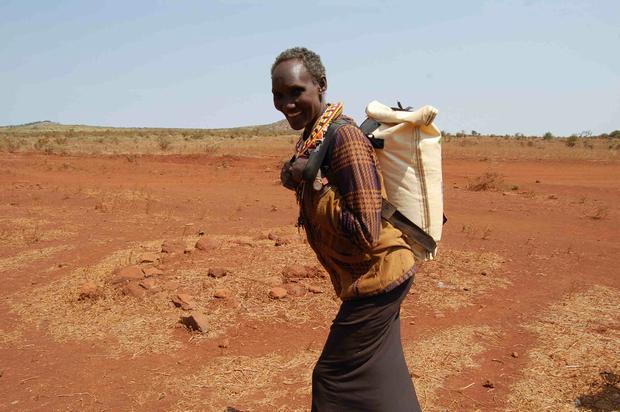
Habitat for Humanity International is getting 100,000 PackH2O collapsible water backpacks from the manufacturer, Greif, to use in 8 developing countries.
In my previous article, I posted the press release for the Science Play and Research kit. There are 76 days left in the competition. I can only produce one article per week due to my work schedule thus I’d only be able to come up with a chemistry set with 11 experiments. It wouldn't be much of a chemistry set would it? So, I’ve decided not to actually enter the competition but instead to post ideas for the set so whoever wants to use them can incorporate them into their design for SPARK. 

According to the FAQ page:

Does the entry need to be based on the science of chemistry?

Any time you get a majority of people together, there will always be some sensitivity and compassion and outreach for the minority. In science academia, it is obvious; small blips in representation get concern about fixing the problem of how to get more of demographic X.

A high school student is credited with finding the youngest, smallest and most complete fossil skeleton yet known from the iconic tube-crested dinosaur Parasaurolophus, in Grand Staircase-Escalante National Monument in southern Utah. 

The discovery shows that the prehistoric plant-eater sprouted its strange headgear before it celebrated its first birthday. Three-dimensional scans of nearly the entire fossil make this the most digitally accessible dinosaur to date.

Female edible dormice (Glis glis) have a pleasant taste and have long been viewed as a special delicacy. The Romans even kept them in captivity to fatten them up for eating, which explains the "edible" part of their name. 

The reason is because after summer ends, and they are done caring for their young, they start to replenish their fat stores to cope with the upcoming winter. Later in the year, when outside temperatures drop, dormice move to their hibernation quarters where they will spend months without food. During hibernation, dormice enter phases of 'torpor': they drastically reduce their metabolic rate and lower their body temperature to that of the surrounding environment.

During a space shuttle mission on October 30th, 2007, astronauts set out to install two solar panels on the truss of the International Space Station (ISS). The first panel deployed successfully but they noticed a two-foot-wide tear in the second panel. 

To repair it, they had to send someone on a spacewalk while tethered to the shuttle’s inspection arm. Mercury astronauts wouldn't have blinked at the idea but modern NASA has a zero risk tolerance so not only was it dangerous - the robotic arm hadn't been used in such a way, a wrong move could have electrocuted the astronaut - but it also had political implications if an accident happened. 
I am not a metaphysician (or a metaphysicist, as some call themselves), but I've been fascinated for a while by what I've come to think of as the metaphysics wars. Let me explain. Metaphysics is, of course, one of the classic branches of philosophy, tracing back at least to the pre-Socratic Thales of Miletus (the guy who thought that all is made of water), and of course getting its name from Aristotle's treatise (though that wasn't the original title, it was named so afterwards, because it came after Aristotle's Physics).


