

Marijuana use continues to be on the upswing in the United States. A public relations campaign claiming health benefits while ignoring health risks have led to diminishing public disapproval and more lenient legislation.

People who disapprove of a particular drug are unlikely to use it, but what about the gateway affect? Does the use of one drug affects people's attitudes toward using other drugs? Do personality traits matter?

High school seniors who frown upon the use of drugs are most likely to be female, nonsmokers or hold strong religious beliefs, according to a paper by Joseph Palamar of New York University. Palamar that examines how teenagers' attitudes toward marijuana influenced their thoughts on the further use of other illicit drugs. 

The early days of Ashkenazi Jews – that is, Jews with more recent ancestry in central and Eastern Europe – are a hot debate topic. It is believed that their ancestors migrated into Europe from Judea in the first century A.D., after the destruction of the Second Temple by the Romans, and that led to some intermarriage with Europeans later on.  

Others have argued that they have a mainly European ancestry, and arose by conversion to Judaism of indigenous Europeans, especially in Italy. While still others have even argued that they were largely assimilated in the North Caucasus during the time of the Khazar Empire, the Turkic people in the Western steppe whose rulers turned to Judaism around of the tenth century AD.

We're better off if chemicals we use in everyday life are created from renewable resources using biotechnology - currently many of those chemicals are instead derived from fossil resources.

The earliest evidence of a comet entering Earth's atmosphere and exploding has been found. It rained down a shock wave of fire which obliterated every life form in its path, has been found. 

The regions of the U.S. that have doctors and hospitals consolidated into large networks are more likely to have accountable care organizations - medical practice structures that seek to improve medical care and reduce costs - according to a new RAND Corporation paper written to bolster support for the federal Affordable Care Act. 

Consolidation and accelerating growth of large accountable care organizations are a key cost control strategy for Obamacare.

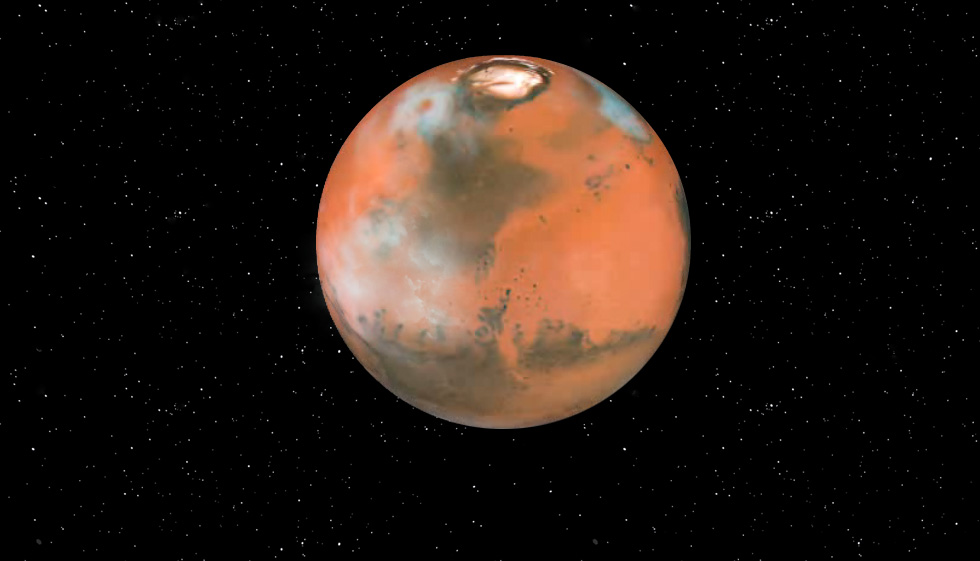
Clouds on Mars look a lot like those on Earth: images of the Martian sky taken by NASA's Opportunity rover depict gauzy, high-altitude wisps, similar to our cirrus clouds.

These clouds likely consist of either carbon dioxide or water-based ice crystals but since we can't sample a Martian cloud yet, it's difficult to know the precise conditions that give rise to them. So researchers have done the next-best thing; they've recreated Mars-like conditions within a three-story-tall cloud chamber in Germany, adjusting the chamber's temperature and relative humidity to match conditions on Mars — essentially forming Martian clouds on Earth.  

With 99% of the Earth's water unused, it might not seem like there could be a water scarcity issue, but water tends to be boom and bust. Many of the poorest regions don't have access to potable water and new estimates by the Potsdam Institute for Climate Impact Research (PIK) if temperatures warm due to climate change.

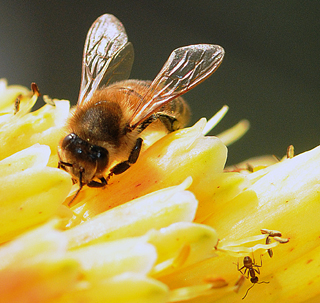
Bees are more genetically related to ants than they are to social wasps such as yellow jackets and paper wasps, according to a new paper.

 Ants, bees and stinging wasps all belong to the aculeate (stinging) Hymenoptera clade, the insect group in which social behavior is most extensively developed, said senior author and ant specialist Phil Ward, professor of entomology at UC Davis. 

The use of genome sequencing and bioinformatics answers a piece of a long-standing, unanswered evolutionary puzzle. Previously it was thought that ants and bees were distantly related, with ants being closer to certain parasitoid wasps.

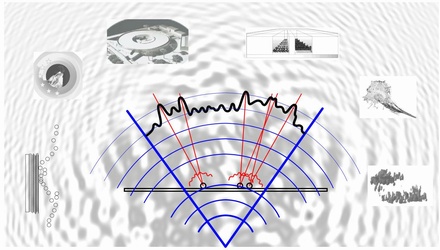
HIGGS AND ENGLERT!

Note
: this article is being updated in real time as events unfold... Updates are at the bottom. Note in particular the 12.05 update...!

---

As with any new technology, the development and commercialization of biotech crops is a story about people.  Its a story about people with ideas and vision; people who did hard and creative work; people who took career or business risks, and people who integrated this new technology into the complex business of farming.  By various artifacts of my educational and career path, I've been in a position to know many of these people as friends and colleagues over the last 36 years.  Their story is important, but it tends to get lost in much of the conversation about biotech crops.


