


I recently examined (and found wanting) the so-called computational theory of mind, albeit in the context of a broader post about the difference between scientific theories and what I think are best referred to as philosophical accounts (such as the above mentioned computational “theory”). Defenders of strong versions of computationalism (which amounts to pretty much the same thing as strong AI) often invoke the twin concepts of computation itself and of the Church-Turing thesis to imply that computationalism is not only obviously true, but has been shown to be so by way of mathematical proof.

Finasteride, a generic drug used by physicians to treat enlarged prostate and male pattern baldness, was found to significantly reduce the risk of prostate cancer. During the trial of 19,000 men, a slightly higher percentage of those on finasteride developed high-grade cancer than those taking a placebo. This difference shrank in the follow-up analysis, which caused concern and debate in the medical community, and doctors backed away from prescribing the drug.

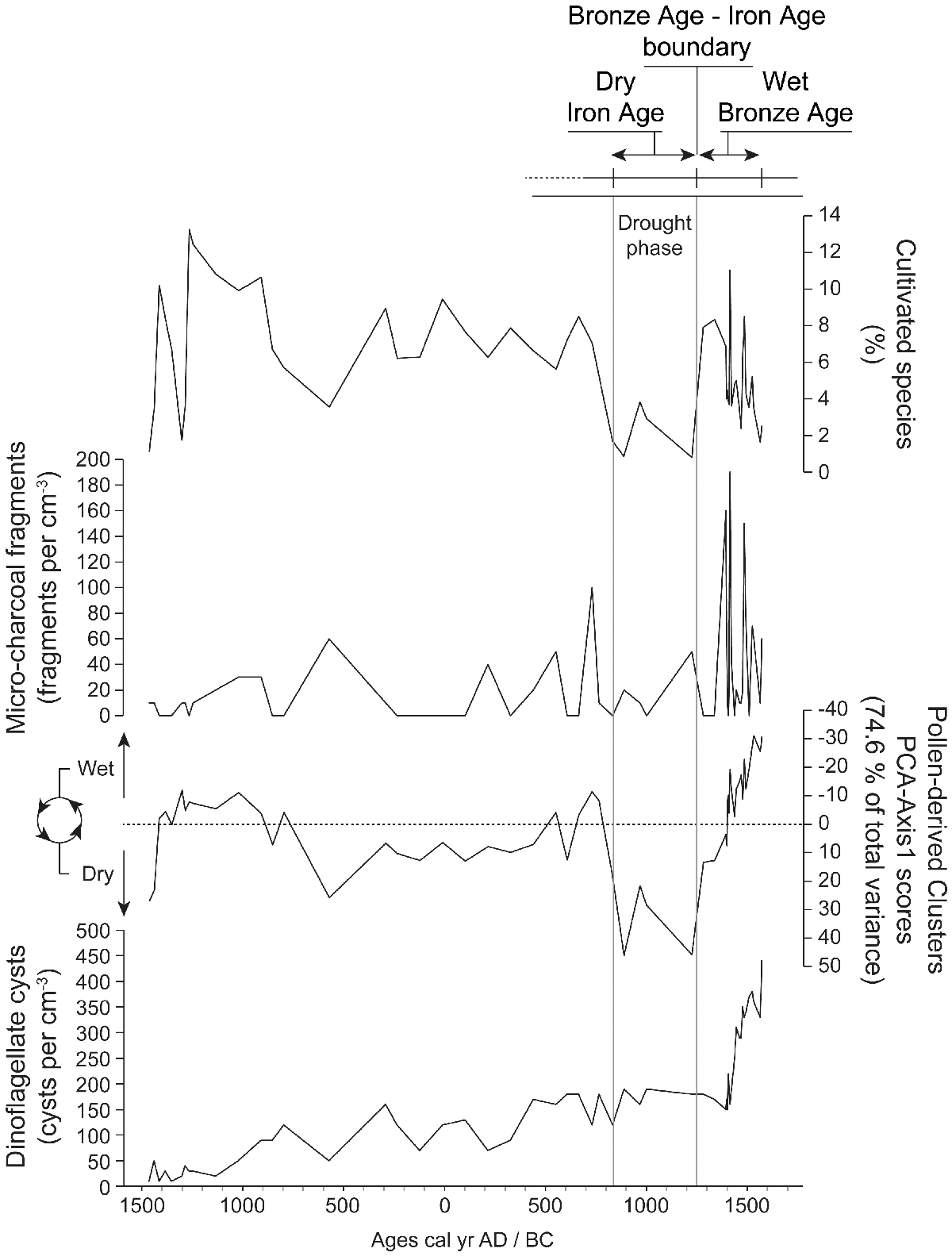
Some of the ancient civilizations that flourished in regions of the Eastern Mediterranean - Aegean, Egyptian, Syro-Palestinian, and Hittite civilizations - collapsed during the late Bronze Age. 

Hieroglyphic and cuneiform text remains portray invasions of the “Peoples-of-the-Sea” at the Nile Delta, the Turkish coast, and down into the heartlands of Syria and Palestine. Armies clashed, famine-ravaged cities were abandoned, and countrysides were depopulated. Mycenaean, Hittites, Canaanites and Egypt's New Kingdom all suffered dramatic declines.

When it comes to what's for dinner – or breakfast and lunch for that matter - too many people suffer from chemophobia, an irrational fear of chemicals that pose no risk to our health.

Chemistry Professor Gordon Gribble argues that low doses of chemicals in modern food are inherent, typically harmless and often highly beneficial. He says most people don't know they are routinely exposed to a host of compounds in non-toxic concentrations in what they eat and drink each day.

Even the air we breathe, whether in big cities or the countryside, is full of naturally occurring and synthetic chemicals, including wine "aroma," flower "bouquet," perfume "fragrance," bakery "smell" and "garbage "stench."

Physicists have successfully teleported information in a solid state system for the first time - they moved information from A to B for the first time in an electronic circuit, similar to a computer chip.

The essential difference between their method and the usual computer chip is that the information is not stored and processed based on the laws of classical physics, but on those of quantum physics. The researchers were able to teleport information across a distance of about six millimeters, from one corner of a chip to the opposite one. This was shown to be possible without transporting the physical object carrying the information itself from the sender's to the receiver's corner.

The Earth has periodic ice ages - every 100,000 years, give or take, and the ice ages last far longer than the warm periods.

In the last century, scientists determined that Earth's ice ages were determined by the wobbling of the planet's orbit, which changes its orientation to the sun and affects the amount of sunlight reaching higher latitudes, particularly the polar regions. The Northern Hemisphere's last ice age ended about 20,000 years ago and then the ice age in the Southern Hemisphere ended about 2,000 years later, suggesting that the south was responding to warming in the north.

 But new research says that Antarctic warming began at least two, and perhaps four, millennia earlier than previously thought.

Which strategies give players an edge at winning in multi-player real-time strategy games like Warcraft III/ Defense of the Ancients or Starcraft II?

An analysis technique by North Carolina State University computer scientists offers extremely precise information about how a player's actions affect a team's chances of winning, and could be used to develop technology for use by players and developers to improve gameplay experiences.

Their technique various existing analytical tools to evaluate logs of player actions from thousands of real-time strategy games. They then used that information to develop a set of rules governing team gameplay strategies, in order to identify which approaches give teams the best chance of winning.

Cleaner drinking water with fewer chemicals may be made possible using ... bacteria.

A research team studied four bacteria, Sphingobium, Xenophilus, Methylobacterium and Rhodococcus, found in a city's drinking water to see which combinations were more likely to produce a 'biofilm'. Biofilms are layers of bacteria which form on the inner surfaces of water pipes. Like in many instances, bacteria can be harmful or not.

For as much as the War of the Roses has been over-analyzed and documented, you'd think researchers would know where the Battle of Bosworth, which brought the Plantagenet King of England Richard III to a grisly end at the hands of the Tudors, was fought.

Not really.  it was thought that the Battle of Bosworth took place at a site in Leicestershire called Ambion Hill. There is a battlefield heritage center there.  Like Glastonbury being the burial place of King Arthur, sometimes the English just pick a spot.
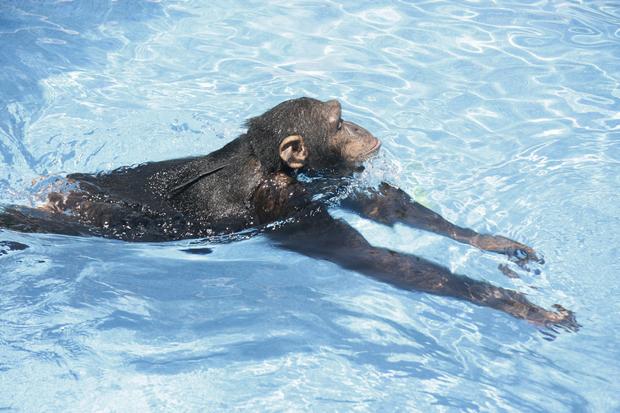
Zoos have used water moats to confine chimpanzees, gorillas or orangutans. When apes ventured into deep water, they often drowned, which indicated that apes could not learn to swim and so prefer to stay on dry land.

But it turns out that they can.

Two researchers have video-based observation of swimming and diving apes. Instead of the usual dog-paddle stroke used by most terrestrial mammals, these animals use a kind of breaststroke. This swimming strokes peculiar to humans (and apes) might be the result of an earlier adaptation to an arboreal life.

