


X chromosomes are special, even for genetic material. They differ in number between men and women and to achieve equality between sexes, one out of two X chromosomes in women is silenced.

In Drosophila, the opposite happens: in male flies, the only available X chromosome is highly activated, to compensate for the absence of the second X-chromosome.

A "structure-based" approach to drug design has led to identification of compounds with the potential to delay or treat Alzheimer's disease, and possibly Parkinson's, Lou Gehrig's disease and other degenerative disorders.

Structure-based drug design, in which the physical structure of a targeted protein is used to help identify compounds that will interact with it, has already been used to generate therapeutic agents for a number of infectious and metabolic diseases. 

A new projection estimates that by the middle of this century there could be an average 56 percent drop in the amount of water stored in peak snowpack in the McKenzie River watershed of the Oregon Cascade Range -   if there is a 3.6 degree Fahrenheit temperature increase.

Similar impacts may be found on low-elevation maritime snow packs around the world.

40 years ago, a technique now used for detecting tiny quantities of molecules, in situations from crime scene forensic analysis, to drug detection, to establishing the origins of works of art, was discovered.

But despite there being a dozen CSI shows that use this on American television, you probably never heard of it. 

In the early 1970s, researchers discovered that by roughening the metal surface upon which the molecules they were examining had been placed, they could increase the signal by which they could detect these molecules - by a million times. It became arguably the most sensitive method of analysis on surfaces that anyone has ever come up with.

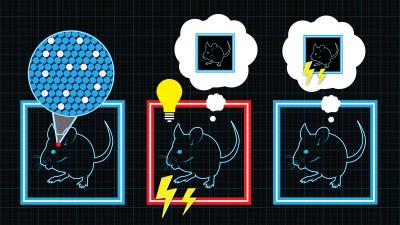
False memories implanted in mice show how easily it is to manipulate recall of events.


Natural killer cells (NK cells) are part of our innate immune system. As they first line of defense, researchers agree that the body needs as many active NK cells as possible.

But, as is often the case, there can be too much of a good thing and researchers at the Helmholtz Centre for Infection Research (HZI) have shown how.

In California, there are runaway wildfires because no one is allowed to take a machine into the woods and clear dead trees. Other countries have the opposite problem; a shortage of dead wood in forests results because fallen branches and trees are cleared away too often. 

Our one-size-fits-all federal management policy often hurts the environment under the guise of trying to help. Biologists working in Navarre note that dead wood ought to be decomposing, as it is the habitat of many living beings like lignicolous fungi. These fungi are capable of decomposing dead wood and turning it into organic and inorganic matter. Clearing away the dead wood from the forests is ecologically harmful for the fungi.

There aren't many areas where men and women benefit equally but coffee has always been about bringing people together. Do you think Newton would have done his great work without coffee? No, he would have starved long before Principia. The man ate every meal in a coffee house.

A new review in The World Journal of Biological Psychiatry will get heads nodding among coffee acolytes for finding that drinking lots of coffee daily reduces the risk of suicide in men and women by about 50%. The authors reviewed data from three U.S. studies and found that the risk of suicide for adults who drank two to four cups of caffeinated coffee per day was about half that of those who drank decaffeinated coffee or very little or no coffee.

Much like a superconductor loses no energy to resistance, a superfluid moves like a completely frictionless liquid, able to propel itself without any hindrance from gravity or surface tension.

The physics underlying these materials, which appear to defy the common sense precepts of conventional physics, has been a source of fascination for decades. 

Liquid helium is an example. When cooled to extremely low temperatures, helium exhibits behavior that is otherwise impossible in ordinary fluid - the superfluid can squeeze through pores as small as a molecule, and climb up and over the walls of a glass. It can even remain in motion years after a centrifuge containing it has stopped spinning. 

A lingering space mystery has been how electrons within Earth's radiation belt can suddenly become energetic enough to kill orbiting satellites. Thanks to data gathered from a pair of NASA probes roaming the harsh environment of near-Earth space, scientists have found an answer: an internal electron accelerator operating within the Van Allen radiation belts.

Scientists knew that something in space accelerated particles in the radiation belts to more than 99 percent the speed of light but they didn't know what that something was. New results from NASA's Van Allen Probes now show that the acceleration energy comes from within the belts themselves.

