






There are no lost cities containing aliens and otherworldly technology but ancient settlements in the Amazon, now almost entirely obscured by tropical forest, were once large and complex enough to be considered "urban" as the term is commonly applied to both medieval European and ancient Greek communities, according to a paper in Science authored by anthropologists from the University of Florida and Brazil, and a member of the Kuikuro, an indigenous Amazonian people who are the descendants of the settlements' original inhabitants.

The paper also argues that the size and scale of the settlements in the southern Amazon in North Central Brazil means that what many scientists have considered virgin tropical forests are in fact heavily influenced by historic human activity. Not only that, but the settlements – consisting of networks of walled towns and smaller villages, each organized around a central plaza – suggest future solutions for supporting the indigenous population in Brazil's state of Mato Grosso and other regions of the Amazon, the paper says.

NUREMBERG, Germany, August 28 /PRNewswire/ -- The GfK Group recorded a successful second quarter in 2008. The Group achieved excellent sales growth in organic terms of 11.4%. Adjusted operating income rose by 13.4% to EUR 43.8 million compared with the second quarter of 2007. With a figure of 13.6%, the margin, which represents the ratio of adjusted operating income to sales, was above the same quarter in the prior year when it stood at 13.2%.

CHARENTON-LE-PONT, France, August 28 /PRNewswire/ --

- A Solid First-Half Performance

- Net Profit Up 16.8% at Constant Exchange Rates

- Essilor Launches a Share Buyback Program

The Board of Directors of Essilor International, the world leader in ophthalmic optics, has approved the financial statements for the six months ended June 30, 2008.

EUR millions First-half 2008 First-half 2007 % change % change at constant exchange rates Revenue 1,520.2 1,476.9 +2.9% +9.6% Contribution margin 18.2% 18.1% - - Profit attributable 198.3 181.9 +9.0% +16.8% to equity holders of Essilor International Basic earnings per 0.96 0.88(1) +8.1% +15.8% share (in EUR)

(1) Adjusted for the two-for-one stock split on July 16, 2007

CHARENTON-LE-PONT, France, August 28 /PRNewswire/ --

- Hubert Sagnieres Appointed Chief Operating Officer of Essilor

The Board of Directors of Essilor International today appointed Hubert Sagnieres as Chief Operating Officer, to serve alongside Xavier Fontanet, Chief Executive Officer, and Philippe Alfroid, Chief Operating Officer.

High impact activities such as jumping and skipping that can easily be incorporated into warm-ups before sports and physical education classes, have been shown to benefit bone health in adolescents. The 10 minute school-based intervention, provided twice a week for about eight months, significantly improved bone and muscle strength in healthy teenagers compared to regular warm-ups.

Physiotherapist Ben Weeks said the warm-up which included tuck jumps, star jumps, side lunges and skipping with gradually increasing complexity and repetitions, was specifically designed to apply a bone-stimulating mechanical load on the skeleton. Students worked up to about 300 jumps per session by the end of the study.

LLNL researchers care about the environment too. To keep Mother Nature safe while we blow stuff up, they have added unique green solvents (ionic liquids) to an explosive called TATB (1,3,5-triamino-2,4,6-trinitrobenzene) and improved the crystal quality and chemical purity of the material.

Most explosives belong to a general class of materials called molecular crystals, which have become important building blocks in a number of other applications ranging from drugs, pigments, agrochemicals, dyes and optoelectronics. Many of these materials, including TATB, are bound together by a strong network of hydrogen-bonds. This extended network often makes these materials nearly insoluble in common organic solvents, leading to poor quality and limited size crystals, which in turn hinders progress in many technological applications.

The advantage of using two eyes to see the world around us has long been associated solely with our capacity to see in 3-D. Now, a new study from a scientist at Rensselaer Polytechnic Institute has uncovered a truly eye-opening advantage to binocular vision: our ability to see through things.

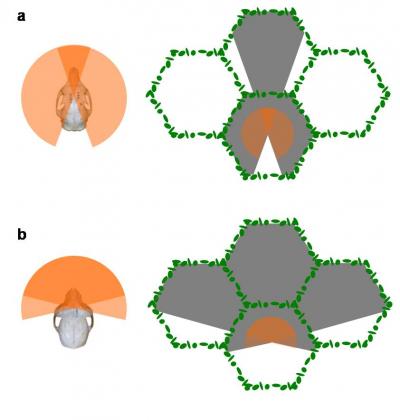
Most animals — fish, insects, reptiles, birds, rabbits, and horses, for example — exist in non-cluttered environments like fields or plains, and they have eyes located on either side of their head. These sideways-facing eyes allow an animal to see in front of and behind itself, an ability also known as panoramic vision.

Humans and other large mammals — primates and large carnivores like tigers, for example — exist in cluttered environments like forests or jungles, and their eyes have evolved to point in the same direction. While animals with forward-facing eyes lose the ability to see what's behind them, they gain 'X-ray vision', according to Mark Changizi, assistant professor of cognitive science at Rensselaer, who says eyes facing the same direction have been selected for maximizing our ability to see in leafy environments like forests.

Researchers conducting a study in mice have discovered that the brain must create new nerve cells for either exercise or antidepressants to reduce depression-like behavior. In addition, the researchers found that antidepressants and exercise use the same biochemical pathway to exert their effects.

These results might help explain some unknown mechanisms of antidepressants and provide a new direction for developing drugs to treat depression, said Dr. Luis Parada, chairman of developmental biology and senior author of a study in the Aug. 14 issue of the journal Neuron.

Transplantation of insulin-producing cell islets, so-called islets of langerhans is an appealing strategy for treatment of type 1 diabetes. But it turns out that these are short-lived, and the procedure needs to be repeated.

Now researchers at Linköping University and Uppsala University in Sweden can show that accumulation of protein aggregatess, amyloid, in the transplanted cells may be causing their death.

Until now it was not known why this insulin production ceases. The discovery now being published in The New England Journal of Medicine may change the course of diabetes research.

Just when you think modern technology reveals all, Mother Nature throws out a few surprises. According to a Wildlife Conservation Society(WCS) report, two surprisingly large populations of globally threatened primates have been found in Cambodia.

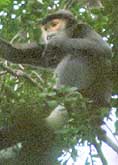
The report counted 42,000 black-shanked douc langurs along with 2,500 yellow-cheeked crested gibbons in Cambodia's Seima Biodiversity Conservation Area, an estimate that represents the largest known populations for both species in the world.

The two primate species are found in much lower numbers at other sites in Cambodia and in Vietnam. Prior to the recent discovery in the Seima Biodiversity Conservation Area, the largest known populations were believed to be in adjacent Vietnam, where black-shanked douc langurs and yellow-cheeked crested gibbons hover at 600 and 200 respectively. The total population of the two species remains unknown.

You may be wondering how something can be endangered if the population is unknown. Science has no answer for that.

