





SUNNYVALE, California, July 21 /PRNewswire/ --

- Long-term study confirms treatment could help 3.3 million U.S. sufferers

BARRX Medical, Inc. today announced that 98.4 percent of patients having a precancerous condition of their esophagus called Barrett's esophagus were free of the disease 2.5 years after non-surgical, endoscopic treatment with the HALO ablation system. The results were published this month in Gastrointestinal Endoscopy, a leading scientific publication for gastrointestinal physicians and researchers. Barrett's esophagus develops as a result of chronic gastroesophageal reflux disease (GERD) and afflicts more than 3.3 million people in the United States.

If you had to pick one organism with which to tell the story of the modern science of biology, you couldn't do better than to pick the tiny gut bacterium Escherichia coli, commonly called just E. coli. In his latest book Microcosm: E. coli and The New Science of Life, Carl Zimmer, uses E. coli as a decoder ring to open up the dense and diverse world of biological research, taking us on a panoramic tour of some of the most important conceptual advances and outstanding scientific questions in this important realm of science.

Biology, in contrast to a science like physics, is a science of particulars. In physics, if you understand one electron, you understand them all, but in biology every organism is unique. In biology it is more challenging to find universals, to pick an object of study that let's you ask big questions with the hope of finding general answers.

With E. coli we can come quite close: this tiny bacterium is the hydrogen atom of biology, a model simple enough to be experimentally tractable, but representative of general principles that apply to all life. As the pioneering molecular biologist Jacques Monod put it, "What is true for E. coli is true for the elephant," and also true for us. In Microcosm, we follow E. coli through a survey of some of the deep foundations and controversies of biology.

BANGALORE, India, July 21 /PRNewswire/ -- Manthan Systems, a leading provider of retail analytics and decision-making solutions, today unveiled the latest edition of its retail performance management solution - ARC 5.8. Positioned to deliver the latest in advanced retail decision-making capability, ARC 5.8 is expected to transform the way retailers use analytics for competitive advantage.

Scientists say they have found a workable way of reducing CO2 levels in the atmosphere by adding lime to seawater. And they think it has the potential to dramatically reverse CO2 accumulation in the atmosphere, reports Cath O’Driscoll in SCI’s Chemistry & Industry magazine published today.

Shell is so impressed with the new approach that it is funding an investigation into its economic feasibility. ‘We think it’s a promising idea,’ says Shell’s Gilles Bertherin, a coordinator on the project. ‘There are potentially huge environmental benefits from addressing climate change – and adding calcium hydroxide to seawater will also mitigate the effects of ocean acidification, so it should have a positive impact on the marine environment.’

Adding lime to seawater increases alkalinity, boosting seawater’s ability to absorb CO2 from air and reducing the tendency to release it back again.

A new technology that spots tooth decay almost as soon as it’s begun promises to reduce the need for drilling and filling, writes Patrick Walter in SCI’s Chemistry & Industry (C&I) magazine.

Drilling is one of the top dental phobias and puts thousands of people off visiting their dentist every year.

The new technology, which may be available in dental surgeries in five years from now, is based on Raman spectroscopy most commonly used to distinguish between different chemicals by identifying each molecule’s unique fingerprint. It detects decay simply and painlessly by pointing a tiny optical fibre at the tooth to check on its health.

The white horse has been an icon for dignity, purity and good guys across various human cultures all over the world but only now has an international team been able to identify the mutation that causes this fascinating trait.

Their analysis shows that white horses carry an identical mutation that can be traced back to a common ancestor that lived thousands of years ago. The study is interesting for medical research since this mutation also enhance the risk for melanoma.

The great majority of white horses carry the dominant mutation 'Greying with age.' A Grey horse is born colored (black, brown or chestnut) but the greying process starts already during its first year and they are normally completely white by six to eight years of age, though the skin remains pigmented. Thus, the process resembles greying in humans but the process is ultrafast in these horses. The research presented now demonstrates that all Grey horses carry exactly the same mutation which must have been inherited from a common ancestor that lived thousands of years ago.

Logic says that just as air and water preceded life, so must the 'niche', the hospitable environment that shelters adult stem cells in tissue and provides factors necessary to keep them young and vital, must have emerged before its stem cell dependents.

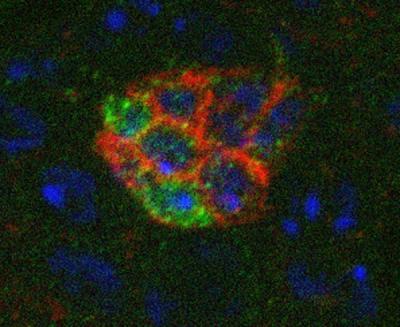
A team of scientists at the Salk Institute for Biological Studies led by Leanne Jones, Ph.D., assistant professor in the Laboratory of Genetics, now suggests that this is not always the case. They report in the July 20 advance online edition of Nature that the cells that comprise a specialized niche in the testis of fruit flies actually emerge from adult stem cells, a finding with implications for regenerative medicine, aging research, and cancer therapeutics.

Long DNA sequences, or palindromes, change the shape of the molecule from double helix to hairpin-like formation, which causes replication to stall. Altered or stalled replication causes chromosomal breaking, resulting in cancers and diseases.

In the past 10 years, researchers in genome stability have observed that many kinds of cancers are associated with areas where human chromosomes break. More recently, scientists have discovered that slow or altered replication causes chromosomal breaking. But why does DNA replication stall?

In a Tufts University study published in the July 14 issue of Proceedings of the National Academy of Sciences of the United States of America, a team of biologists have found a relationship between peculiar DNA sequences named palindromes and replication delays.

For the first time, researchers have successfully grown functional human blood vessels in mice using cells from adult human donors — an important step in developing clinical strategies to grow tissue, researchers report in Circulation Research: Journal of the American Heart Association.

The researchers combined two different types of progenitor cells in a culture dish of nutrients and growth factors, then washed off the nutrients and implanted the cells into mice with weakened immune systems. Once implanted, the progenitor cell mixture grew and differentiated into a small ball of healthy blood vessels.

Progenitor cells are similar to stem cells but can only differentiate into specific cells, while stem cells can differentiate into practically any cell in the body.

Overweight mothers give birth to offspring who become even heavier, resulting in amplification of obesity across generations, said Baylor College of Medicine researchers in Houston who found that chemical changes in the ways genes are expressed – a phenomenon called epigenetics -- could affect successive generations of mice.

"There is an obesity epidemic in the United States and it's increasingly recognized as a worldwide phenomenon," said Dr. Robert A. Waterland, assistant professor of pediatrics – nutrition at BCM and lead author of the study that appears in the International Journal of Obesity. "Why is everyone getting heavier and heavier? One hypothesis is that maternal obesity before and during pregnancy affects the establishment of body weight regulatory mechanisms in her baby. Maternal obesity could promote obesity in the next generation."

