




If you weren't living under a scientific rock for the last 20 years, you know that everyone from environmental groups to Senator and then Vice-President Al Gore believed biofuels were the renewable way to cut dependence on foreign oil and have a cleaner environment.

If you weren't living under a scientific rock for the last 20 years and know anything about how biofuels are made you always knew that was complete hoopie, but it wasn't until a Republican president and Congress agreed they were good that everyone knew they must be terribly wrong.

But biofuels are not as bad today as some make them out to be, just like they were not as good as many of those same people used to make them out to be. Renewable energy continues to be the goal and biofuels can be a part of that, though most have switched to wildly optimistic projections about solar energy as the magic cure-all of the future now.

Unless you are Scrooge McDuck or have a life-size poster of Dr. Eric R. Pianka on your wall, you probably like to see babies smile. It isn't just you. In a mother, her baby's smile also lights up the reward centers of her brain, just like free money, wrote Baylor College of Medicine researchers in Pediatrics today.

Not only could findings like this help scientists learn more about the magic of the mother-infant bond, it could also tell us how it sometimes goes wrong, said Dr. Lane Strathearn, assistant professor of pediatrics at BCM and Texas Children's Hospital and a research associate in BCM's Human Neuroimaging Laboratory.

To study this relationship, Strathearn and his colleagues asked 28 first-time mothers with infants aged 5 to 10 months to watch photos of their own babies and other infants while they were in a functional magnetic resonance imaging scanner. The machine measures blood flow in the brain. In the scans, areas of increased blood flow "light up," giving researchers a clue as to where brain activity takes place.

Tabebuia impetiginosa, commonly known as Pink Ipê, is a deciduous tree, native to Central and South America, and is related to magnolias.

With obesity levels rising (and people apparently unwilling to eat moderately) scientists have been searching for ways to mitigate obesity and the related conditions it brings, such as diabetes and heart disease.

Scientists from Germany have recently discovered that extracts of Tabebuia impetiginosa, a traditional herbal remedy, can act to delay the absorption of dietary fat in animal models. They believe that the extract could be incorporated into a food supplement which may not only reduce obesity, but also lessen the risk of development of type 2 diabetes and coronary heart disease.

The numbers of cycles of preimplantation genetic diagnosis or screening are rising steadily in Europe with over 2,700 reported in 2004 (the most recent year for which data are available). Fertility centres are able to screen for a growing number of genetically related conditions, but what should doctors do if no embryos without the targeted condition are available for transfer and the parents request that affected embryos should be transferred instead?

Ethicist Dr Wybo Dondorp told the 24th annual meeting of the European Society of Human Reproduction and Embryology in Barcelona today (Monday): "Parental requests for transferring affected embryos should not be dismissed beforehand as a sign of irresponsible capriciousness. As the couple's primary wish may be for a child, they may reason that if a non-affected, healthy child is not what they can get, they will also be happy with, and good parents for, a child with a condition they at first intended to avoid. Respect for autonomy at least requires taking such requests seriously, even if, in view of all other considerations, doctors decide not agree to the requests."

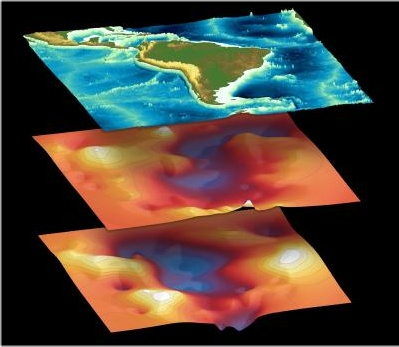
In a recent paper, geophysicist Mioara Mandea from the GFZ German Research Centre for Geosciences, Potsdam and her Danish colleague Nils OLSEN from the National Space Institute/DTU Copenhagen, have shown that motions in the fluid in the Earth’s core are changing surprisingly fast, and that this, in turn, effects the magnetic field of our planet.

The very precise measurements of the Earth’s magnetic field delivered by the geosatellite CHAMP combined with Ørsted satellite data and ground observations over the past nine years, have made it possible to reveal what is happening at 3,000 km under ground.

Nils Olsen and Mioara Mandea have computed a model for the flow at the top of the Earth’s core that fits with the recent rapid changes in the magnetic field, and is also in agreement with the changes in the Length-of-Day variation. This core flow is rather localized in space, and involves rapid variations, almost sudden, over only a few months – a remarkably short time interval compared with the respectable age of our Planet or even with the time of the last magnetic field reversal, some 780,000 years ago.

U.S. companies are helping spread fair hiring practices across the world as they set up shop in developing nations, according to a new study of gender and age discrimination co-written by a University of Illinois labor expert.

American-based firms tend to follow U.S. hiring laws, even when they do business in countries with no anti-discrimination standards on the books, based on findings that will appear in the Journal of International Business Studies.

"American companies are very much emulated these days by companies all over the world," said John Lawler, a professor in the U. of I. Institute of Labor and Industrial Relations. "So I think to the extent they do these sorts of things, they create a very positive model that's going to have an impact internationally."

The jury is still out on the actual benefits of recycling as far as environmental impact but new research suggests that a cellular version could be useful for battling cancer. Scientists at Stanford University have identified a molecule that uses this unexpected pathway to selectively kill cancer cells.

Renal cell carcinoma (RCC), the most common form of kidney cancer, is nearly always caused by mutation of the von Hippel-Lindau (VHL) tumor suppressor gene and often does not respond well to treatment.

The researchers discovered a compound, STF-62247, that was selectively toxic to RCCs deficient in VHL whereas cells with normal VHL were not affected. Treatment of RCC cells lacking functional VHL induced autophagy, a cellular recycling process that cells normally use to conserve resources during times of stress.

PHILADELPHIA and LONDON, July 7 /PRNewswire/ --

- Survey Identifies Highest Impact Institutions, 2003-2007

The Scientific business of Thomson Reuters today announced results of a study assessing high-impact research by the United Kingdom's top-cited institutions and researchers. In the May/June issue of Science Watch and on ScienceWatch.com, Thomson Reuters analyzes data from its Essential Science Indictors to identify "high-impact papers" that rank among the top one percent most-cited, by field, for their respective years of publication, 2003-2007. From the resulting file of approximately 6,000 high-impact papers, Science Watch highlighted the institutions and researchers most heavily represented.

SAN DIEGO, July 7 /PRNewswire/ --

- BD GeneOhm(TM) Cdiff Assay Submitted for FDA Clearance

BD Diagnostics, a segment of BD (Becton, Dickinson and Company) (NYSE: BDX), announced today the CE marking of the BD GeneOhm(TM) Cdiff molecular assay for the rapid diagnosis of patients with Clostridium difficile infection (CDI). It is the first CDI diagnostic test that offers sensitivity, simplicity and speed in one test procedure. BD has also submitted this assay to the U.S. Food and Drug Administration for clearance.

LONDON, July 7 /PRNewswire/ --

LONDON, July 7 /PRNewswire/ --

Unite representatives working in electrical engineering, electronics and IT are calling for statutory rights for union representatives to gain access to environmental impact information on companies.

The sector is also calling for company executives to have their pay and bonuses linked to meeting environmental targets. The union has published a report entitled 'How Green Is My Workplace?'. The publication gives guidance on how union representatives can raise awareness of environmental issues to make workplaces greener.

