
Alzheimer's disease (AD) affects as much as 10% of the world population above 65 years of age but after years of research it is still not understood exactly how the disease appears and, even less, how to treat it. But work just published in The EMBO Journal opens the door to new ways for disease intervention by showing that lipids found throughout the brain can dissolve the large insoluble protein plaques characteristic of the disease, releasing their soluble protofibrillar components, and also that it is the soluble components and not the insoluble plaques that provoke neural death.
A recent issue of Genome Research contains a report of the cat genome sequence (Pontius et al. 2007), adding Felis catus to the rapidly growing collection of animal genome sequences. One of the reasons that the number of mammal sequences is increasing so quickly is that there have been reduced standards for sequence coverage. To wit, the cat is one of 24 mammal species approved by NHGRI for "low redundancy" sequencing, meaning that the sequence will be covered only 2-fold (vs. up to 7x coverage in dog, chimp, human, mouse, and rat).
Of all the 'Greatest Scientific Breakthroughs' of 2007 heralded in the pages of various newspapers and magazines this past month, perhaps the most unsung one is the entrance of next-generation DNA sequencing onto the stage of serious research. Prior to this year, the latest sequencing technologies were limited in their usefulness and accessibility due to their cost and a steep technical learning curve. That's now changing, and a group of recent research papers gives us a hint of just how powerful this new technology is going to be. Not only will next-generation sequencing be the biggest change in genomics since the advent of microarray technology, but it may also prove to be the first genome-scale technology to become part of every-day medical practice.

Recently there has been some discussion in the blogosphere about student-advisor relationships in science.

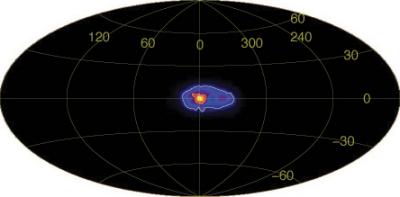
Four years of observations from the European Space Agency’s Integral (INTErnational Gamma-Ray Astrophysics Laboratory) satellite may have cleared up one of the most vexing mysteries in our Milky Way: the origin of a giant cloud of antimatter surrounding the galactic center.

As reported by an international team in the January 10 issue of Nature, Integral found that the cloud extends farther on the western side of the galactic center than it does on the eastern side.

When people in a University of North Carolina at Chapel Hill study were told that anorexia nervosa had a biological or genetics-based cause they were less likely to put any personal accountability on anorexics than when they were told it was personal or cultural.

That makes sense. A disease that is egalitarian and exculpatory like a genetics or biological mutation is different than a syndrome. We can't blame kids with Autism for having Autism, though we do teach them to moderate their behavior - and that's a key point.

Anorexia nervosa is characterized by an obsessive desire to be thin and results in self-starvation and related medical complications.

The last fish you ate probably came from the Bering Sea. At present, the Bering Sea provides roughly half the fish caught in U.S. waters each year and nearly a third caught worldwide.

While the basic dynamics of a 'greenhouse ocean' are not well understood, marine ecologists writing in Marine Ecology Progress Series expressed concern that, if their predictions are true, a warming ocean would lead to a much different ecology there.

“All the fish that ends up in McDonald’s, fish sandwiches — that’s all Bering Sea fish,” said USC marine ecologist Dave Hutchins.

NAIROBI, January 11 /PRNewswire/ -- cbm through its staff and Regional Office in Nairobi is providing emergency assistance to the humanitarian crisis in Kenya.

It is estimated that around 500,000 people have lost their homes, due to the widespread violence following the disputed election.

Prof. Allen Foster, cbm's President announced, "There is an urgent need of food, shelter and health services, and cbm will provide immediate financial assistance through our partners to help people in the region."

PHILADELPHIA and LONDON, January 11 /PRNewswire/ --

- Unique Identifier Ensures An Accurate Record Of A Researcher's Output And Attribution and Builds a World-class Author Community

Thomson Scientific, part of The Thomson Corporation (NYSE: TOC; TSX: TOC) and leading provider of information solutions to the worldwide research and business communities, today announced the launch of ResearcherID.com. This unique Web environment enables researchers to create stable personal identifiers to present their works and manage public presentation of their personal metrics.

NEW YORK, January 11 /PRNewswire/ --

"I am pleased to announce that Haas TCM Inc. and its subsidiaries, Kemfast Aerospace Group, Ltd. and Kemfast, Ltd (collectively Kemfast) and its MC Technologies division have combined with an affiliate of The Jordan Company, L.P. to form Haas TCM Group Inc. ICMS Holdings, Inc. (d/b/a Avchem, Inc.), an existing portfolio company of Jordan, will be integrated with Haas TCM Group Inc. The focus of these businesses is to provide chemical management services on a global basis to a wide range of industries including aerospace, automotive, electronics, health care and other markets, as well to government agencies such as the U.S. Defense Logistics Agency," stated Dean M. Willard, Chairman of the Board of Haas TCM Group Inc.

