






Gary Taubes spoke at Berkeley a few weeks ago; the title of his talk was “The Quality of Calories: What Makes Us Fat and Why No One Seems to Care” (webcast).

Did you know that the last edition of Dr. Spock’s baby book advocated a vegan diet? One of many fascinating details.

Also this:

A new study by a Penn State College of Medicine research team found that honey may offer parents an effective and safe alternative than over the counter children's cough medicines.

The study found that a small dose of buckwheat honey given before bedtime provided better relief of nighttime cough and sleep difficulty in children than no treatment or dextromethorphan (DM), a cough suppressant found in many over-the-counter cold medications.

Honey did a better job reducing the severity, frequency and bothersome nature of nighttime cough from upper respiratory infection than DM or no treatment. Honey also showed a positive effect on the sleep quality of both the coughing child and the child’s parents. DM was not significantly better at alleviating symptoms than no treatment.

In a study of more than 6,000 Los Angeles-area children – the largest study of its kind – researchers at the Keck School of Medicine of the University of Southern California (USC) found that both strabismus (commonly known as cross-eyed or wall-eyed) and amblyopia (often referred to as lazy eye) were more prevalent in older children than in younger children. The study was in the journal Ophthalmology.

The population for this first phase of the Multi-Ethnic Pediatric Eye Disease Study (MEPEDS) was composed equally of African-American and Hispanic youngsters, ages six months to six years, who reside in the Los Angeles County community of Inglewood.

NEW YORK, and DUBAI, United Arab Emirates, December 9 /PRNewswire/ --

- New Fortent AML 6.0 release enhances investigation and correspondent banking features

Fortent has released a new version of the company's market-leading anti-money laundering technology, the company announced today at the Middle East-North Africa International Money Laundering/Terrorist Financing Conference & Exhibition, hosted in Dubai by the Association of Certified Anti-Money Laundering Specialists (ACAMS) and the Union of Arab Banks.

After grabbing headlines for years as the ultimate solution to world energy problems, the “hydrogen economy” has an emerging but lesser-known competitor called the “methanol economy,” according to an article in Chemical & Engineering News.

In the article, C&EN Associate Editor Jyllian Kemsley describes how methanol, an alcohol like ethanol, shows increasing promise as an alternative energy source with advantages over both ethanol and hydrogen.

A methanol economy — championed in a 2006 book by chemistry Nobel Laureate George Olah — would not be dependent on bumper crops of corn and could provide lower tailpipe emissions and a reduced fire hazard.

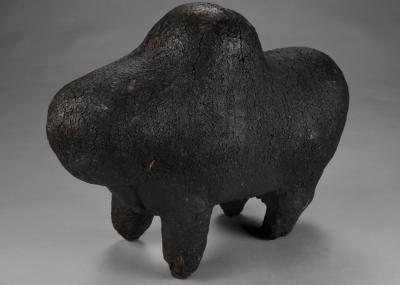
Scientists in France are reporting for the first time that sculptors from the fantastically wealthy ancient Empire of Mali — once the source of almost half the world’s gold — used blood to form the beautiful patina, or coating, on their works of art.

In a study published in Analytical Chemistry, Pascale Richardin and colleagues describe development of a new, noninvasive test that accurately identifies traces of blood apparently left on ancient African artifacts used in ceremonies involving animal sacrifices.

Archaeologists often had reported or suspected the presence of blood on many African artifacts, the study points out. However, accurately identifying the presence of blood was difficult because of the tiny amounts of blood remaining over the ages.

Scientists in New York are reporting development of a new biodegradable “nanohybrid” plastic that can be engineered to decompose much faster than existing plastics used in everything from soft drink bottles to medical implants. The study is scheduled for the Nov. issue of ACS’ Biomacromolecules.

The plastic is a modified form of polyhydroxybutyrate (PHB), a promising biodegradable plastic produced from bacteria that has been widely hailed as a “green” alternative to petroleum-based plastic for use in packaging, agricultural and biomedical applications. Although commercially available since the 1980s, PHB has seen only limited use because of its brittleness and unpredictable biodegradation rates.

A bioprospecting expedition to Iceland’s famed hot springs has yielded new strains of bacteria with potential of producing hydrogen and ethanol fuels from wastewater now discharged from factories that process sugar beets, potatoes and other plant material. The microbes hold potential for combining energy production with wastewater treatment, according to a report on the discovery scheduled for the Jan./Feb. issue of ACS’ Energy & Fuels.

In the study, Perttu E. P. Koskinen and colleagues point out that ethanol and hydrogen are two leading eco-friendly candidates for supplementing world supplies of oil, coal, and other conventional fuels.

Scientists in Pennsylvania are reporting development of a fuel cell that uses pollution from coal and metal mines to generate electricity, solving a serious environmental problem while providing a new source of energy. They describe successful tests of a laboratory-scale version of the device in a study scheduled for the Dec. 1 issue of ACS’ Environmental Science & Technology.

In the new study, Bruce E. Logan and colleagues point out that so-called acid-mine drainage (AMD) is a serious environmental problem that threatens the health of plants and animals as well as the safety of drinking-water supplies, due mainly to the high acidity of contaminated waters and its high content of metals, particularly iron.

Males with twin sisters are more likely to develop anorexia nervosa than other males, including males with a twin brother. Does exposure to female sex hormones in the womb increase the risk of getting it? If so, is anorexia a sex steroid hormone issue rather than strictly a psychological one?

“Anorexia nervosa is approximately 10 times more common in females than in males,” write study authors in the Archives of General Psychiatry. “The reasons for this difference are not known, and it is likely that their unraveling will represent an important step forward in the understanding of the etiopathogenetic factors involved in the development of eating disorders.”

