



A chemical found in household fittings has been found to affect the development of the mammary gland in rats and new research published in BMC Genomics is the first to show that this chemical can also affect the breasts' genomic profile.

Jose Russo and coworkers from the Fox Chase Cancer Center in Philadelphia, along with colleagues from the University of Alabama in Birmingham, US, fed lactating rats with butyl benzyl phthalate (BBP), which their offspring then absorbed via breast milk. The offspring ingested levels of chemical estimated to be nearly equivalent to the Environmental Protection Agency's safe dose limit of BBP for humans.

The age-old refrain, “Eat your vegetables!” gets scientific support as researchers present the latest findings on cancer prevention at the American Association for Cancer Research’s Sixth Annual International Conference on Frontiers in Cancer Prevention, being held December 5 – 8 in Philadelphia, Pennsylvania.

Today, researchers present new data that demonstrate how diets full of raw vegetables --particularly broccoli sprouts -- and black raspberries could prevent or slow the growth of some common forms of cancer.

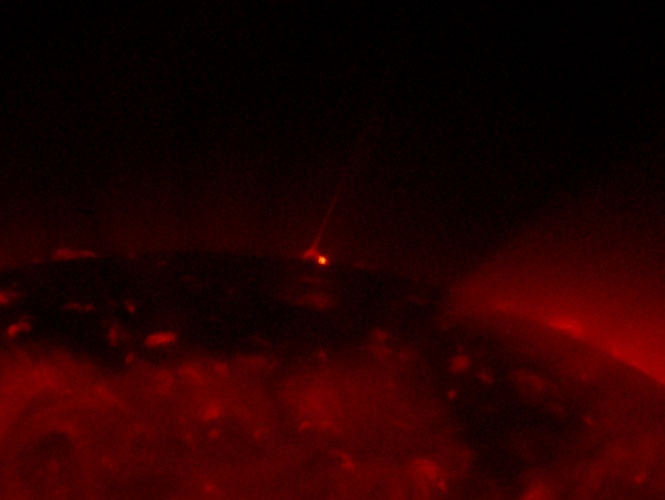
Images from NASA-funded telescopes aboard a Japanese satellite have shed new light about the sun's magnetic field and the origins of solar wind, which disrupts power grids, satellites and communications on Earth.

Data from the Hinode satellite shows that magnetic waves play a critical role in driving the solar wind into space. The solar wind is a stream of electrically charged gas that is propelled away from the sun in all directions at speeds of almost 1 million miles per hour. Better understanding of the solar wind may lead to more accurate prediction of damaging radiation waves before they reach satellites. Findings by American-led international teams of researchers appeared in the Dec.

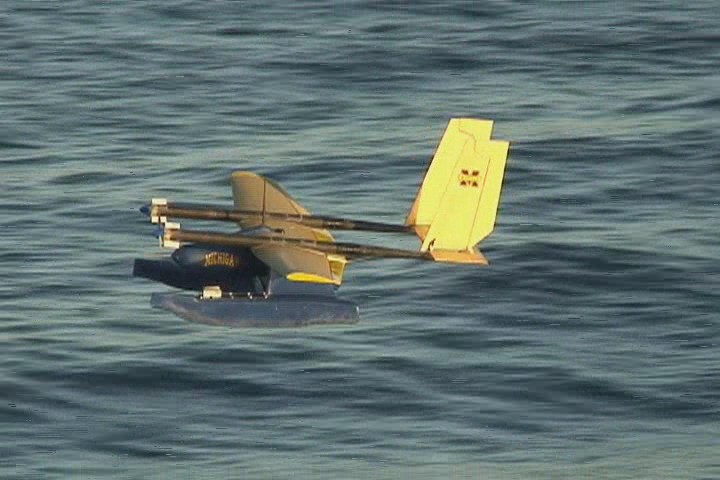
Howard Hughes had a 'Spruce Goose' but the University of Michigan now has a 'flying fish' - an unmanned seaplane with a 7-foot wingspan believed to be the first seaplane that can initiate and perform its own takeoffs and landings on water.

Funded by the Department of Defense's Defense Advanced Research Projects Agency (DARPA), it is designed to advance the agency's "persistent ocean surveillance" program.

Engineering researchers from U-M recently returned from sea trials off the coast of Monterey, Calif., where they demonstrated the craft's capability to DARPA officials.


Credit: University of Michigan

Patricia Ford, MD, a hematologist/oncologist and Medical Director of the Center for Bloodless Medicine and Surgery at Pennsylvania Hospital, is one of the pioneers of bloodless surgery and has been teaching its technique to doctors around the world.

One technique a bloodless surgery can employ is called “cell salvage” in which blood lost during surgery is siphoned from the body, passed through a filter for cleaning and returned to the body. It can also be used by the physician during surgery to limit blood loss and to avoid the need for transfusion of blood from sources other than the patient.

A family of proteins commonly found in mouse urine is able to trigger fighting between male mice, a study in the Dec. 6, 2007, issue of Nature has found.

Pheromones are chemical cues that are released into the air, secreted from glands, or excreted in urine and picked up by animals of the same species, initiating various social and reproductive behaviors. The study is the first to identify protein pheromones responsible for the aggression response in mice.

"Although the pheromones identified in this research are not produced by humans, the regions of the brain that are tied to behavior are the same for mice and people. Consequently, this research may one day contribute to our understanding of the neural pathways that play a role in human behavior," says James F.

One way to alleviate the pain of banging your shin while on a hike is to encounter a grizzly bear—a well-known phenomenon called stress-induced analgesia. Now, researchers have elucidated a key mechanism by which the stress hormone noradrenaline — which floods the bloodstream during grizzly encounters and other stressful events — affects the brain’s pain-processing pathway to produce such analgesia.

Pankaj Sah and colleagues published their findings in the December 6, 2007, issue of the journal Neuron, published by Cell Press.

In an accompanying perspective article on the research, Harvard Medical School researchers Keith Tully, Yan Li, and Vadim Bolshakov wrote that “The impressive new study… provides important mechanistic clues helping to explain this phenomenon.”

Human fetus

"The conflict between maternal and fetus genes is one of the weirdest ideas in the modern theory of evolution."* According to evolutionary logic, the fetus "wants" to milk the mother for all it can get; the mother "wants" to restrict the fetus to what it needs to survive and save something for future offspring. The reason is that the fetus benefits from every bit of help the mother gives, while the mother's return on her investment diminishes with increasing investment, (i.e. ever greater investment won't necessarily increase her fitness).

Children learn by imitating adults—so much so that they will rethink how an object works if they observe an adult taking unnecessary steps when using that object, according to a Yale study today in Proceedings of the National Academy of Sciences.

“Even when you add time pressure, or warn the children not to do the unnecessary actions, they seem unable to avoid reproducing the adult’s irrelevant actions,” said Derek Lyons, doctoral candidate, developmental psychology, and first author of the study. “They have already incorporated the actions into their idea of how the object works.”

Learning by imitation occurs from the simplest preverbal communication to the most complex adult expertise.

A missing brain protein may be one of the culprits behind autism and other brain disorders, researchers at MIT's Picower Institute for Learning and Memory report in the Dec. 6 issue of Neuron. Li-Huei Tsai, Picower Professor of Neuroscience at MIT, has uncovered an enzyme that is key to that protein's activity.

Synapses are complex structures consisting of ion channels, receptors and intricate protein complexes that all work together to send and receive signals. Improperly formed synapses could lead to mental retardation, and mutations in genes encoding certain synaptic proteins are associated with autism.

Tsai studies a kinase (kinases are enzymes that change proteins) called Cdk5.

