


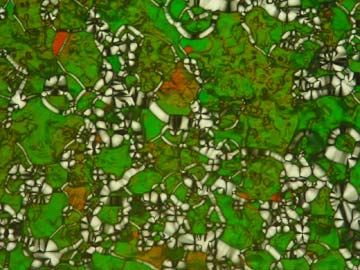



A multidisciplinary team of UCLA scientists were able to differentiate metastatic cancer cells from normal cells in patient samples using leading-edge nanotechnology that measures the softness of the cells.

The study in the journal Nature Nanotechnology, represents one of the first times researchers have been able to take living cells from cancer patients and apply nanotechnology to analyze them and determine which were cancerous and which were not. The nano science measurements may provide a potential new method for detecting cancer, especially in cells from body cavity fluids where diagnosis using current methods is typically very challenging. The method also may aid in personalizing treatments for patients.

The compound sulforaphane, whose natural precursors are found at high levels in broccoli and other cruciferous vegetables, has been hailed for its chemopreventive powers against cancer.

Now sulforaphane has demonstrated new skills in treating a genetic skin blistering disorder called epidermolysis bullosa simplex (EBS), Pierre Coulombe and colleagues at the Johns Hopkins University School of Medicine in Baltimore report at the American Society for Cell Biology 47th Annual Meeting.

EBS is a rare but devastating inherited condition in which fluid-filled lesions called bullae appear at sites of frictional trauma to the skin. Unfortunately, treatment options for EBS are limited and palliative in nature.

Finally, a win for human embryonic stem cells (hESCs).

Mice whose skulls were made whole again by bone tissue grown from hESCs shows that healing critical-size defects (defects that would not otherwise heal on their own) in intramembraneous bone, the flat bone type that forms the skull, is a vivid demonstration of new techniques to use hESCs for tissue regeneration.

Using mesenchymal precursor cells isolated from hESCs, the Hopkins team steered them into bone regeneration by using “scaffolds,” tiny, three-dimensional platforms made from biomaterials.

Researchers at Wageningen University, Netherlands, have shown that a drop in atmospheric nitrogen deposition will slow down forest growth. Lower tree growth implies less carbon sequestration and thus a decrease in the sequestration of carbon dioxide. This may have a significant impact on the targets set in the Kyoto protocol.

Researcher Wieger Wamelink of Wageningen University showed in model calculations that the carbon sequestration for all forests in The Netherlands, for example, may drop to 27 % of its present value. This reduced sequestration is expected as a result of pollution control policy strategies in all countries with present high nitrogen deposition, mainly located in Europe, North America and Asia.

Carbon dioxide is fixed in wood when a tree is growing.

Scientists at The University of Manchester have developed a new x-ray technique that could be used to detect hidden explosives, drugs and human cancers more effectively.

Professor Robert Cernik and colleagues from The School of Materials have built a prototype color 3D X-ray system that allows material at each point of an image to be clearly identified.

The technique developed by the Manchester scientists is known as tomographic energy dispersive diffraction imaging or TEDDI.

It harnesses all the wavelengths present in an x-ray beam to create probing 3D pictures.

A team led by the University of Colorado at Boulder and the University of Milan has discovered some unexpected forms of liquid crystals of ultrashort DNA molecules immersed in water, providing a new scenario for a key step in the emergence of life on Earth.

CU-Boulder physics Professor Noel Clark said the team found that surprisingly short segments of DNA, life's molecular carrier of genetic information, could assemble into several distinct liquid crystal phases that "self-orient" parallel to one another and stack into columns when placed in a water solution. Life is widely believed to have emerged as segments of DNA- or RNA-like molecules in a prebiotic "soup" solution of ancient organic molecules.

Direct-to-consumer advertising for commercial genetic testing is on the rise and may be problematic, according to a Massachusetts General Hospital physician. In the December issue of Obstetrics & Gynecology, Erin Tracy, MD, MPH, warns that such testing is poorly regulated and may present potential pitfalls for patients and physicians.

“Some of the tests that are being offered have no proven clinical validity whatsoever and are quite costly,” says Tracy. “So patients spend money trying to identify a particular gene to figure out if their child is prone to addictive behavior, for example.

Water chemistry and mineralogy are scientific fields that have been around long enough to develop extensive knowledge and technologies. The boundary of water and rock, however, is not a thin wet line but the huge new field of nanoparticle science.

Scientists are discovering that aquatic nanoparticles, from 1 to 100 nanometers, influence natural and engineered water chemistry and systems differently than similar materials of a larger size. “Nanoparticles are in an awkward intermediate state, between elements dissolved in water and minerals that you can hold in your hand,” said Michael Hochella Jr., University Distinguished Professor of geosciences at Virginia Tech. “The nanoscale represents a transition zone.

Even after more than a year of maintaining a normalized body weight, young women who recovered from anorexia nervosa show vastly different patterns of brain activity compared to similar women without the eating disorder, Walter H. Kaye, M.D., professor of psychiatry, University of Pittsburgh School of Medicine, and colleagues report in the December issue of the American Journal of Psychiatry.

Studying these differences in brain function could lead to a better understanding of why some young women, who are typically worriers and perfectionists in childhood, are at greater risk of developing the disorder. Evidence also shows that such patterns of temperament persist even after recovery.

Messier 74, also called NGC 628, is a stunning example of a 'grand-design' spiral galaxy that is viewed by Earth observers nearly face-on. Its perfectly symmetrical spiral arms emanate from the central nucleus and are dotted with clusters of young blue stars.

In the new Hubble image we can also see a smattering of bright pink regions decorating the spiral arms. These are huge, relatively short-lived, clouds of hydrogen gas which glow due to the strong radiation from hot, young stars embedded within them; glowing pink regions of ionized hydrogen (hydrogen that has lost its electrons).

