

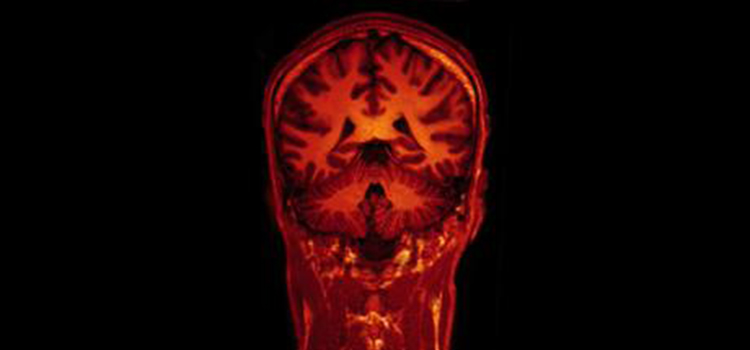

Gender and personality matter in how people cope with physical and mental illness, according to a paper by a Washington State University scientist and colleagues at the University of the Thai Chamber of Commerce.

Men are less affected by a single-symptom illness than women, but are more affected when more than one symptom is present. The number of symptoms doesn't change how women are affected, according to Robert Rosenman, WSU professor in the Department of Economic Sciences. Rosenman worked with Dusanee Kesavayuth and Vasileios Zikos, both at UTCC in Bangkok, Thailand, on the study.

It's hard to hide from a bat: The camouflage and mimicry techniques that animals use to avoid becoming a meal aren't much use against a predator using echolocation. But a new study shows that moths can outsmart sonar with a flick of their long tails.

The study appearing in the Proceedings of the National Academy of Sciences shows luna moths spin their trailing hindtails as they fly, confusing the sonar cries bats use to detect prey and other objects.

What started as an evolutionary protection against starvation has become a biological "bad joke" for people who need to lose weight. The human body doesn't distinguish between dieting and possible starvation, so when there is a decrease in calories consumed, human metabolism increases its energy efficiency and weight loss is resisted.

Adolescent binge drinking has been linked to a host of problems, including worse school performance, risky sexual behaviors, illicit drugs, and a greater risk of suicide. Binge drinking may also be linked to problematic eating behavior, yet little research exists. A study of the relationship between binge drinking and eating problems among Russian adolescents has found that problematic eating behaviors and attitudes are commonplace, and that binge drinking is associated with more eating problems in girls than boys.

Results will be published in the March 2015 online-only issue of Alcoholism: Clinical & Experimental Research and are currently available at Early View.

Oats are often touted for lowering bad cholesterol,  improving the immune system, lowering blood pressure and, more recently, being gluten-free, but a new study finds that some oat-based breakfast cereals in the U.S. contain a mold-related toxin called ochratoxin A (OTA) that's been linked to kidney cancer in animal studies. 

Natural or not, they may need closer monitoring for potential mold contamination, warns a paper in the Journal of Agricultural and Food Chemistry

A new genetic therapeutic technique that has the potential to treat more than half of the patients suffering from Duchenne Muscular Dystrophy (DMD), according to a new study. 

Faced with an increased senior population and a dwindling working age one, government accountants have spread the word that elderly people need to be encouraged to work longer.

And they are being encouraged, by changes in pension policies that force them to do so. As a result, a social safety net that was designed to reduce retirement inequality nearly a century ago is once again increasing it - some groups are more likely to be disadvantaged by a rise in the state retirement age than others, because some people are more able to work as senior citizens than others. 

If genes were lights on a string of DNA, the genome would appear as an endless flicker, as thousands of genes come on and off at any given time. Tim Hughes, a Professor at the University of Toronto's Donnelly Centre, is set on figuring out the rules behind this tightly orchestrated light-show, because when it fails, disease can occur.

Genes are switched on or off by proteins called transcription factors. These proteins bind to precise sites on the DNA that serve as guideposts, telling transcription factors that their target genes are nearby.

In their latest paper, published in Nature Biotechnology, Hughes and his team did the first systematic study of the largest group of human transcription factors, called C2H2-ZF.

The size of the human brain expanded dramatically during the course of evolution, imparting us with unique capabilities to use abstract language and do complex math. But how did the human brain get larger than that of our closest living relative, the chimpanzee, if almost all of our genes are the same?


Credit: Jon Olav Eikenes, CC-BY-SA

By: Carrie Peyton Dahlberg, Inside Science

(Inside Science) - Brain imaging can already pull bits of information from the minds of willing volunteers in laboratories. What happens when police or lawyers want to use it to pry a key fact from the mind of an unwilling person?

Will your brain be protected under the U.S. Constitution's Fourth Amendment from unreasonable search and seizure?

