






Ceres is the largest object in the asteroid belt, and NASA’s Dawn spacecraft will arrive at this dwarf planet on March 6, 2015. Pluto is the largest object in the Kuiper belt, and NASA’s New Horizons spacecraft will arrive at this dwarf planet on July 15, 2015.
Each year millions of infants, toddlers and preschool children require anesthesia or sedation for various procedures and a new review suggest caution about their use.

A team of anesthesiology investigators and toxicologists writing in the New England Journal of Medicine reviewed existing animal and human studies for the impact of anesthetics on developing brains. 

Observational studies of children have been weak, but they still suggested a correlation between children who had received anesthetics and long-term cognitive impairments such as learning disabilities. Children between the ages of one and three appeared to be at a higher risk of adverse effects.
Wheat is a critical staple crop that provides 20% of the calories and over 25% of the protein consumed by humans.

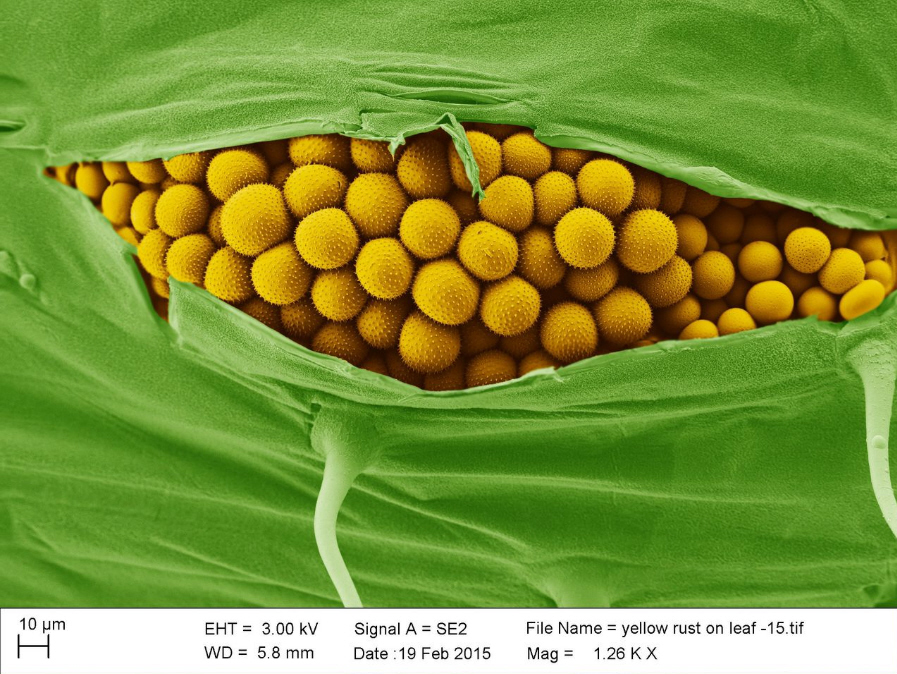
'Yellow rust' caused by the fungus Puccinia striiformis f. sp. tritici (PST) is one of the plant's major diseases and is found throughout the major wheat-producing areas of the world. Infections lead to significant reductions in both grain quality and yield, with some rare events leading to the loss of an entire crop. New strains of the fungus have recently emerged that adapt to warmer temperatures.
The MUSE instrument on ESO's Very Large Telescope has given astronomers the best ever 3-D view of the deep Universe - in just 27 hours.

By taking very long exposure pictures of regions of the sky, astronomers have created many deep fields that have revealed much about the early Universe. The most famous of these was the original Hubble Deep Field, taken by the NASA/ESA Hubble Space Telescope over several days in late 1995. This spectacular and iconic picture rapidly transformed our understanding of the content of the Universe when it was young. It was followed two years later by a similar view in the southern sky -- the Hubble Deep Field South. 


By Emilie Lorditch, Inside Science
(Inside Science) – When I was in elementary school, I couldn't wait to get home to watch my favorite TV show, "3-2-1 Contact." Watching that show, I learned that science was fun and part of my everyday life. Seeing young women on the show – who were like older sisters that I wished I had – I believed that I could be a scientist too.

Children show a vastly improved ability to absorb knowledge when they are allowed to make some of their own decisions about what they want to learn.

Testing, in other words, gets in the way – and worse.

Indeed, as the No Child Left Behind (NCLB) legislation comes up for re-authorization this week President Obama has himself stated that testing should be cut down to “a bare minimum.”

A pre-clinical study of ANAVEX 2-73 found that it prevents mitochondrial dysfunction and blocks resulting oxidative stress and apoptosis (cell death) in a nontransgenic mouse model of Alzheimer's disease (AD).

Mitochondrial damages have been consistently reported as an early cause of Alzheimer's disease and appear before amyloid-beta plaques and memory decline in Alzheimer's patients and transgenic mice. If so, by preserving mitochondrial functionality and reducing other key Alzheimer's disease hallmarks, it has the potential to prevent, stop, slow or reverse the disease, in addition to treating its symptoms.
The use of animals in experimental research has soared at US laboratories, according to People for the Ethical Treatment of Animals (PETA), and taxpayer-funded scientists are the culprits.

The 25 largest recipients of government funding increased animal experimentation 73 percent in 15 years, despite growing public opposition to the practice and mounting evidence that animal studies often do not faithfully translate to people, they write.

They also say the data contradict government claims of reduced animal use and are at odds with government policies designed to curb and replace the use of animals in experiments. 

Palbociclib, an investigational oral medication that works by blocking molecules responsible for cancer cell growth, is well tolerated and extends progression-free survival (PFS) in newly diagnosed, advanced breast cancer patients, including those whose disease has stopped responding to traditional endocrine treatments. Results of the phase II study, led by researchers in the Abramson Cancer Center and the Perelman School of Medicine at the University of Pennsylvania , were published this month in Clinical Cancer Research. Earlier phase I results by researchers at Penn Medicine contributed to the development of palbociclib, which was recently approved by the U.S. Food and Drug Administration (FDA) for metastatic breast cancer patients just beginning to undergo endocrine therapy.

Case Western Reserve University dental researcher Pushpa Pandiyan has discovered a new way to model how infection-fighting T cells cause inflammation in mice.

The hope is that the discovery can lead to new therapies or drugs that jump-start weakened or poorly functioning immune systems, said Pandiyan, an assistant professor at Case Western Reserve School of Dental Medicine.

Pandiyan believes the process could lead to identifying and testing new drugs to replace antifungal medicines that have become ineffective as the fungi develop a resistance to them.

Pandiyan's findings are explained and demonstrated in the Journal of Visualized Experiments video and print article, "Th17 inflammation model of oropharyngeal candidiasis in immunodeficient mice."

