Though adopting a whole-food diet has become popular in some circles, is it really going to help you? Perhaps, perhaps not.
One reason to err on the side of caution and not chase diet fads is that fads tend to be expensive and their benefit is unknown. A gluten-free diet, for example,
will be 242 percent higher cost and the extra sugar, extra fat, hydroxypropyl methyl cellulose and xanthan gum in gluten-free foods are not a health positive.
What about the whole food diet?
It's been over 50 years since the first experimental use of adult stem cells - bone marrow transplants - began, and in that time over 1,000,000 hematopoietic stem cell (HSCT - cells isolated from the blood or bone marrow that can renew themselves and differentiate to a variety of specialized cells) transplantations (have been performed in 75 countries, but there are striking variations between countries and regions in the use of this lifesaving procedure and high unmet need due to a chronic shortage of resources and donors that is putting lives at risk.
Nature is all about booms and busts - it is common for species to grow too large to be sustainable. Humans were once that way too, but science has now made it possible for even the poorest people to be fat. We no longer have a feast or famine existence.
And the worst thing you can do to lose weight is go on a 'crash' diet, according to modern nutritional thinking - your body quickly goes into starvation mode. But that is in the short term, clearly if you were to go on a starvation diet for any extended period, you lose a lot of weight, it happens every season on "Survivor". Mitochondria, the little energy factories in our cells, are nimble about optimizing what they have and do not have.
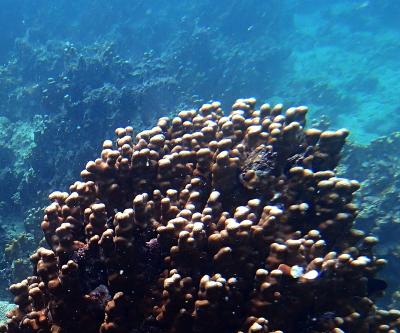
Reefs are made up of many coral species that live in a mutually beneficial symbiotic relationship with microscopically small algae hosted in their tissue. These symbiont algae produce sugars that contribute to the diet of the coral in return for shelter and nutrients that are vital for algal growth.
A symbiotic association is vulnerable to changes in environmental conditions, like seawater temperature. Heat-stress induced loss of the algal partners from the coral host can result in the often fatal process known as 'coral bleaching'.
A new species of algae has been discovered in reef corals of the Persian (Arabian) Gulf where it helps corals to survive seawater temperatures of up to 36 degrees Celsius - temperatures that would kill corals elsewhere.
The recent slowdown in climate warming is due to natural oscillations in the climate, according to a team of climate scientists, who add that these oscillations represent variability internal to the climate system. They do not signal any slowdown in human-caused global warming.
The Atlantic Multidecadal Oscillation (AMO) describes how North Atlantic sea-surface temperatures tend to oscillate with a periodicity of about 50 to 70 years. The Pacific Decadal Oscillation (PDO) varies over a broader range of timescales. The researchers looked only at the portion of the PDO that was multidecadal -- what they term the Pacific multidecadal oscillation (PMO).
By:
Charles Q. Choi, Inside Science
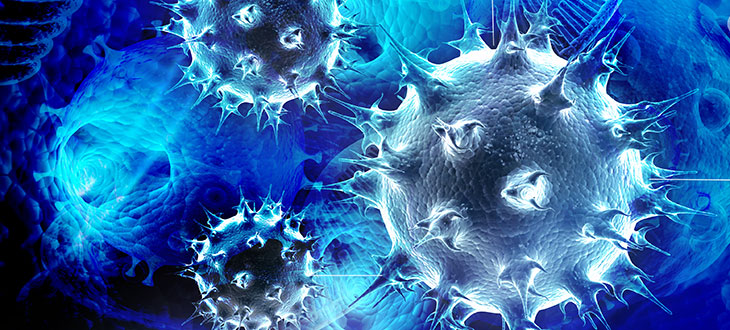
(Inside Science) -- Viruses that invaded the DNA of humanity's ancestors millions of years ago may now play critical roles in the earliest stages of human development, researchers say.
The discovery sheds light on the key part that viruses may have played in human evolution, scientists added.
Life is unpredictable, and we move forward the best we can despite not knowing every detail.
It's no different in the natural world. The Earth is warming in some places and in some places it isn't, the weather is more variable today except it was always worse in the past when you talk to old people, some years there are more fish and deer than others.
Beware people who have magic bullets when it comes to conservation; it's all based on estimates and no small amount of speculation surrounding a kernel of things we know to be true. We can only get real policies when we are flexible - sometimes that means making a decision even when unanswered questions remain.
Hundreds of hours of video are uploaded to YouTube every minute, and hundreds of millions of hours are viewed daily, including many that cover areas of science. Despite this, if you want to use YouTube for science communication, reaching an audience is not always guaranteed.
We’ve analyzed nearly 400 science communication videos to understand what the successful YouTube science communicators do – those with numerous subscribers – that less successful communicators do not.
So, here are seven things we found that can help you to communicate science on YouTube.
Might living a structured life with regularly established meal times and early bedtimes lead to a better life and perhaps even prevent the onset of mental illness?
That's what's suggested in a study led by Kai-Florian Storch, PhD, of the Douglas Mental Health University Institute and McGill University, titled "A highly tunable dopaminergic oscillator generates ultradian rhythms of behavioral arousal," and published in eLife.
If you live in a city, some of your movement around town is social in nature.
But how much, exactly?
Around 20 percent, according to a new paper that used anonymized phone data to reconstruct both people's locations and their social networks.
By linking this information together, the researchers were able to build a picture indicating which networks were primarily social, as opposed to work-oriented, and then deduce how much city movement was due to social activity.