




Taking hormone replacement therapy (HRT) for the menopause, even for just a few years, is associated with a significantly increased risk of developing the two most common types of ovarian cancer, according to a detailed re-analysis of all the available evidence, published in The Lancet.

The findings from a meta-analysis of 52 epidemiological studies, involving a total of 21488 women with ovarian cancer, almost all from North America, Europe and Australia, indicate that women who use HRT for just a few years are about 40% more likely to develop ovarian cancer than women who have never taken HRT.

The "Hockey Stick" graph, a simple plot representing temperature over time, led to the center of the larger debate on climate change, and skewed the trajectory of at least one researcher, according to Michael Mann, Distinguished Professor of Meteorology at Penn State.

"The "Hockey Stick" graph became a central icon in the climate wars," Mann told attendees today last week at the annual meeting of the American Association for the Advancement of Science. "The graph took on a life of its own."

French artist Paul Gauguin has had quite the resurgence - having a painting sell for nearly $300 million will do that - but the artist noted for his colorful paintings of Tahitian life was also a highly experimental printmaker.

The techniques and materials Gauguin used to create his unusual and complex graphic works are little studied but a team from Northwestern University and the Art Institute of Chicago used a simple light bulb, an SLR camera and computational power to uncover new details of Gauguin's printmaking process -- how he formed, layered and re-used imagery to make 19 unique graphic works in the Art Institute's collection.
The Blacksmith Group has unveiled the world’s first compact 3-D printer that can also scan items into digitized models - and it was crowdfunded.

The Blacksmith Genesis allows users to scan any item, then edit the digitized model and print it out in 3-D. The first production run will be shipped out in March to the people who supported the crowdfunding campaign. It is available for pre-order at a cost of $2,200, with flat rate shipping to 70 countries worldwide for another $150. It is housed in a black aluminum casing, weighs 6 kilograms and features a 2-inch LCD display, Wi-Fi, an integrated SD-card reader and a USB connection for instant printing.

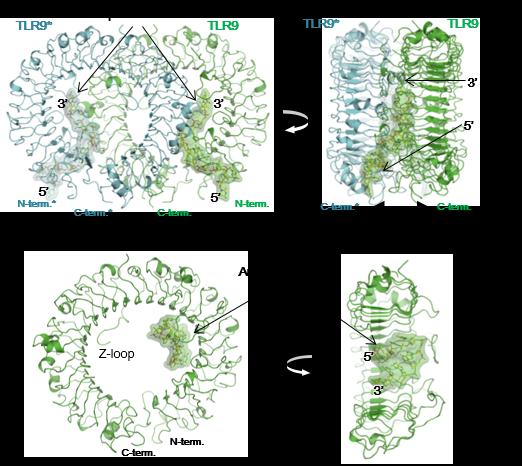
Researchers have discovered how Toll-like receptor 9 (TLR9) binds to pathogen DNA, activating the innate immune system. This discovery is vital for the design of new antiviral, antibacterial, allergy and other drugs targeting TLR9.

Invading pathogens such as bacteria or viruses leave traces in the form of DNA fragments, proteins and other biomolecules. TLR9 is a membrane-bound protein that detects these traces by recognizing a DNA sequence called Cytosine-phosphate-Guanine dinucleotide (CpG), a motif that is specific to bacteria and viruses. This brings about the release of interferon and induces inflammation, but until recently, the structure of TLR9 and how it functions remained unknown.

UK supermarket price promotions are more likely to lead to an increase in sales of less healthy foods than healthier choices in supermarkets, according to a study published today. However, the study of almost 27,000 UK households found that supermarkets were no more likely to promote less healthy over healthier foods.

Price promotions are commonly used in stores to boost sales through price reductions and stimulate impulsive purchases by increasing items' prominence through tags and positioning. However, there is growing concern that such promotional activities by the food industry may contribute to poor dietary choices and might lure consumers away from healthier, higher priced options.


The bacteria living in your gut have more to do with your immune system than you might think. Shutterstock

Your intestines are home to many different kinds of bacteria (and some non-bacterial organisms as well). Together they’re called the “gut microbiome.”

They come from the food you eat – and whatever else gets into your mouth. Bacteria start colonizing your gut at birth.

Sophisticated germ fighters found in alligator blood may help future soldiers in the field fend off infection, according to new research by George Mason University.

The study, published Feb. 11 in the scientific journal PLOS One, is the result of a fundamental research project supported by the Defense Threat Reduction Agency (DTRA) to find bacterial infection-defeating compounds in the blood of the crocodilian family of reptiles, which includes American alligators.

The project is about to start its fourth year and has received $6 million in funding to date from DTRA. If fully funded over five years, the project will be worth $7.57 million.

Alligators live in bacteria-filled environments and dine on carrion. Yet this ancient reptile rarely falls ill.

Influenza has a long history of being one of the most deadly diseases to afflict humanity, but what exactly makes it so dangerous?

Certainly one reason is that influenza viruses have a history of jumping from other animals to humans, which, when the trans-species virus is new to the human population, generally means that human immune systems have no natural resistance. Another reason is that influenza viruses, with their rapidly mutating single-strand RNA genomes, are highly variable over time.


If you thought it has been a while since you heard any more rumors about the long-awaited Apple TV, they are about to be replaced by even more exciting possibility - that Apple may be about to build an electric car.

The Wall Steet Journal kicked things off with a report that Apple had been hiring “hundreds” of staff with automotive design skills to work on a project called “Titan” that may be a self-driving electric vehicle configured in a (not-so-exciting) mini-van design.

