


For chimpanzees, just like humans, teasing, taunting and bullying are familiar parts of playground politics. An analysis of 12 years of observations of playground fights between young chimpanzees in East Africa finds that chimps with higher-ranked moms are more likely to win.

The results come from an analysis of daily field notes recorded from 2000 to 2011 at Gombe National Park in western Tanzania. Stored in the Jane Goodall Institute Research Center at Duke University and also at The George Washington University, the records are part of a larger database containing more than 50 years of data on over 300 wild chimpanzees, going all the way back to Jane Goodall's first observations from the early 1960s.

It's always helpful to have text or verbal claims about where a video was taken, but when it comes to terrorists or other criminals, they might not be telling the truth. 

Researchers from Ramón Llull University in Spain have created a system capable of geolocating videos by comparing audiovisual content with a worldwide multimedia database and it is able to locate where the videos were taken with no indication of where they were produced.

DreamWorks Animation Foliage System "trees" in "How To Train Your Dragon." Courtesy of DreamWorks Animations

By Emilie Lorditch, Inside Science

Latching onto the probiotics diet fad, several studies have claimed that the gut microbiome, the diverse array of bacteria that live in the stomach and intestines, may be to blame for obesity. But Katherine Pollard, PhD, a senior investigator at the Gladstone Institutes, says it is not that simple.

The Great Lakes have been invaded by more non-native species than any other freshwater ecosystem in the world, and though there have been increasing efforts to stem the tide of invasion threats, they remain vulnerable.

Over the past two centuries, more than 180 non-native species have been recorded in the Great Lakes and the rivers that flow into them. Nearly 20% of these species are considered to be harmful ecologically and economically, posing threats to the Lakes' native biodiversity and multibillion dollar fishery. New threats are emerging because of risks associated with trade in live organisms and climate change,researchers caution in a study in the Journal of Great Lakes Research.

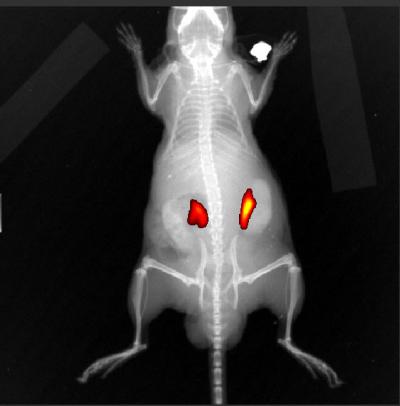
A team of scientists has created a "conjugate" molecule -- one stitched together from two separate molecules -- that seeks out and blocks prostate cancer growth in lab animals.

The molecule NMI combines a near-infrared dye that targets cancer cells and a MAO-A inhibitor often used in antidepressants but recently shown to be effective at reducing or even eliminating prostate tumor growth in mice.

Near-infrared dye targets tumors in a mouse. Credit: Jean Shih / USC

Rivers and streams could be a major source of antibiotic resistance in the environment.

The discovery comes following a study on the Thames river by scientists at the University of Warwick's School of Life Sciences and the University of Exeter Medical School.

The study found that greater numbers of resistant bacteria exist close to some waste water treatment works, and that these plants are likely to be responsible for at least half of the increase observed.

There are many hypotheses about genetic advantages of sexual reproduction but none have been proven in humans.

The researchers of a new study say they have done so, showing how humanity’s predispositions to disease gradually decrease the more we mix our genetic material together. That's right, sex leads to less disease, at least for a species. Obviously sleeping around individually is going to get you sent to a clinic. 

Scientists at Rigshopitalet, Herlev Hospital and the University of Copenhagen identify a new biomarker that can predict the risk of developing dementia by way of a simple blood test. In the long term, this could mean better prevention and thus at least postponement of the illness and at best evading the development all together. The study was recently published in an internationally acclaimed journal, the Annals of Neurology.

Scholars have long debated what successful aging is, how to measure it, and how to promote it. But the latest issue of The Gerontologist lays the groundwork for building consensus on the topic -- while pointing out that the answer may differ among academics and the general public, as well as across populations and demographic groups.


