








Now with added "2". Shutterstock

Hypertext Transfer Protocol, HTTP, is a key component of the world wide web.

It is the communications layer through which web browsers request web pages from web servers and with which web servers respond with the contents of the page. Like much of the Internet it’s been around for decades, but a recent announcement reveals that HTTP/2, the first major update in 15 years, is about to arrive.


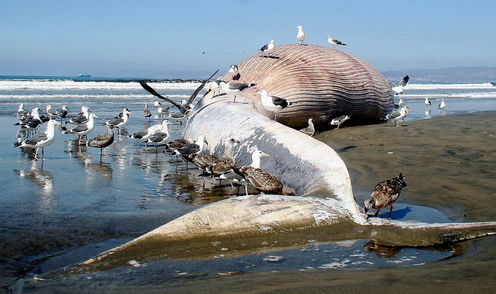
One day something will outgrow the blue whale – but it won't be another whale. EPA

When life on Earth began around 3.6 billion years ago, all organisms were small.

Indeed, it took some 2.5 billion years to evolve any organism that grows larger than a single cell.

Since then, things have accelerated a bit and – along with the great diversification of body forms – animals have tended to get bigger. Indeed, the largest animal ever to live, the blue whale, is still very much with us, and has been swimming the world’s oceans for only a couple of million years – a mere blink of the eye in the long, long history of life in the sea.

Precision medicine could prevent the flawed 'one size fits all' diet recommendations we currently get from the federal government and self-professed nutrition experts who latch onto the latest fad to sell books.

29 million Americans already already have diabetes and the way to separate those with the highest risk of developing the disease from those with lower risk, and channel resources into areas most likely to help each of them individually, is the goal of the "precision medicine" approach.
Diabetes is a significant risk factor for developing eye diseases and the most common diabetic eye disease and a leading cause of blindness is diabetic retinopathy, which is caused by elevated blood sugar levels damaging the blood vessels of the retina and affects approximately 7.7 million Americans.

About 750,000 Americans with diabetic retinopathy have diabetic macular edema (DME) in which fluid leaks into the macula, the area of the retina used when looking straight ahead. The fluid causes the macula to swell, blurring vision.
Cancer vaccines turn the body's own immune system specifically against tumor cells and one area of study are vaccines that are directed against neoantigens, proteins that have undergone a genetic mutation in tumor cells and are therefore different than counterparts in healthy cells.
In 2006, a somewhat common yet unpredictable decline in bees occurred, just as had happened in previous decades and leading back as long as anecdotal records have been kept. While scientists tried to determine the cause, various constituents rushed to lay blame for this new short-term decline on various environmental factors. The science consensus was that it was parasites but while the investigation was ongoing, the European Union wanted to know if it was due to a newer class of pesticides, called neonicotinoids, that had been introduced as a safe alternative a decade earlier, due to a mass die-off of bees.

Bee numbers have rebounded nicely but the report says they are not out of the woods yet.
The origin of curious ring-like structures that formed half a billion years ago on a seabed in Wisconsin is an ancient unsolved riddle and academics would like you to help them figure it out.

It makes sense, since it was citizen scientist paleontologists that discovered the almost perfectly circular rings some 30 years ago.

Nigel Hughes, a professor of paleobiology in the Department of Earth Sciences at the University of California, Riverside, wants to know if they are the result of a physical process or the activity of an ancient organism - and a cool $500 is in it if you do what the pros cannot.

For exposed skin, there really isn’t an alternative to topical insect repellents. LoloStock

Mosquitoes need blood to survive. And what better place to get a good meal than a slow, tasty human?

A team of archaeologists and other researchers hope that an ancient graveyard in Italy can yield clues about the deadly bacterium that causes cholera.

The researchers are excavating the graveyard surrounding the abandoned Badia Pozzeveri church in the Tuscany region of Italy. The site contains victims of the cholera epidemic that swept the world in the 1850s, said Clark Spencer Larsen, professor of anthropology at The Ohio State University and one of the leaders of the excavation team. Archaeologists and their students have spent the past four summers painstakingly excavating remains in a special section of the cemetery used for cholera victims.

Using Twitter can help physicians be better prepared to answer questions from their patients, according to researchers from the University of British Columbia. This challenges common opinion that physicians are reluctant to jump on the social media bandwagon.

