

A new study has found that giving acetate supplements sped up the growth and metastasis of tumors in mice.

Acetate is a major compound produced in the gut by host bacteria, which can have beneficial and also potentially harmful effects on human health. Further studies are needed to determine whether restricting acetate production by gut bacteria will affect growth of tumors.

Anyone who knows me also knows that I have a huge sweet tooth.

I always have. My friend and fellow graduate student Andrew is equally afflicted, and living in Hershey, Pennsylvania – the “Chocolate Capital of the World” – doesn’t help either of us.

But Andrew is braver than I am. Last year, he gave up sweets for Lent. I can’t say that I’m following in his footsteps this year, but if you are abstaining from sweets for Lent this year, here’s what you can expect over the next 40 days.

Recent studies have shown that added sugars, particularly those containing fructose, are a principal driver of diabetes and pre-diabetes, even more so than other carbohydrates. Clinical experts writing in Mayo Clinic Proceedings challenge current dietary guidelines that allow up to 25% of total daily calories as added sugars, and propose drastic reductions in the amount of added sugar, and especially added fructose, people consume.

Worldwide, approximately one in ten adults has type 2 diabetes, with the number of individuals afflicted by the disease across the globe more than doubling from 153 million in 1980 to 347 million in 2008. In the United States, 29 million adults (one in eleven) have type 2 diabetes and another 86 million (more than one in three) have pre-diabetes.

Scientists are teaming up to use satellite data to target deadly parasites to help predict patterns of parasitic diseases such as malaria, worms and hydatids. Project leader Professor Archie Clements, from The Australian National University, said the research could help authorities in developing countries fight parasitic diseases.

"Some diseases are highly sensitive to their environment, especially parasitic diseases. With remote sensing you can identify places where disease flourishes," said Professor Clements, Director of the ANU Research School of Population Health. "This information is useful for decision makers to help them ensure scarce resources are targeted to where they are most needed."

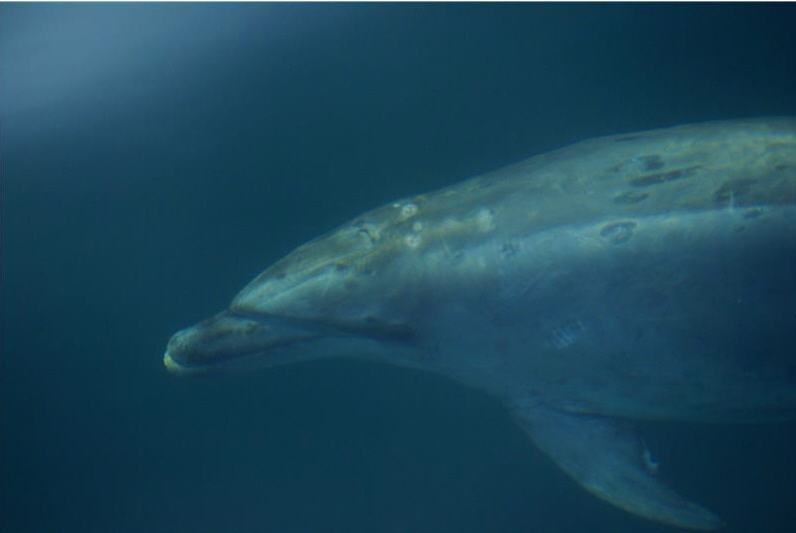
A new study to investigate the population structure and historical processes responsible for the geographic distribution of the species in the Mediterranean finds that the bottlenose dolphin only colonized the region after the last Ice Age, about 18,000 years ago.

The Mediterranean basin is now a global biodiversity hotspot and several marine species exhibit complex population structure patterns over relatively short geographic distances, so it is interesting to investigate the drivers of population structure in marine organisms. Tissue samples from 194 adult bottlenose dolphins (Tursiops truncatus) were collected between 1992 and 2011 from the five main eastern Mediterranean basins. 
A nicotine metabolite once thought to be inactive, cotinine, instead supports learning and memory, by amplifying the action of a primary chemical messenger involved in both, finds a new study.

The new findings indicate cotinine makes brain receptors more sensitive to lower levels of the messenger acetylcholine, which are typical in Alzheimer's, and may boost effectiveness, at least for a time, of existing therapies for Alzheimer's and possibly other memory and psychiatric disorders.
At least five mass extinction events have profoundly changed the course of life on Earth - animal life, at least. Plants have been very resilient to those events, finds a new study.

For over 400 million years, plants have played an essential role in almost all terrestrial environments and covered most of the world’s surface. During this long history, many smaller and a few major periods of extinction severely affected Earth’s ecosystems and its biodiversity.
"1. Interaction with matter changes the neutrino mixing and effective mass splitting in a way that depends on the mass hierarchy. Consequently, results of oscillations and flavor conversion are different for the two hierarchies.
2. Sensitivity to the mass hierarchy appears whenever the matter effect on the 1-3 mixing and mass splitting becomes substantial. This happens in supernovae in large energy range, and in the matter of the Earth.[...] 
4. Multi-megaton scale under ice (water) atmospheric neutrino detectors with low energy threshold (2-3 GeV) may establish mass hierarchy with (3-10)σ confidence level in few years. [...]

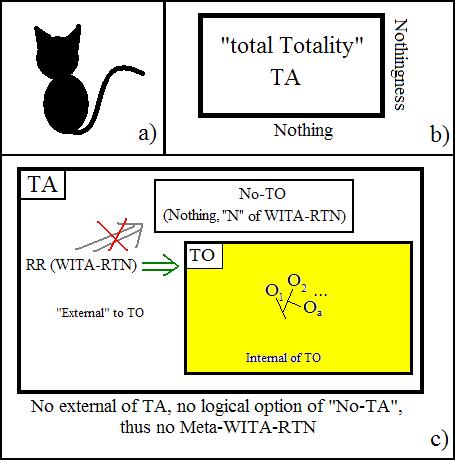
  Modern physics is not accidentally relativistic and quantum, or in other words, Einstein-relative as well as Everett-relative (Bell-violating Everett-relativity is the very core of quantum mechanics!). Modern physics becomes ever more relativistic still today, and description relativity has revolutionized fundamental physics (see string theory dualities, Maldacena conjecture, black hole complementarity/holography, and so on). Why? Because we must take the observer’s perspective, and this means the describer’s perspective, ever more into account.

It's a firmly established fact straight from Biology 101: Traits such as eye color and height are passed from one generation to the next through the parents' DNA.

But now, a new study in mice by researchers at Washington University School of Medicine in St. Louis has shown that the DNA of bacteria that live in the body can pass a trait to offspring in a way similar to the parents' own DNA. According to the authors, the discovery means scientists need to consider a significant new factor - the DNA of microbes passed from mother to child - in their efforts to understand how genes influence illness and health.

